

Most Dallas homeowners think about their fireplace when it's cold and forget about it the rest of the year. That's exactly how small problems become expensive ones. The chimney cap purpose explained simply is this: a small metal cover at the top of your flue does more protective work than almost any other component on your chimney. Without it, you're leaving your home open to rain damage, animal intrusion, dangerous downdrafts, and flying embers that can land on your roof. This guide walks you through everything you need to know to protect your home the right way.
Table of Contents
- What a chimney cap does and why it matters
- Building codes and safety standards for chimney caps in Dallas
- Choosing the right chimney cap: types, materials, and features
- How chimney caps improve fireplace safety and performance
- Installing and maintaining your chimney cap for lasting protection
- Rethinking chimney caps: what Dallas homeowners often overlook
- Expert chimney cap services for Dallas homeowners
- Frequently asked questions
Key Takeaways
| Point | Details |
|---|---|
| Prevents hazards | Chimney caps block rain, animals, and embers, reducing fire risk and damage to your home. |
| Ensures safe venting | Proper draft clearance and mesh size prevent smoke backup and carbon monoxide hazards. |
| Extends chimney life | Caps protect masonry from water damage and reduce maintenance needs over time. |
| Code compliance matters | Following local codes and manufacturer instructions ensures safety and avoids fines. |
| Professional help recommended | Correct measurement, installation, and inspection by experts keep your chimney functioning properly. |
What a chimney cap does and why it matters
A chimney cap sits at the very top of your flue, the vertical channel that carries smoke out of your home. It covers the flue opening with a solid lid and surrounds it with a wire mesh screen. That simple design handles several serious problems at once.
Rain is the most obvious threat. When water enters an uncapped flue, it soaks into the masonry, freezes and thaws with seasonal temperature changes, and causes brick spalling (when the surface of the brick breaks off). Over time, that moisture damage travels down the flue liner and into the firebox itself. In Dallas, where spring storms can dump inches of rain in hours, an uncapped chimney can take on a surprising amount of water in a single season.
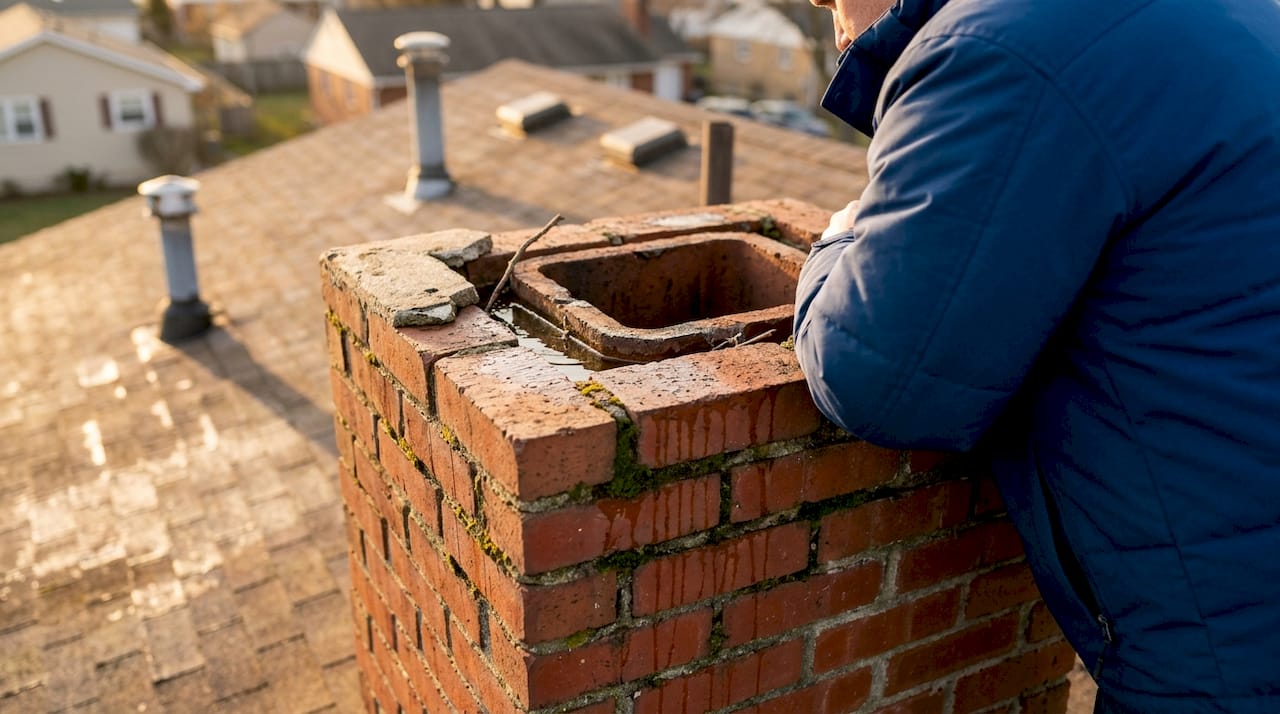
The mesh screen serves a second critical function as a spark arrestor. When you burn wood, embers can travel up the flue and exit the top of the chimney. Without a screen to catch them, those embers land on your roof, your deck, or nearby dry vegetation. A chimney cap serves as an inexpensive fix for smoking problems including nesting animals, wet flues, and wind-induced downdrafts, while keeping stray embers off the roof. In the Dallas-Fort Worth area, where dry summers and seasonal winds create real wildfire risk, that spark-arresting function is not optional.
Animals are a third concern that homeowners consistently underestimate. Squirrels, raccoons, and birds actively seek out uncapped flues as nesting sites. A nest in your flue is not just an annoyance. It's a blockage that can force carbon monoxide back into your living space instead of out through the chimney.
Key chimney cap benefits at a glance:
- Rain and moisture protection prevents masonry deterioration and liner damage
- Spark arrestor mesh reduces ember escape and fire risk on your roof and yard
- Animal and debris barrier keeps nests, leaves, and twigs out of the flue
- Downdraft prevention stops wind from pushing smoke back into your home
- Carbon monoxide protection by keeping the flue clear and functioning properly
"Chimneys without proper caps and liners pose extreme fire hazards from ember risks without mesh-sided caps."
Pro Tip: If you've noticed smoke occasionally backing into your living room even when the damper is fully open, a missing or damaged cap is one of the first things to check. Browse our fireplace and chimney tips for more guidance on diagnosing common fireplace issues.
Now that you understand the basic functions, let's explore how building codes guide chimney cap design and installation.
Building codes and safety standards for chimney caps in Dallas
Understanding the code requirements around chimney caps helps you make informed decisions and avoid costly violations. The two primary standards that govern chimney cap installation in the U.S. are the International Residential Code (IRC) and NFPA 211, the National Fire Protection Association's standard for chimneys, fireplaces, and venting systems.
IRC 2021 Section R1003.9 regulates chimney caps to ensure proper draft and prevent rain and animal entry, and caps are often required by manufacturer instructions or local codes. Neither the IRC nor NFPA 211 universally mandates a cap on every chimney, but both require that the chimney top not impair draft and that the design prevent water, animal, and debris entry. In practice, most chimney manufacturers require caps as a condition of their product warranty, which means skipping a cap can void your coverage.
NFPA 211 and IRC standards require chimney cap mesh sizes of 3/8 inch standard or 5/8 inch in wildfire zones, with a lid clearance minimum of 8 inches above the flue opening. That 8-inch clearance is not arbitrary. It allows combustion gases to exit freely without creating back pressure that would push smoke into your home.
| Code requirement | Standard specification | Wildfire zone specification |
|---|---|---|
| Mesh size | 3/8 inch | 5/8 inch |
| Lid clearance above flue | 8 inches minimum | 8 inches minimum |
| Preferred materials | Stainless steel, copper | Stainless steel, copper |
| Primary authority | IRC 2021 / NFPA 211 | IRC 2021 / NFPA 211 |
Key code compliance points for Dallas homeowners:
- Mesh size matters locally. Dallas and surrounding areas face seasonal wildfire risk, making the 5/8-inch mesh the safer choice.
- Material requirements. Stainless steel and copper are preferred for corrosion resistance and long-term durability.
- Manufacturer instructions apply. Always follow the specific installation requirements for your chimney system.
- Local amendments exist. Dallas and Tarrant County may have local code amendments that go beyond the IRC baseline.
Our chimney cap replacement services include a full code compliance check so your installation meets both state and local requirements.
With code basics covered, let's compare chimney cap types and materials suitable for Dallas homes.
Choosing the right chimney cap: types, materials, and features
Not all chimney caps are created equal, and the wrong choice can create problems as serious as having no cap at all. Here's how to think through your options.
Copper caps are the premium choice. Copper caps last 50+ years and are recommended for masonry chimneys due to weather resistance, while stainless steel is preferred for acidic flues. Copper develops a natural patina over time that actually adds to its corrosion resistance. If you have a traditional brick chimney and want a long-term investment, copper is hard to beat.
Stainless steel caps are the most practical choice for most Dallas homeowners. They resist the acidic byproducts of both wood and gas combustion, they're durable in the heat and humidity cycles that Texas delivers, and they're available at a range of price points. For gas fireplaces especially, stainless steel holds up better than aluminum against the condensation that forms in the flue.
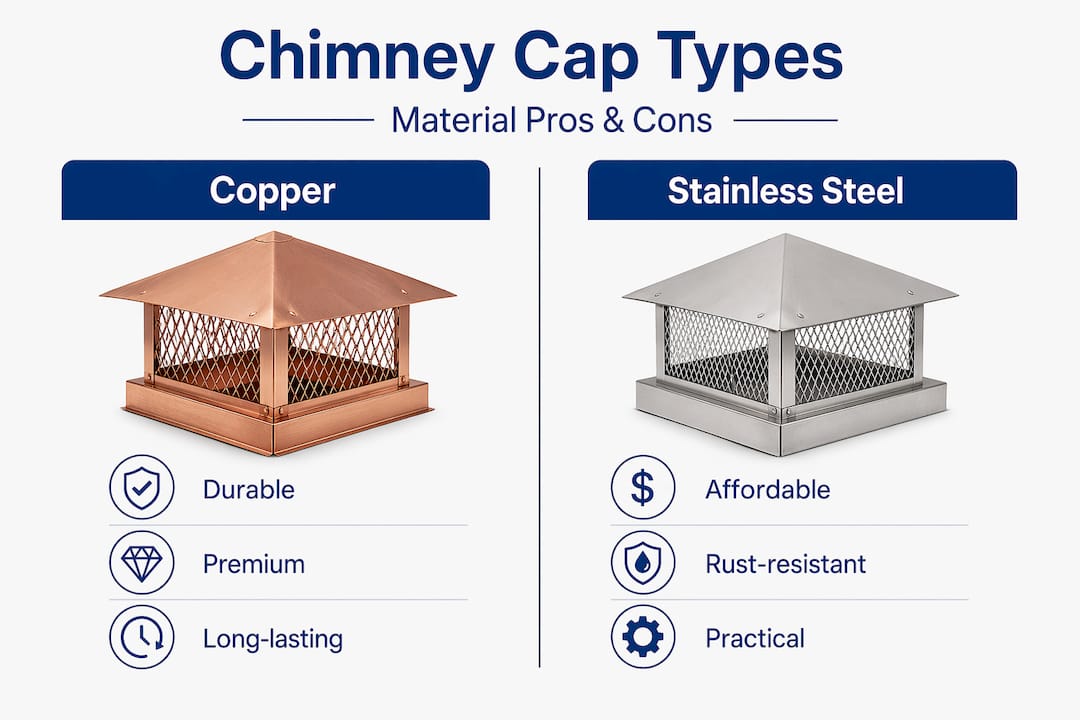
Aluminum caps cost less upfront but have a shorter lifespan. They're more susceptible to corrosion and physical damage, and they're not recommended for wood-burning fireplaces where acidic creosote (a tar-like residue that builds up in flues) is a factor.
| Material | Lifespan | Best for | Relative cost |
|---|---|---|---|
| Copper | 50+ years | Masonry chimneys | High |
| Stainless steel | 20-30 years | Wood and gas fireplaces | Medium |
| Aluminum | 5-10 years | Budget installations | Low |
Beyond material, look for these features when selecting a cap:
- Spark arrestor mesh built into the design and sized to code
- Rain cover that extends past the flue opening on all sides
- Draft-optimized design that doesn't restrict airflow
- Correct sizing matched to your specific flue dimensions
Pro Tip: Never install a cap that doesn't match your flue dimensions precisely. A cap that's too small can fall in; one that's too large may not seal properly. Our team handles custom chimney cap installation with accurate flue measurements every time.
Now that you know how to choose, let's discuss how chimney caps impact your fireplace's performance and safety day-to-day.
How chimney caps improve fireplace safety and performance
The practical, day-to-day benefits of a properly fitted chimney cap show up in ways that directly affect how your fireplace performs and how safe your home is.
When embers escape an uncapped flue, they don't just disappear. Over 500 wood fires have been attributed to ember risks from missing mesh caps on wood-burning chimneys. In the DFW area, where summer and fall bring dry conditions and occasional high winds, a single escaped ember landing on dry grass or a wood deck is a genuine hazard.
A properly fitted cap also maintains consistent chimney draft. Draft is the upward flow of air and combustion gases through the flue. When wind blows across an uncapped flue at certain angles, it can push air downward instead of allowing gases to rise, a problem called downdraft. The result is smoke filling your living room instead of exiting through the chimney. A cap with proper lid clearance redirects wind and keeps draft moving in the right direction.
Animal nests are another performance issue. A bird's nest or squirrel nest in the flue acts like a partial blockage. Your fire may still burn, but combustion gases including carbon monoxide can't exit efficiently. That's a health and safety risk, not just an inconvenience.
Regular chimney maintenance steps to keep your cap working properly:
- Inspect the cap visually each fall before fireplace season begins
- Check for rust, bent mesh, loose fasteners, or physical damage
- Clear any debris, leaves, or animal nesting material from the mesh
- Schedule a professional chimney cleaning to remove creosote buildup from the flue
- Replace any cap showing significant corrosion or structural damage before using the fireplace
"Chimneys without proper caps and liners pose extreme fire hazards, with ember risks from missing mesh caps being a leading cause of wood-burning chimney fires."
Finally, let's review practical steps for installation, maintenance, and when to replace your chimney cap.
Installing and maintaining your chimney cap for lasting protection
Installation done correctly takes less than an hour for a professional. Done incorrectly, it creates draft problems that make your fireplace frustrating to use and potentially dangerous.
The first step is accurate flue measurement. Your cap must fit the flue tile (the clay or metal liner at the top of the chimney) precisely. Most single-flue caps attach directly to the flue tile with set screws. Multi-flue caps mount to the chimney crown, the concrete or mortar surface that surrounds the flue at the top of the chimney.
Chimney cap replacement costs around $300 on average, varying by material and installation complexity. Copper caps and custom-sized units cost more. That's a modest investment compared to the cost of repairing water-damaged masonry, which can run into the thousands.
Signs your chimney cap needs replacement:
- Visible rust or corrosion on the cap body or mesh
- Bent, torn, or missing mesh sections
- Water stains inside the firebox or on the chimney breast
- Smoke backing into the house during normal use
- Animal sounds or debris falling into the firebox
Chimney cap maintenance schedule:
- Annual inspection every fall before you start using the fireplace regularly
- Bi-annual cleaning if you use your fireplace heavily, once in fall and once mid-season
- Post-storm check after any significant hail, wind, or ice storm in the DFW area
- Immediate repair or replacement if you spot damage, don't wait until next season
| Maintenance task | Frequency | Who should do it |
|---|---|---|
| Visual cap inspection | Annual (fall) | Homeowner or professional |
| Mesh cleaning | Bi-annual | Professional recommended |
| Creosote removal | Annual | Certified chimney sweep |
| Full cap replacement | As needed | Certified professional |
Pro Tip: After any major storm in the Dallas area, have a certified technician check your cap. Hail can dent or crack caps, and high winds can loosen or displace them entirely. Our team handles chimney cap replacement, chimney leak repair, and chimney masonry repair so you can address all storm damage in one visit.
With these maintenance insights, let's explore a fresh perspective on the traditional views of chimney caps.
Rethinking chimney caps: what Dallas homeowners often overlook
Here's what we've seen after years of inspecting chimneys across the DFW Metroplex: the most common chimney cap mistake isn't skipping the cap entirely. It's installing the wrong one and assuming the job is done.
Homeowners frequently purchase caps online based on a rough flue measurement, install them without verifying the 8-inch lid clearance, and end up with a cap that technically covers the flue but creates back pressure that pushes smoke into the house. A poorly fitted cap interferes with draft, causing smoke backup, and professionals ensure the 8-inch minimum lid clearance per NFPA 211 to maintain airflow in DFW winds. That's not a minor inconvenience. In a tightly sealed modern home, it can mean carbon monoxide accumulation.
Dallas wind patterns add a layer of complexity that generic installation guides don't address. The prevailing southerly winds in North Texas, combined with the occasional strong northers that sweep through in winter, create variable wind pressure at chimney tops. A cap that performs fine in calm conditions may cause downdraft problems when a cold front moves through. Our certified inspectors account for these local conditions when recommending cap designs and sizing.
The mesh size issue is another area where standard advice falls short. A 3/8-inch mesh is code-compliant in most situations, but it clogs faster with creosote and soot than a 5/8-inch mesh. In wildfire-prone areas around Dallas, the 5/8-inch mesh is the right call for both safety and function. The tradeoff is that slightly larger embers could theoretically pass through, but the reduced clogging risk keeps the flue performing better over time.
We also see homeowners treat chimney caps as decorative accessories rather than safety components. They'll spend money on a copper cap because it looks good from the street, but skip the professional measurement that ensures it actually functions correctly. A beautiful cap that fits poorly is worse than a plain cap that fits well.
Our chimney inspection tips cover more of these local nuances, but the core message is this: chimney caps are safety equipment. Treat them that way, and get a professional involved in the selection and installation process.
Expert chimney cap services for Dallas homeowners
At Chimney Professionals, we work with Dallas-Fort Worth homeowners every day to ensure their chimneys are safe, code-compliant, and performing at their best. A properly installed chimney cap is one of the most cost-effective protections you can add to your home.

Our team handles custom chimney cap replacement with precise flue measurements, material selection matched to your fireplace type, and full compliance with IRC and NFPA 211 standards. We also offer chimney masonry repair services to address any water damage that a missing or failed cap may have already caused, and chimney leak repair services for homeowners dealing with moisture intrusion after storms. We're open daily from 8 AM to 8 PM and serve homeowners across the entire DFW Metroplex. Contact us today to schedule your inspection or cap installation.
Frequently asked questions
Are chimney caps required by building codes in Dallas?
Chimney caps are often required by manufacturer instructions and local codes, and IRC 2021 Section R1003.9 regulates them to ensure proper draft and prevent rain and animal entry, even where they aren't universally mandated. In practice, skipping a cap typically voids your chimney manufacturer's warranty and creates safety risks that most local inspectors will flag.
What mesh size should a chimney cap have in wildfire-prone areas like Dallas?
NFPA 211 and IRC standards require 5/8-inch mesh in wildfire zones, which balances ember containment with adequate airflow and reduced clogging. This is the mesh size we recommend for most Dallas-area wood-burning fireplaces.
How much does chimney cap replacement cost in Dallas?
Chimney cap replacement costs around $300 on average in the Dallas area, though the final price varies based on the material you choose and the complexity of your chimney's configuration. Copper caps and custom-sized units will run higher than standard stainless steel options.
What are signs that my chimney cap needs replacement?
The clearest signs are visible rust or corrosion, damaged or missing mesh sections, water stains inside your firebox, or smoke backing into your home during normal fireplace use. Any one of these warrants a professional inspection before your next fire.
Recommended
- Chimney Cap Replacement Dallas TX | Custom Cap Installation | Chimney Professionals
- Chimney & Fireplace Blog | Tips for Dallas Homeowners | Chimney Professionals
- Chimney Cleaning Dallas TX | Level 1 & 2 Sweeps | Chimney Professionals
- Chimney Waterproofing Dallas TX | Prevent Water Damage | Chimney Professionals