

Whether you're buying a home in the Dallas-Fort Worth area or managing repairs on a property you already own, understanding what is chimney repair negotiation explained means knowing your options before money changes hands. Chimney issues discovered during inspections are among the most common triggers for renegotiating a home purchase price or repair scope. Yet most buyers and homeowners walk into these conversations without a clear strategy, solid documentation, or realistic expectations. This guide breaks down the full negotiation process, from identifying which defects matter to knowing exactly when to push and when to accept a compromise.
Table of Contents
- Key Takeaways
- Common chimney problems that trigger negotiation
- The chimney repair negotiation process explained
- Strategies and tips for negotiating chimney repairs
- How buyers and homeowners negotiate differently
- Common pitfalls to avoid in chimney negotiations
- Our perspective on chimney repair negotiations
- Get expert chimney support before you negotiate
- FAQ
Key Takeaways
| Point | Details |
|---|---|
| Know your repair cost ranges | Minor repairs cost $200–$1,000; major work runs $1,000–$3,500; full rebuilds can reach $15,000 or more. |
| Focus on safety and structure | Prioritize health, safety, and structural defects in negotiations rather than cosmetic or age-related wear. |
| Get written documentation | Inspection reports and at least two independent contractor quotes strengthen your negotiating position significantly. |
| Prefer credits over seller repairs | Requesting a price reduction or seller credit typically produces better long-term results than seller-managed fixes. |
| Buyers and owners negotiate differently | Buyers have pre-closing leverage through contract contingencies; homeowners negotiate primarily through competitive contractor bids. |
Common chimney problems that trigger negotiation
Not every chimney issue carries the same weight at the negotiating table. Understanding the difference between a minor inconvenience and a genuine structural threat helps you decide which repairs are worth fighting for and which ones to let go.
Common chimney issues that trigger negotiation include leaks, structural cracks, flashing failures, and liner damage. These problems directly affect safety and water intrusion, making them legitimate grounds for requesting repairs or price adjustments. A cracked flue liner, for example, can allow carbon monoxide to seep into living spaces. That is a safety issue, not a cosmetic one.
Here is a practical breakdown of chimney repair categories and what they typically cost:
| Repair Type | Common Issues | Typical Cost Range |
|---|---|---|
| Minor repairs | Cap replacement, minor tuckpointing, damper repair | $200–$1,000 |
| Major repairs | Flashing replacement, liner repair, partial rebuild | $1,000–$3,500 |
| Full rebuild | Severe structural deterioration, complete masonry failure | $4,000–$15,000+ |
Chimney repair costs vary significantly based on severity, with minor repairs starting around $200 and complete rebuilds exceeding $15,000. Knowing these ranges before you negotiate prevents you from either undershooting a legitimate request or overreaching on something a seller will dismiss outright.
The defects that carry the most weight in negotiations are those that affect safety and structural integrity. These include:
- Deteriorated mortar joints that compromise the chimney's load-bearing capacity
- Damaged or missing flashing that allows water intrusion into the home's structure
- Cracked or collapsed flue liners that create fire and carbon monoxide hazards
- Spalling bricks that signal advanced water damage or freeze-thaw deterioration
- Leaning or separating chimney stacks that indicate foundation or structural problems
Cosmetic issues like minor surface staining or slight discoloration are normal in older homes and rarely justify a negotiation request. Sellers know this, and pushing for cosmetic fixes weakens your credibility on the issues that actually matter.
The chimney repair negotiation process explained
Chimney repair negotiation typically begins after a formal home inspection uncovers defects. The inspection report becomes your foundational document. Without it, you are asking a seller to take your word for problems they cannot see. With it, you have objective, third-party evidence that a licensed professional identified specific issues requiring attention.
Once the inspection report is in hand, the negotiation process generally follows these steps:
- Review the inspection report carefully. Identify every chimney-related finding and categorize each as a safety concern, structural issue, or cosmetic matter.
- Obtain independent contractor estimates. Contact at least two licensed chimney contractors to get written quotes. This validates the inspection findings and establishes realistic repair costs.
- Decide on your negotiation type. You can request the seller repair the issue before closing, ask for a price reduction, or negotiate a seller credit at closing that you apply toward repairs yourself.
- Submit your request in writing. Written requests with objective evidence signal professionalism and protect your legal position. Verbal agreements are difficult to enforce and easy to misremember.
- Allow reasonable response time. Give the seller and their agent adequate time to review your request, consult their own contractors, and respond with a counteroffer.
- Evaluate the response and decide. Accept the offer, counter again, or exercise your right to walk away if the contract includes an inspection contingency.
Most purchase agreements state that homes sell "as-is," but nearly all sellers expect some repair negotiations after an inspection. The "as-is" language does not eliminate your right to negotiate. It simply means the seller has no obligation to agree.
Pro Tip: Always communicate negotiation requests through your real estate agent in writing, with a clear summary of each issue and its estimated repair cost. This creates a paper trail and reduces the chance of misunderstandings that can derail a deal at the last moment.
Strategies and tips for negotiating chimney repairs
Effective chimney repair negotiation is not about extracting every possible concession. It is about reaching a fair resolution that protects your investment and keeps the deal moving forward. These chimney repair negotiation strategies consistently produce better outcomes than aggressive or scattershot approaches.
- Lead with safety and structure. Buyers who focus on essential repairs rather than minor inconveniences are more likely to reach agreements. A seller is far more likely to respond to a documented flue liner failure than a request to repaint the firebox.
- Get at least two quotes. Never walk into a negotiation with a single estimate. Two or more independent contractor quotes demonstrate that your cost figures are grounded in market reality, not inflated to squeeze the seller.
- Request credits over seller repairs. Seller-managed repairs may be handled by the cheapest contractor available, leaving you with a non-durable fix. A credit or price reduction gives you control over who does the work and how it gets done.
- Keep communication professional. Accusatory or emotional language in negotiation correspondence damages trust and makes sellers defensive. Stick to documented facts and specific repair costs.
- Know your walk-away point. If the chimney requires a full masonry rebuild and the seller refuses any concession, that is a legitimate reason to reconsider the purchase entirely.
Pro Tip: Buyers who document defects properly and provide contractor estimates have successfully negotiated price reductions of 5–10%, especially in a flat or slow market. The documentation does the heavy lifting.
One more consideration: timing matters. Raising new repair demands in the final days before closing, after terms have already been agreed upon, is a tactic that often backfires. It signals bad faith and can collapse a deal that both parties wanted to complete. Raise all chimney-related concerns during the designated negotiation window your contract specifies.
How buyers and homeowners negotiate differently
The negotiation approach changes significantly depending on whether you are purchasing a home or managing repairs on a property you already own. Both situations involve negotiation, but the leverage, timing, and outcomes look very different.
| Factor | Prospective Buyer | Current Homeowner |
|---|---|---|
| Primary leverage | Contract contingencies and pre-closing timeline | Competitive contractor bids and budget control |
| Negotiation partner | Seller and their real estate agent | Chimney repair contractors |
| Walk-away option | Yes, before contract exchange | No, repairs still need to happen |
| Documentation needed | Inspection report plus contractor quotes | Multiple written contractor estimates |
| Timing | Fixed to contract and closing schedule | Flexible, but urgency depends on severity |
| Outcome options | Price reduction, seller credit, or seller repairs | Negotiate scope, price, or payment terms |
Buyers hold their strongest leverage before the contract is finalized. Offers remain subject to contract until final exchange, which means buyers can propose revised terms or walk away after discovering defects. That window is finite, and using it well requires preparation.
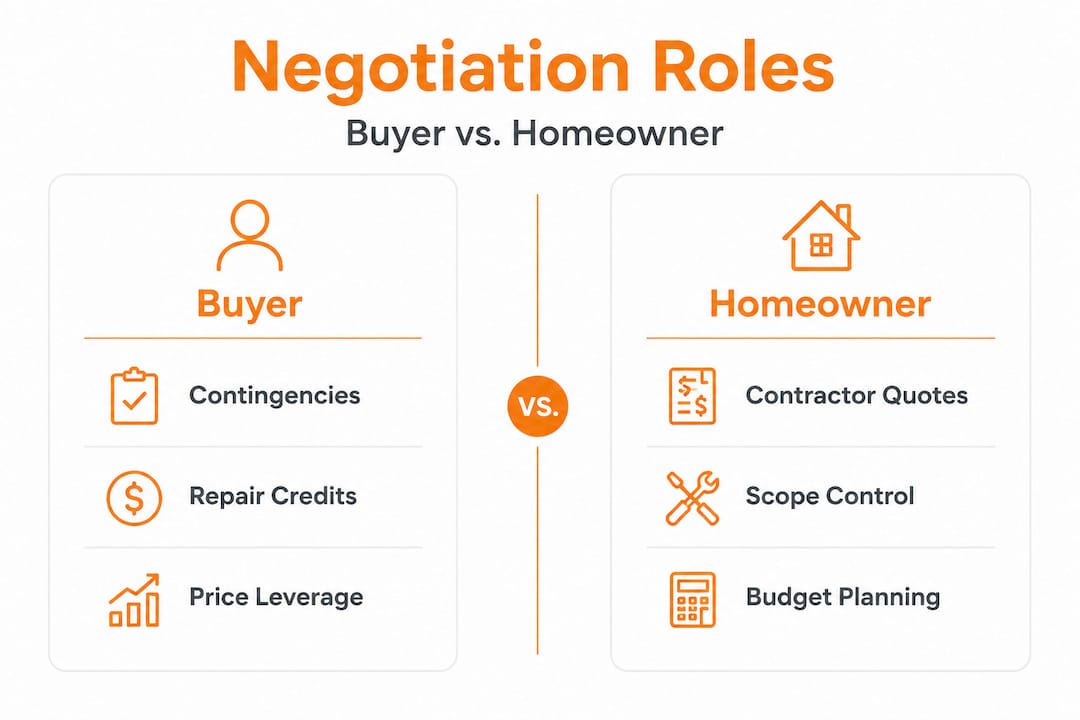
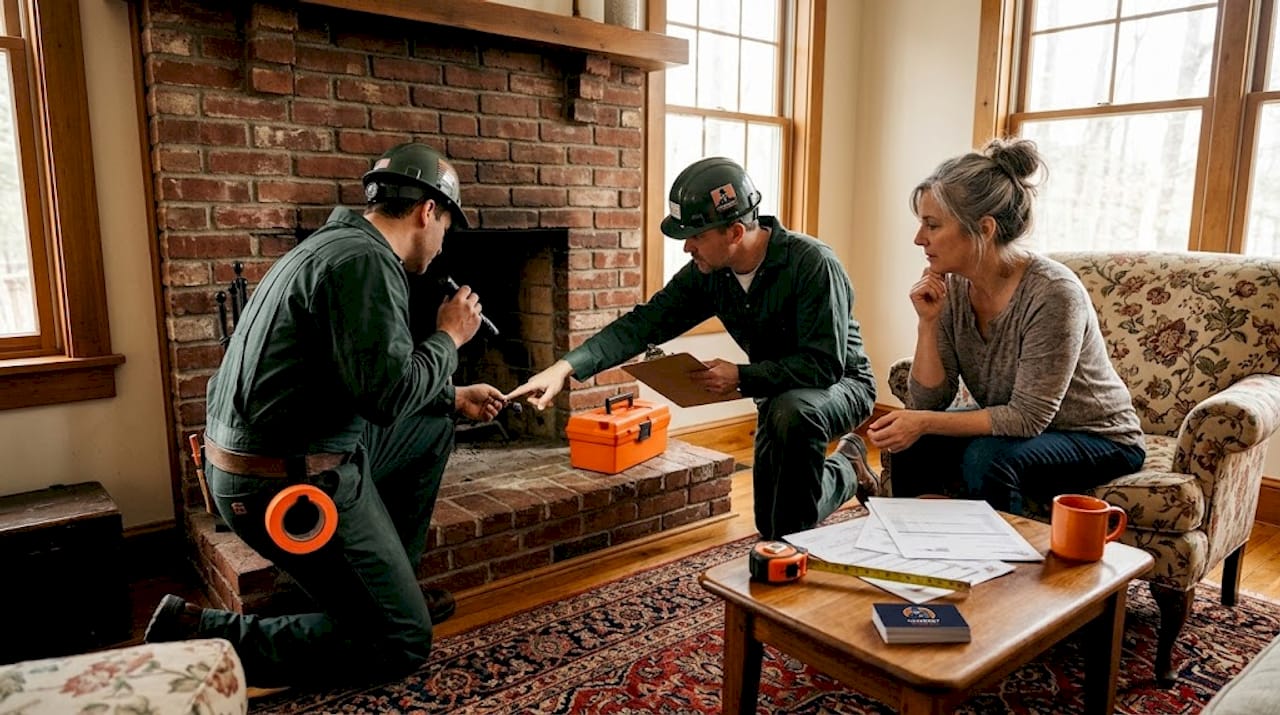
Homeowners negotiating with contractors operate differently. You are not trying to reduce a purchase price. You are trying to get quality work at a fair price. Getting three written quotes, asking about material warranties, and requesting a detailed scope of work in the contract are the primary tools available. For significant repairs like chimney leak repair, the difference between the lowest and highest quotes can be substantial, so comparison shopping is not optional.
Common pitfalls to avoid in chimney negotiations
Even well-prepared buyers and homeowners make mistakes that weaken their position or lead to poor repair outcomes. Recognizing these pitfalls before you negotiate saves time, money, and frustration.
- Requesting cosmetic repairs. Asking a seller to address age-related wear, minor surface staining, or normal weathering signals that you have not distinguished between real defects and expected wear. Sellers and their agents notice this, and it undermines your credibility on legitimate issues.
- Relying on verbal agreements. Nothing said in a phone call or casual conversation carries legal weight. Every request, response, and agreement must be documented in writing and attached to the contract.
- Accepting seller repairs without verification. If a seller agrees to repair a chimney defect before closing, you have the right to verify the work was completed properly by a licensed contractor before you sign off. Do not skip this step.
- Submitting last-minute demands. Raising new repair requests days before closing, after all terms were settled, is known as gazundering in some markets. It damages trust and frequently kills deals that were otherwise on track.
- Ignoring contract contingency deadlines. Your contract specifies a window for inspection-related negotiations. Missing that window can mean losing your right to renegotiate, regardless of what the inspection found.
Negotiation is not about making an old home like-new but about addressing material defects that affect safety or livability. Keeping that principle front and center prevents most of these common mistakes.
Our perspective on chimney repair negotiations
I have seen hundreds of chimney inspections in the Dallas-Fort Worth area, and the pattern is consistent. The buyers who get the best outcomes are not the ones who push hardest. They are the ones who come prepared.
In my experience, the single biggest mistake people make is treating negotiation like a confrontation rather than a problem-solving conversation. When you walk in with a certified inspection report, two contractor quotes, and a focused list of safety-related concerns, you are not demanding anything unreasonable. You are presenting facts. Sellers respond to facts.
What I have also learned is that accepting a seller-managed repair without oversight is a gamble you often lose. I have seen "repaired" chimneys that received a cosmetic patch over a structural crack, work that looked fine on the surface but failed within a season. Requesting a credit and hiring your own qualified contractor is almost always the smarter path.
My honest take: if a seller refuses to acknowledge a documented flue liner failure or a structural crack that any certified inspector would flag as a safety concern, that tells you something important about how they have managed the property overall. Walk-away decisions are sometimes the right ones.
And once you own the home, do not wait for the next sale to think about chimney maintenance. Regular inspections and cleaning prevent the kind of deterioration that turns a $300 repair into a $10,000 rebuild. Prevention is always cheaper than negotiation.
— chimneyprofessionalstx
Get expert chimney support before you negotiate
When you need a professional evaluation that holds up in a negotiation, Chimney Professional Services is the team DFW homeowners and buyers rely on.
Our certified inspectors provide detailed, documented assessments of every chimney component, from flashing and flue liners to masonry and caps. Whether you need a pre-purchase inspection to support your negotiation or a full masonry repair estimate to justify a price reduction request, we deliver the documentation that protects your position. We also specialize in stopping chimney leaks fast, one of the most common defects buyers encounter during inspections. Open daily from 8 AM to 8 PM across the Dallas-Fort Worth Metroplex. Contact Chimney Professional Services today to schedule your inspection.
FAQ
What is chimney repair negotiation in a home purchase?
Chimney repair negotiation is the process of requesting price reductions, seller credits, or pre-closing repairs after an inspection identifies chimney defects. It typically occurs during the inspection contingency window specified in the purchase contract.
Which chimney issues are worth negotiating over?
Safety and structural defects, including cracked flue liners, failing flashing, structural cracks, and active leaks, are the strongest grounds for negotiation. Cosmetic issues and normal wear are generally not worth raising.
Should I ask the seller to repair the chimney or request a credit?
Requesting a seller credit or price reduction is usually the better option. Sellers may choose the cheapest contractor available, which can result in low-quality repairs that fail quickly after closing.
How many contractor quotes do I need for chimney repair negotiation?
At least two independent written quotes from licensed chimney contractors. Multiple quotes validate your cost figures and demonstrate that your request is grounded in real market pricing, not an inflated estimate.
Can a homeowner negotiate chimney repair costs outside of a home sale?
Yes. Homeowners negotiate chimney repair costs by obtaining multiple written bids from licensed contractors, comparing scope of work and material warranties, and selecting the contractor who offers the best combination of quality and price.
Recommended
- Chimney & Fireplace Blog | Tips for Dallas Homeowners | Chimney Professionals
- Chimney Masonry Repair Dallas TX | Tuckpointing & Rebuilds | Chimney Professionals
- 7 Signs Your Chimney Needs Repair | Dallas TX | Chimney Professionals
- Chimney Leak Repair Dallas TX | Stop Water Damage Fast | Chimney Professionals