
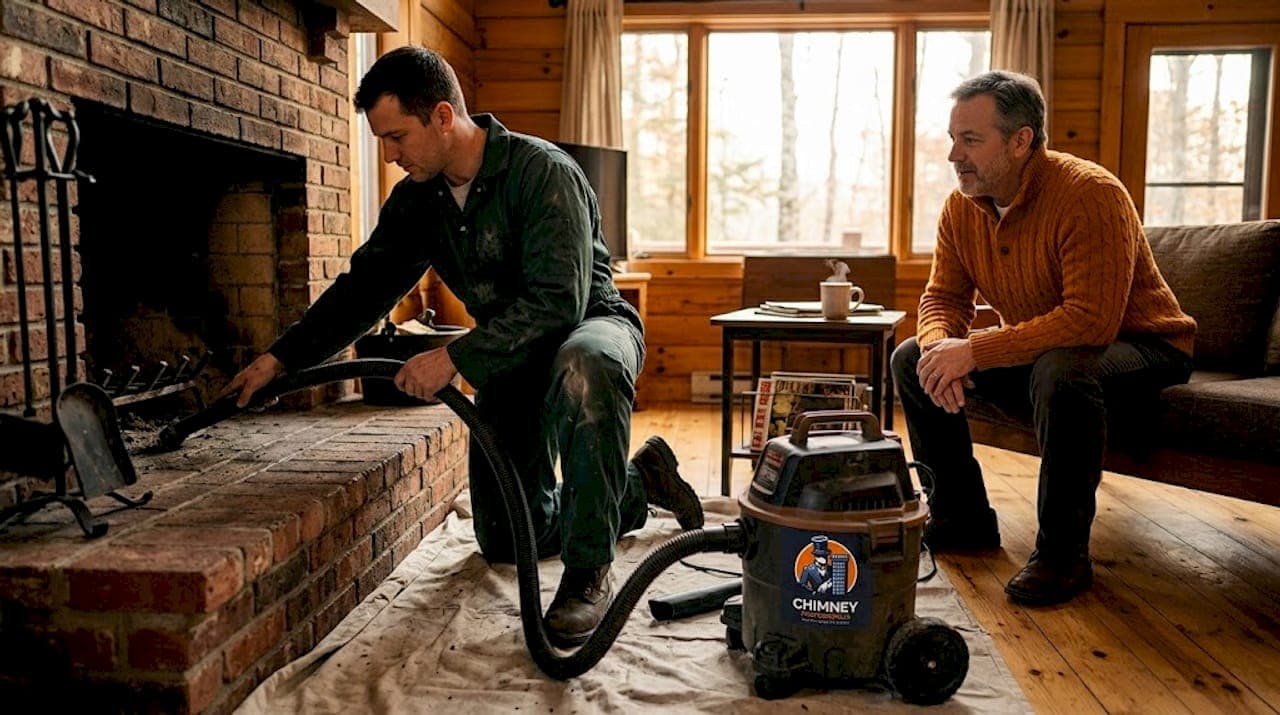
Moving into a new home with a fireplace is exciting, but your first chimney cleaning in your new home is not something to delay. Many new homeowners assume a working fireplace means a safe one. That assumption puts families at risk. Creosote buildup from previous owners, cracked flue liners, animal nests, and years of deferred maintenance can all hide behind a chimney that looks perfectly fine from the living room. Before you light your first fire in the Dallas-Fort Worth area, here is exactly what you need to know to get your chimney properly cleaned, inspected, and ready to use safely.
Table of Contents
- Key takeaways
- What your first chimney cleaning in your new home actually requires
- Preparing for your first service visit
- How the cleaning and inspection process works, step by step
- Common findings and what to do next
- Our take: what the first visit really tells you
- Start safe with Chimney Professional Services
- FAQ
Key takeaways
| Point | Details |
|---|---|
| Level 2 inspection is required | NFPA 211 mandates a Level 2 inspection whenever a home changes ownership, not a basic Level 1 check. |
| Schedule before heating season | Book your service in late summer or early fall to avoid delays before North Texas heating season begins. |
| First visit takes under 90 minutes | A thorough baseline service typically runs 45 to 90 minutes and includes photos and a written report. |
| Creosote is a serious fire hazard | Creosote deposits from prior owners can reach 2,000°F during a chimney fire if not removed professionally. |
| Your report is a control document | The written inspection report from your first visit anchors all future maintenance and supports insurance claims. |
What your first chimney cleaning in your new home actually requires
Most new homeowners expect a sweep to show up, brush the flue, and call it done. The reality is more specific, and understanding the difference protects you.
Level 1 vs. Level 2 inspection
Per NFPA 211 standards, a Level 1 inspection covers only the readily accessible portions of the chimney interior and exterior. It is appropriate for chimneys that have been in continuous, problem-free use. A Level 2 inspection is a different category entirely. It is not simply a more thorough Level 1 check. Level 2 is condition-triggered, required by NFPA standards specifically when a property changes ownership, which means your situation as a new homeowner triggers it automatically.
A Level 2 inspection includes a full-length video scan of the flue interior, a comprehensive review of all accessible areas, and a written report with photo and video documentation. This matters because hidden damage, such as cracked terra cotta liner sections, deteriorated mortar joints inside the flue, or debris packed into a smoke chamber, is completely invisible without proper video camera equipment. Phone photos or a quick flashlight check do not meet the standard and leave real hazards undetected.
Pro Tip: Ask your chimney professional specifically whether they will perform a Level 2 video scan. If they quote you only a Level 1 or decline to use camera equipment, that is not the right fit for a new homeowner situation.
Here is what a proper Level 2 inspection covers:
- Full flue video scan from top to bottom, checking for liner cracks, gaps, and obstructions
- Exterior inspection of the crown, cap, flashing, and masonry for water damage or deterioration
- Firebox and smoke chamber inspection for cracks, spalling, and mortar failures
- Damper operation check to confirm it opens, seals, and closes correctly
- Written report with timestamped photos and video evidence you keep for your records
That final point matters more than most new homeowners realize. The first inspection report becomes your maintenance control document. It gives you a dated baseline to compare against future inspections, which helps identify deterioration over time and supports insurance claims if something ever goes wrong.
Preparing for your first service visit
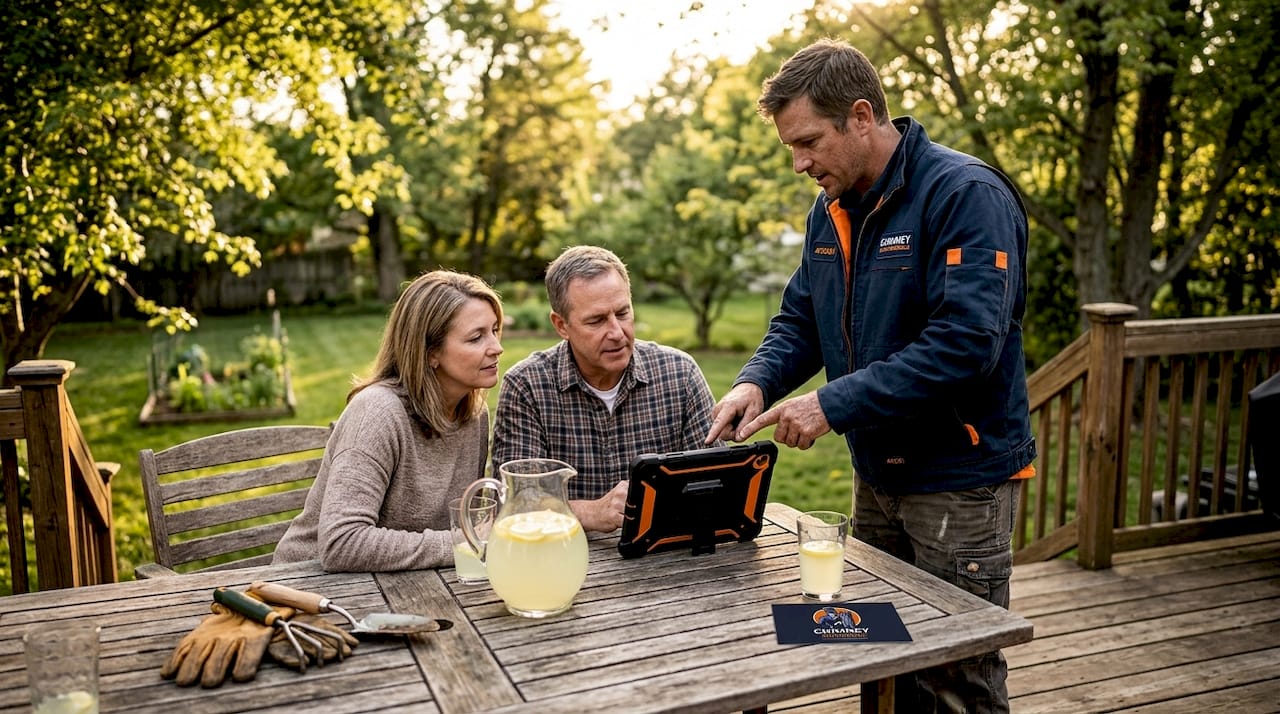
Getting ready for your chimney professional's visit is straightforward, but a few practical steps make the process smoother and more accurate.
When to book in the DFW area
Timing your service correctly is one of the most overlooked chimney cleaning tips for new homeowners. North Texas heating season typically runs from November through March. Booking in late summer or early fall, specifically August through October, puts you ahead of the rush and gives you plenty of time to address any repairs before cold weather arrives. Scheduling in December when you want to use the fireplace immediately is not ideal because repair lead times extend significantly during peak season.
What to do before the technician arrives
| Preparation step | Why it matters |
|---|---|
| Clear a 3-foot area around the fireplace | Technicians set up drop cloths and equipment that need working space |
| Remove fireplace tools and decorative items | Prevents damage and speeds up setup time |
| Do not light a fire for at least 24 hours prior | A cool firebox is safer to inspect and clean accurately |
| Locate any prior inspection or repair records | Prior documentation helps the technician spot changes faster |
| Note any odors, smoke behavior, or sounds | Specific complaints give the technician diagnostic focus points |
Pro Tip: Write down any fireplace behavior you have noticed since moving in, including smoke smell when the fireplace is not in use, drafting issues, or visible staining on the firebox walls. These details help the technician prioritize what to examine closely.
A standard first visit typically runs 45 to 90 minutes depending on chimney height, access, and the findings uncovered during the scan. Professionals bring a rotary brush system, a high-powered HEPA vacuum, video inspection camera, mirror lights, and sealant tools as needed.
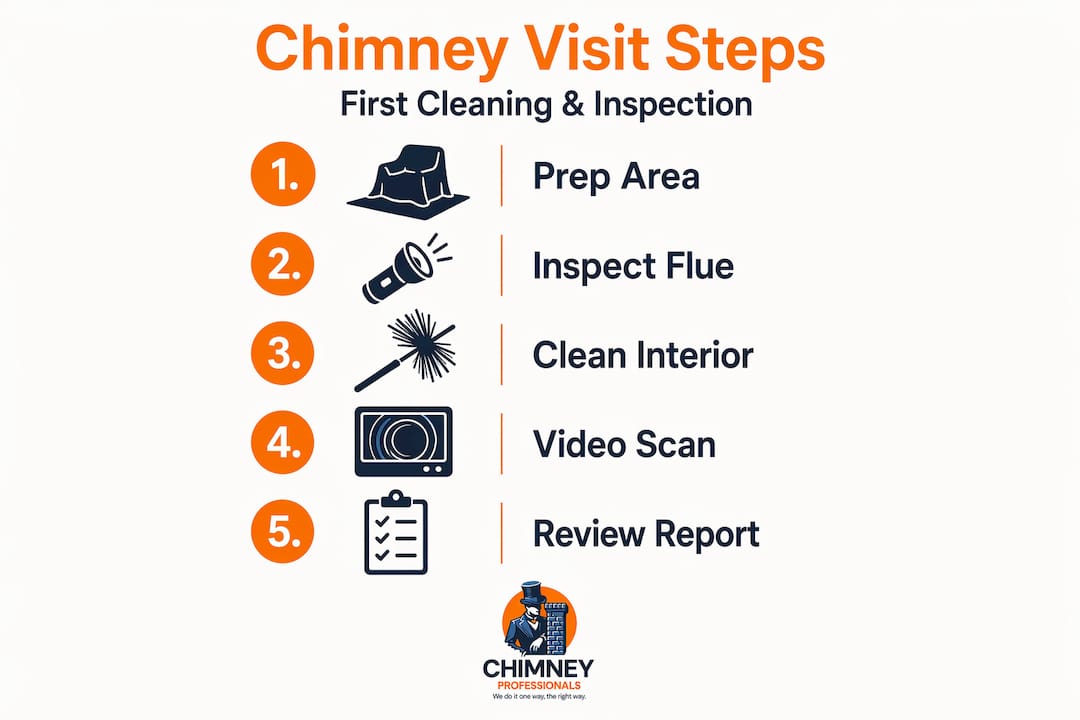
How the cleaning and inspection process works, step by step
Knowing what happens during the visit helps you evaluate whether the work is being done correctly. Here is the standard sequence for a professional first service.
-
Exterior assessment. The technician starts on the roof, checking the chimney cap, crown, flashing, and masonry for visible cracks, missing mortar, or water damage. Flashing gaps are one of the most common sources of interior water damage in DFW homes after heavy rain.
-
Interior setup. Back inside, the technician lays protective drop cloths across flooring and furniture, seals the firebox opening to contain soot, and prepares the HEPA vacuum system. A good containment setup means zero soot spread into your living space.
-
Flue video scan. The camera travels the full length of the flue, transmitting live footage that both the technician and you can review on a monitor. This is where hidden liner cracks, offset joints, and blockages become visible. Without this step, true Level 2 compliance is not met.
-
Rotary brush sweep. Working from top down or bottom up depending on chimney configuration, the technician uses a rotary cleaning system to dislodge and remove creosote buildup and soot from the flue walls. The HEPA vacuum simultaneously captures all debris before it enters the room.
-
Firebox and smoke chamber cleaning. The firebox interior, smoke shelf, and smoke chamber surfaces are cleaned separately. This area collects significant debris and is frequently overlooked in incomplete cleanings.
-
Post-cleaning functional check. The technician tests damper operation, checks smoke flow with a small smoke pen or test, and confirms the system is clear and operational.
-
Report delivery. You receive a written report with photos, video clips of notable findings, and a clear list of any recommended repairs prioritized by urgency.
The comparison that matters most after this process: a chimney cleaning from a certified professional versus a generalist handyman sweep is not just about price. It is about whether the person doing the work can interpret what the video reveals and document it accurately for your records.
Common findings and what to do next
A first-time owner's first chimney service is the most likely visit to uncover problems missed by prior owners. Here is what typically shows up and how to respond.
-
Stage 1 or Stage 2 creosote deposits. Light, flaky creosote is removed during a standard cleaning. Thick, tar-like Stage 2 or glazed Stage 3 deposits require specialized chemical treatments before mechanical removal. Creosote burning above 2,000°F is the leading cause of chimney fires, so this finding should not be ignored.
-
Liner cracks or missing sections. Hairline cracks in terra cotta liners are common in older DFW homes. Depending on severity, the technician may recommend liner repair, a cast-in-place liner, or a stainless steel liner insert. Get the repair recommendation in writing with photos before agreeing to any work.
-
Animal nests or debris blockages. Birds, squirrels, and debris commonly accumulate in uncapped or damaged chimneys. Removal is straightforward, but it often reveals the need for a new chimney cap to prevent re-entry.
-
Mortar or masonry deterioration. North Texas weather cycles, hot summers and occasional freeze events, stress masonry over time. Spalling bricks or crumbling mortar joints in the firebox or flue require professional masonry repair before the fireplace is used.
When repairs are recommended, annual inspections and ongoing cleanings are standard practice going forward, with frequency adjusted based on how often you burn wood and what type. If you receive a high repair quote, know that reasonable first-year chimney maintenance including inspection and cleaning typically costs under $2,500 for standard repairs. Get a second opinion on anything significantly above that range before committing.
For quick reference on recognizing future problems between annual visits, our guide on signs you need chimney repair covers the specific warning signals Dallas-Fort Worth homeowners should watch for.
Our take: what the first visit really tells you
I have seen every version of a new homeowner's first chimney experience. Some arrive convinced the fireplace is fine because the home inspection said so. Others are anxious about every crack they spot. What I have learned is that both reactions miss the point.
A home inspector is not a chimney specialist. Their fireplace check is visual and basic. It is not a Level 2 inspection and was never intended to be. The buyers who skip the dedicated chimney inspection because the home inspector "didn't flag anything" are the ones who call us mid-winter after a fire they should not have lit.
The first chimney cleaning is not about finding catastrophic failure. It is about establishing truth. You need an accurate, documented picture of exactly what you inherited. That baseline report shapes every maintenance decision for as long as you own the home. Homeowners who treat it seriously from day one consistently spend less on repairs over time because they catch small issues before those issues compound.
One more thing worth saying directly: a trustworthy chimney professional will tell you when nothing urgent needs repair. Technicians who don't push unnecessary work earn long-term relationships, and that is the kind of service relationship you want for a safety-critical home system. If a company's first recommendation is always a major repair, ask for documentation before you commit to anything.
— chimneyprofessionalservices
Start safe with Chimney Professional Services
At Chimney Professional Services, we work with new homeowners across the Dallas-Fort Worth Metroplex every day. We understand the specific concerns that come with a home purchase, and our certified inspectors follow NFPA 211 Level 2 standards on every first-visit service. You get a full flue video scan, a written and photo-documented report, and honest repair recommendations backed by real evidence. When repairs are needed, we offer professional chimney cleaning and inspection, masonry work, leak repair, and fireplace services all in one place. We are open daily from 8 AM to 8 PM to fit your schedule. Book your first appointment early. Pre-season availability in late summer and fall fills quickly for DFW homeowners.
FAQ
What inspection level do I need as a new homeowner?
You need a Level 2 inspection. NFPA 211 requires a Level 2 inspection any time a property changes ownership, which includes full video scanning of the flue interior and a documented written report.
How long does a first chimney cleaning take?
A thorough first chimney cleaning and inspection typically takes 45 to 90 minutes, depending on chimney height, condition, and any issues discovered during the video scan.
How often should I clean my chimney after the first visit?
Annual chimney inspections and cleanings are the standard recommendation for most homeowners. Frequency increases if you burn wood regularly or if prior inspections reveal faster-than-average creosote accumulation.
Can I use my fireplace before the inspection?
No. You should not light a fire in a chimney that has not been inspected in your new home. Hidden blockages, liner damage, or creosote deposits from prior owners create serious fire and carbon monoxide risks.
What if the inspection finds major repairs?
Get the findings in writing with photo documentation before agreeing to work. For significant repair quotes, a second professional opinion is reasonable. Most first-year chimney maintenance including inspection, cleaning, and standard repairs stays under $2,500 according to industry cost guidance.