
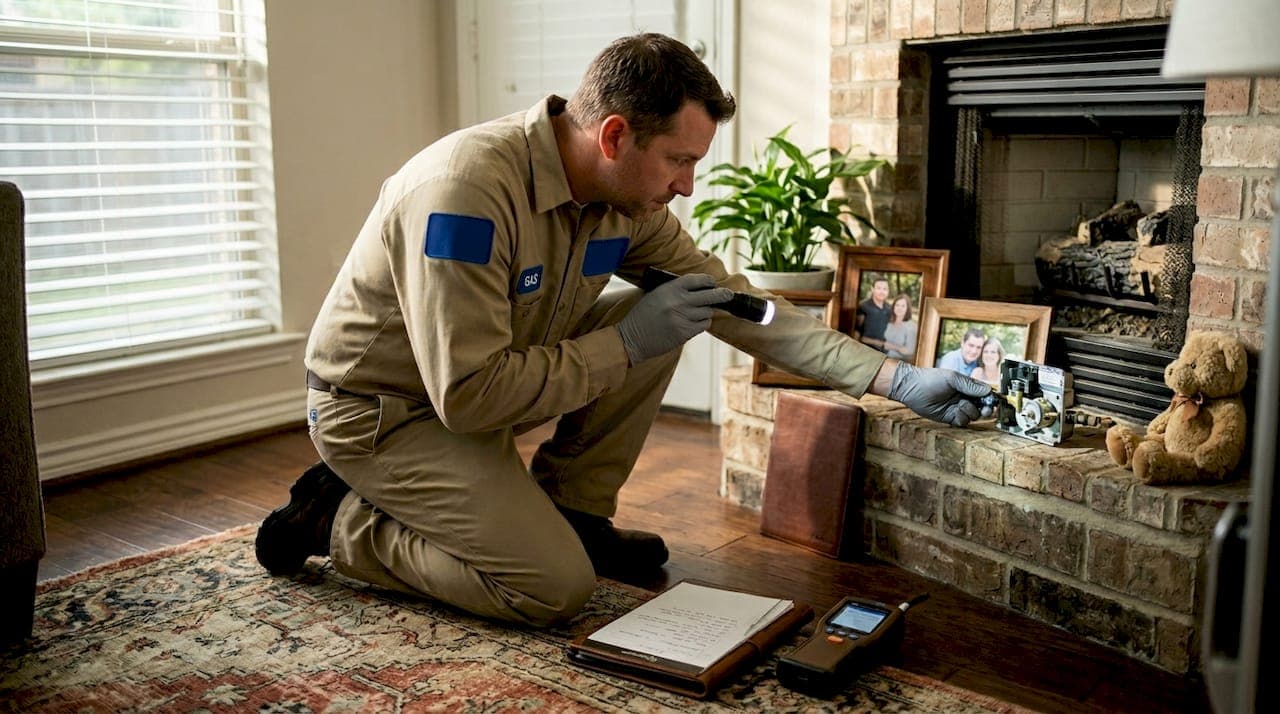
Your gas fireplace can run quietly for months without showing any visible warning signs, even while a cracked vent or failing oxygen depletion sensor builds toward a dangerous situation. For Dallas-Fort Worth homeowners, following a thorough gas fireplace safety inspection guide is not optional. It is the difference between a fireplace that heats your home reliably and one that silently puts your family at risk. This guide walks you through exactly what to prepare, what inspectors check, what problems they commonly find, and how to confirm your fireplace is safe after the appointment is complete.
Table of Contents
- What you need before your gas fireplace safety inspection
- Step-by-step gas fireplace inspection process explained
- Common issues found during inspections and how to address them
- How to verify your gas fireplace is safe after inspection
- Why annual gas fireplace inspections are your best winter safety insurance
- Professional gas fireplace safety inspections and services in Dallas-Fort Worth
- Frequently asked questions
Key Takeaways
| Point | Details |
|---|---|
| Annual inspections required | Gas fireplaces need professional inspections yearly to detect hidden hazards and ensure safe operation. |
| Proper preparation aids inspection | Homeowners should ensure gas and power access and clear areas before inspection appointments. |
| Inspection covers key safety components | Inspectors check burners, gas lines, venting, safety sensors, and perform pressure and leak tests. |
| Common problems include vent blockages and sensor faults | Blocked vent caps, disabled oxygen sensors, and yellow flames indicate safety concerns needing prompt repair. |
| Carbon monoxide alarms placement is critical | Install CO alarms on every home level, outside sleeping areas, and at least 15 feet from gas fireplaces for early detection. |
What you need before your gas fireplace safety inspection
Preparation matters more than most homeowners realize. A well-prepared home allows the inspector to move efficiently and catch problems that a cluttered or inaccessible fireplace might hide.
Start with the basics. Your gas supply valve must be on and accessible, and the electrical power that drives the ignition system must be active. Inspectors cannot perform a complete evaluation on a fireplace that cannot be operated. As Angi's 2025 cost data confirms, homeowners should bring no special items but ensure gas and power are accessible for efficient inspections.
Beyond access, clear any furniture, rugs, or decorative items from the area around the fireplace and from the exterior vent termination point. Inspectors need to see the full vent path, including the cap or termination on the outside wall or roof. If you have records from past inspections or repairs, gather those too. They help the inspector identify recurring issues and confirm whether previous work met code.

Dallas-Fort Worth follows the 2024 IRC with local amendments, which govern gas fireplace inspection requirements including rough-stage pressure tests and vent routing standards. Knowing this helps you ask informed questions and understand what the inspector is verifying.
Understanding the gas fireplace installation standards that apply in your area also gives you a baseline for evaluating whether your existing unit was installed correctly in the first place.
Pre-inspection homeowner checklist:
- Gas supply valve is open and confirmed on
- Ignition system has active electrical power
- Fireplace area is clear of furniture and combustibles
- Exterior vent termination is accessible and unobstructed
- Previous inspection reports and repair records are gathered
- Carbon monoxide alarms are installed and functional
- Pilot light is operational (or note if it is not)
| Checklist item | Why it matters |
|---|---|
| Gas valve accessible | Inspector must operate the unit during testing |
| Electrical power active | Required for ignition and sensor testing |
| Vent termination clear | Blocked caps are a top code violation |
| Past records available | Helps identify recurring or unresolved issues |
| CO alarms installed | Inspector will verify placement and function |
| Area cleared | Prevents obstruction of inspection access points |
Pro Tip: If your fireplace has not been used in over a year, turn it on briefly before the inspection. This helps you identify obvious problems like ignition failure or unusual odors that you should report to the inspector upfront.
With basic preparations in place, you are ready to understand what the professional inspection actually covers and how each step protects your family.
Step-by-step gas fireplace inspection process explained
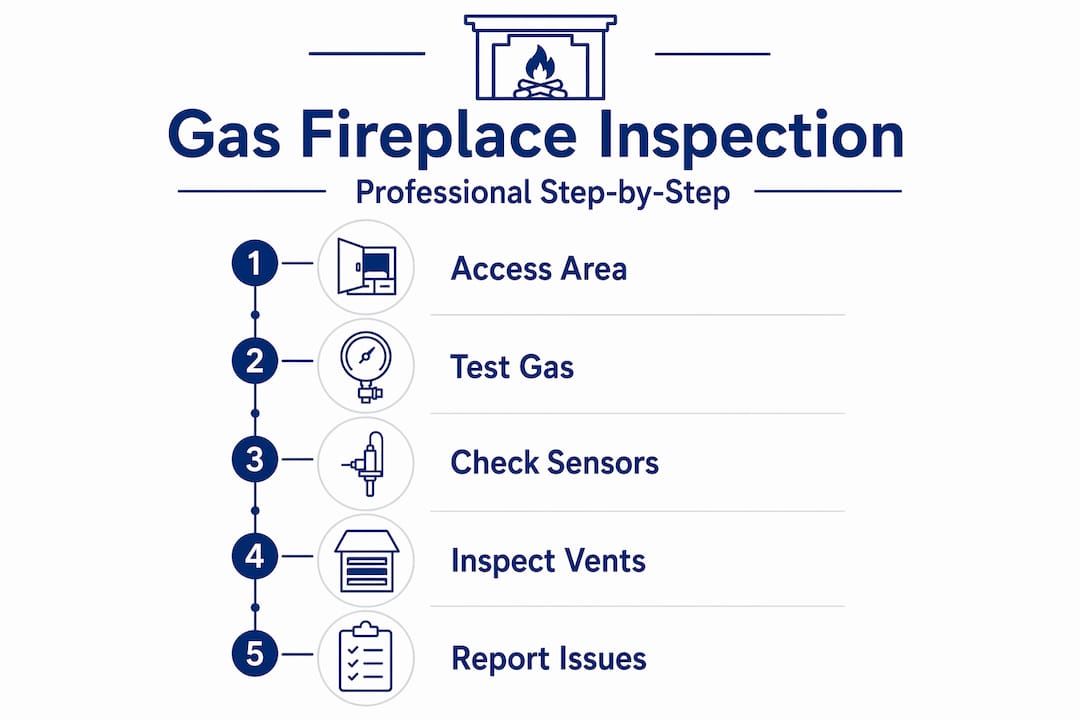
A professional gas fireplace inspection is not a quick visual scan. It is a structured process that typically takes 45 to 60 minutes and covers burner systems, ignition components, pilot lights, gas lines, safety sensors, and venting.
Here is what happens at each stage:
-
Visual and functional inspection. The inspector examines the burner assembly, pilot light, ignition system, and thermopile or thermocouple. They look for corrosion, debris buildup, and signs of heat damage. Any component that shows wear gets flagged for repair or replacement.
-
Gas pressure test and leak check. Using a manometer (a tool that measures gas pressure in the line) and a soap solution applied to connections, the inspector confirms that gas pressure is within the manufacturer's specified range and that no fittings are leaking. Inspectors perform gas piping pressure tests along with framing clearance verifications and vent terminal inspections during both rough and final stages.
-
Venting system verification. The inspector checks the entire vent path for blockages, improper connections, and correct termination clearances. Direct-vent units must terminate with specific clearances from windows, doors, and grade level. B-vent units have their own height and clearance requirements. Any deviation from code is documented.
-
Safety sensor and ODS checks. Oxygen depletion sensors (ODS) are critical for vent-free units. They shut the unit off if oxygen levels drop too low in the room. The inspector verifies these sensors respond correctly. Thermocouples and thermopiles are also tested to confirm they generate enough voltage to hold the gas valve open safely.
-
Operational run and exhaust spillage test. The fireplace runs for 15 to 45 minutes, and then the inspector tests for exhaust gas spillage at the draft hood or vent collar to confirm combustion gases are exiting properly and not spilling into the living space.
A gas fireplace can appear to function perfectly during casual daily use while still failing a spillage test. Exhaust backdrafting is invisible, odorless in many cases, and one of the most dangerous conditions a professional inspection can detect and correct.
What inspectors document during the process:
- Burner flame color and pattern (blue is correct, yellow or orange signals a problem)
- Gas pressure readings compared to manufacturer specifications
- Vent connection integrity and termination clearance measurements
- Sensor response times and voltage output
- Any evidence of prior water intrusion or heat damage
Pro Tip: Annual inspections are especially valuable before the first cold snap of the season. Scheduling your gas fireplace repair services or inspection in October rather than December means you avoid the rush and catch problems before you actually need the heat.
| Inspection stage | Tool used | What it confirms |
|---|---|---|
| Gas pressure test | Manometer | Pressure within safe operating range |
| Leak check | Soap solution | No gas escaping from connections |
| Sensor test | Multimeter | Thermocouple and ODS function correctly |
| Spillage test | Smoke pencil | Exhaust exits through vent, not into room |
| Vent clearance check | Measuring tape | Termination meets IRC 2024 clearance rules |
After knowing the inspection steps, you are better equipped to understand what problems inspectors commonly find and what corrective action looks like.
Common issues found during inspections and how to address them
Most gas fireplace problems fall into predictable categories. Understanding them helps you recognize warning signs early and take action before a minor issue becomes a serious hazard.
Top 5 issues inspectors find most often:
- Blocked vent caps. Debris, insect nests, and rust buildup are frequent culprits. A blocked cap forces exhaust back into the home. Common violations include blocked vent caps, insufficient clearances, disabled sensors, and yellow flames indicating incomplete combustion.
- Failed or bypassed safety sensors. Thermocouples wear out over time. Some homeowners bypass them to keep an old unit running, which removes a critical shutoff safeguard.
- Improper vent installation. Vents routed with too many elbows, incorrect pipe diameter, or inadequate clearance from combustibles are a code violation and a fire risk.
- Yellow or orange flames. This is not an aesthetic issue. Yellow or orange flames indicate incomplete combustion producing dangerous carbon monoxide and require immediate repair.
- Insufficient framing clearances. Gas fireplaces require specific distances from combustible framing. Units installed too close to wood framing create a slow-building fire risk.
Vent type comparison:
| Vent type | How it works | Common problems | Best for |
|---|---|---|---|
| Direct-vent | Sealed combustion, draws outside air | Blocked termination, cracked seals | Most new installations |
| B-vent | Draws room air, vents vertically | Backdrafting, inadequate height | Older homes with existing flues |
| Vent-free | No venting, burns in living space | ODS failure, moisture buildup | Supplemental heat only |
Carbon monoxide alarm placement is a critical part of your fireplace safety devices checklist. Follow EPA carbon monoxide alarm guidelines and place alarms on every living level, outside sleeping areas, and within 15 feet of your fireplace.
Pro Tip: Regular chimney cleaning combined with timely sensor replacement addresses the majority of ignition failures and CO-related issues before they require expensive repairs.
Understanding these issues helps you know exactly what to do once the inspection is complete.
How to verify your gas fireplace is safe after inspection
An inspection report is only useful if you act on it. Here is how to confirm your fireplace is genuinely safe and stays that way through the heating season.
Steps to verify safety after inspection:
- Review the written report. Confirm every flagged item has either been repaired or is scheduled for repair. Do not operate the fireplace with unresolved safety violations.
- Test your CO alarms. Place CO alarms on every living level, outside sleeping areas, and 15 feet from gas fireplaces. Test them immediately after inspection and replace units older than 5 to 7 years.
- Verify vent clearance visually. Walk outside and confirm the vent termination is clear of plants, mulch, and any objects that may have shifted since the inspection.
- Check control access. Confirm the gas shutoff valve is clearly labeled and accessible to every adult in the household. This is a key part of any family fireplace usage safety checklist.
- Confirm pilot light operation. If the pilot was relit or adjusted during inspection, verify it holds a steady flame. Turn off the pilot light during summer to save gas and prevent heat buildup in warmer months, and relight carefully in fall or call a technician if ignition fails after a few attempts.
Seasonal maintenance reminders:
- Test CO alarms monthly and replace batteries every six months
- Inspect the exterior vent cap visually each spring and fall
- Schedule your annual professional inspection before October
- Keep the area around the fireplace clear of combustibles year-round
- Note any changes in flame color or ignition behavior and report them promptly
Pro Tip: Monthly CO alarm tests take less than 30 seconds and are the single most reliable way to catch a sensor failure before it becomes a life-safety event. Add it to your calendar as a recurring reminder.
When repairs are needed after inspection, contact our team promptly. Visit our fireplace safety tips blog for guidance on seasonal maintenance between professional visits.
Why annual gas fireplace inspections are your best winter safety insurance
We have inspected hundreds of gas fireplaces across Dallas-Fort Worth, and the pattern is consistent. The homeowners who call us after something goes wrong almost always say the same thing: the fireplace seemed fine. That is exactly the problem.
Gas fireplaces do not always announce their failures. A cracked vent seal does not smell. A weakening thermocouple does not spark or smoke. A partially blocked termination cap looks fine from the ground. As CSIA Certified Chimney Sweeps emphasize, hidden heat and dust damage without visible symptoms can cause failures during peak winter use, which is precisely when your family is relying on the unit most.
The financial case for annual inspections is straightforward. A professional inspection costs a fraction of what emergency repairs or CO-related medical situations cost. Beyond money, there is the reality that carbon monoxide poisoning is one of the leading causes of accidental poisoning deaths in the United States, and gas fireplaces are a documented source when they malfunction.
We also see the long-term equipment benefit. Gas fireplaces that receive consistent annual attention through annual chimney and fireplace maintenance routinely outlast neglected units by years. Burners stay clean, sensors get replaced on schedule, and venting stays clear. The fireplace simply works better and longer.
The families who benefit most from inspections are those with young children. Child fireplace safety best practices and fireplace safety rules for kids all point to the same foundation: a unit that has been professionally verified is one you can use with confidence. No amount of physical barriers or supervision substitutes for knowing the appliance itself is safe.
Pro Tip: Schedule your inspection in September or early October. By November, our schedule fills quickly as homeowners realize their fireplace is not working correctly when they need it. Early scheduling means priority access and peace of mind before the first cold front hits Dallas.
Professional gas fireplace safety inspections and services in Dallas-Fort Worth
If this guide has made one thing clear, it is that gas fireplace safety is not a DIY project. The risks are real, the code requirements are specific, and the consequences of missed problems are serious.
At Chimney Professionals, our CSIA-certified technicians serve homeowners across the Dallas-Fort Worth Metroplex with thorough inspections that meet both local code and national safety standards. We check every component covered in this guide, from burner systems and gas pressure to venting clearances and sensor function. Our professional fireplace inspection services are available daily from 8 AM to 8 PM, so scheduling around your life is simple. When our inspection identifies issues, our team handles fireplace repair in Dallas and complete chimney cleaning services without sending you to a different contractor. One call covers everything. Contact us today to book your inspection and head into winter with confidence.
Frequently asked questions
How often should I have my gas fireplace professionally inspected?
You should have your gas fireplace inspected annually to ensure it operates safely and meets local safety standards. CSIA 2026 standards require annual professional inspections for gas fireplaces to catch hidden issues before they become hazardous.
What do professional inspectors look for during a gas fireplace inspection?
Inspectors check burner systems, ignition and pilot components, gas lines, safety sensors, venting systems, and perform gas pressure and leak tests. A thorough inspection typically takes 45 to 60 minutes and covers every component that affects safe operation.
Where should I place carbon monoxide alarms in my home?
Install CO alarms on every level of your home, outside sleeping areas, and at least 15 feet away from fuel-burning appliances like gas fireplaces. The EPA recommends this placement to ensure early detection before dangerous concentration levels build up.
Can I perform my own gas fireplace inspection?
Basic visual checks and pilot light troubleshooting are possible, but professional inspections are essential for safety and compliance. DIY inspections are limited and cannot replicate the pressure testing, sensor verification, and vent analysis that certified professionals perform.
What does a yellow or orange flame in my gas fireplace mean?
A yellow or orange flame usually indicates incomplete combustion, which can produce dangerous carbon monoxide levels and requires immediate professional service. Yellow flames signal elevated carbon monoxide production and should never be ignored or treated as a cosmetic issue.
Recommended
- Gas Log Installation Dallas TX | Gas Fireplace Conversion | Chimney Professionals
- Chimney & Fireplace Blog | Tips for Dallas Homeowners | Chimney Professionals
- Fireplace Repair Dallas TX | Gas & Wood Fireplace Experts | Chimney Professionals
- Chimney Cleaning Dallas TX | Level 1 & 2 Sweeps | Chimney Professionals