

Every Frisco homeowner who uses a fireplace is sitting on a potential hazard they can't see. The chimney flue cleaning process in Frisco matters more than most people realize because creosote is a sticky, flammable tar that accumulates after every wood fire and quietly raises the risk of a house fire with each season of neglect. Blocked flues also trap carbon monoxide inside the home, a danger that has no smell and no warning. This guide walks you through exactly what chimney flue cleaning involves, from preparation through final verification, so you can protect your family and get the most out of your fireplace.
Table of Contents
- Key takeaways
- What you need before starting the chimney flue cleaning process
- Step-by-step chimney flue cleaning process
- Common mistakes and how to troubleshoot them
- Post-cleaning verification and year-round maintenance
- Our take on chimney flue cleaning in Frisco
- Keep your Frisco fireplace safe with professional service
- FAQ
Key takeaways
| Point | Details |
|---|---|
| Annual cleaning prevents fires | The NFPA recommends annual inspections and cleanings to stop creosote buildup from becoming a fire hazard. |
| Prep work determines results | Having the right tools and protective gear before you start prevents incomplete cleaning and safety risks. |
| Step-by-step process matters | Skipping steps like the pre-cleaning inspection or post-cleaning smoke test leaves hidden problems unresolved. |
| Mistakes are costly | Inadequate brushing or ignoring minor cracks found during cleaning can lead to expensive structural repairs later. |
| Year-round maintenance pays off | Seasonal checks and professional inspections extend the life of your chimney and keep your fireplace running safely. |
What you need before starting the chimney flue cleaning process
Getting ready properly is more than half the battle. Many homeowners underestimate how much preparation goes into a thorough flue cleaning, and that gap is where problems start.
Tools and equipment you will need
Here is what a properly equipped cleaning session requires:
- Chimney brushes: Round or square wire brushes sized to match your flue dimensions exactly. A brush that is too small skips sections of the flue wall and leaves creosote behind.
- Flexible rods: Fiberglass extension rods attach to the brush and allow you to push from the firebox up or from the rooftop down.
- Industrial vacuum: A standard shop vac is not enough. You need a HEPA-filtered vacuum designed for soot to avoid coating your living room in fine black dust.
- Drop cloths and plastic sheeting: Seal the firebox opening to contain debris before you start brushing.
- Inspection camera: A flexible flue camera lets you see cracks, blockages, or flue deterioration that brushing alone cannot reveal.
- Flashlight or headlamp: You need both hands free when working inside the firebox or on the roof.
Personal protective equipment
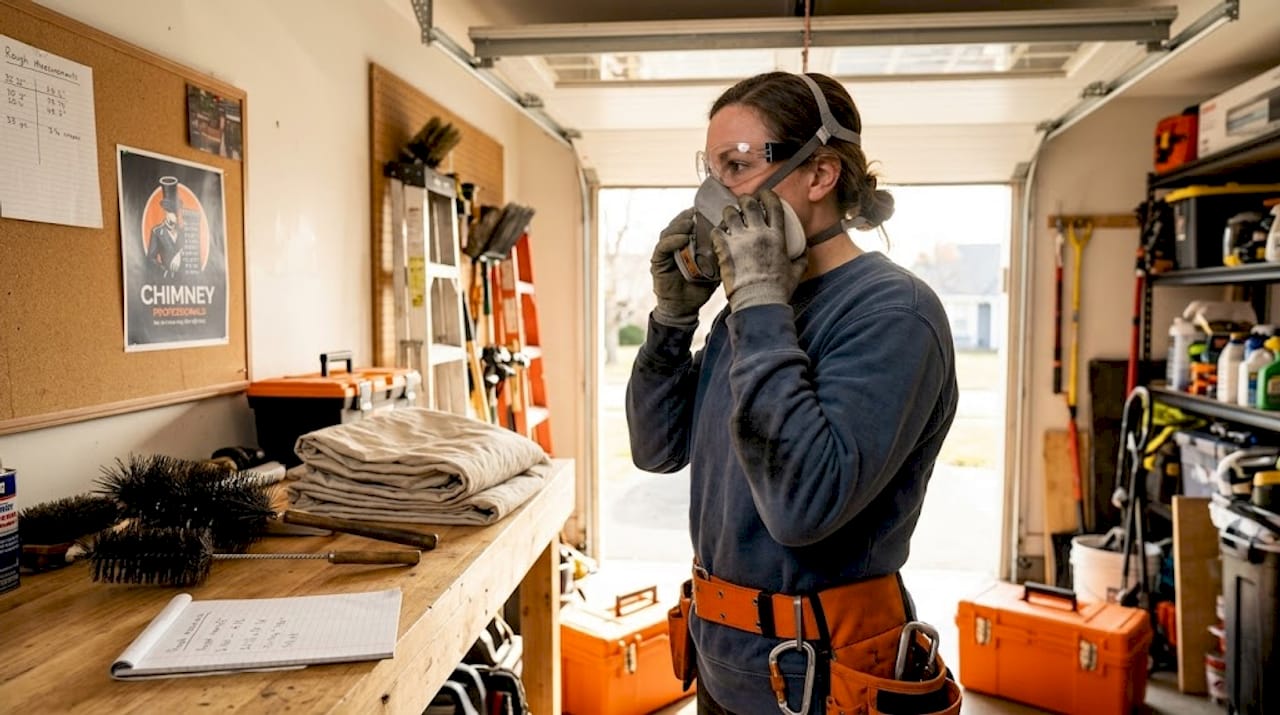
Wear safety goggles, a P100 respirator mask, and work gloves throughout the entire process. Soot and creosote particles are harmful when inhaled or absorbed through the skin. If you are working on the roof, a harness and roof anchor are non-negotiable.
Pro Tip: Before purchasing brushes, measure your flue liner diameter at the clean-out door. Frisco homes built in the 1990s and early 2000s often have 8-inch or 10-inch round clay tile flues, but newer construction sometimes uses oval or rectangular liners. The wrong brush size is the single most common reason DIY cleanings fail.
When to call a professional instead
Some situations call for chimney sweep services in Frisco rather than a DIY attempt. If you notice heavy third-degree creosote deposits (a shiny, hardened glaze on the flue walls), visible cracks in the flue liner, or signs of animal nesting, stop and call a certified technician. These conditions require chemical treatments or specialized tools that go beyond what standard brushes can handle.
Frisco's climate adds a specific wrinkle. The area experiences hot, humid summers followed by occasional hard freezes in winter. That freeze-thaw cycle expands cracks in brick and mortar, meaning a chimney that looked fine in October can show new structural damage by January. Scheduling your flue cleaning in the fall, before the first fire of the season, gives you the best chance of catching winter damage early.
Step-by-step chimney flue cleaning process
A standard cleaning takes about 45 minutes to one hour, depending on flue length and how much buildup is present. Here is the full sequence professionals follow and what you should replicate or watch for when supervising a cleaning crew.
-
Inspect the firebox and damper. Open the damper fully and shine your flashlight up the flue. Look for visible blockages like bird nests, debris, or heavy creosote deposits. Check that the damper plate moves freely and seals properly when closed.
-
Seal the work area. Tape heavy plastic sheeting across the firebox opening from inside the room, leaving only a small gap at the bottom for the vacuum hose. Lay drop cloths across the hearth and surrounding floor. This step alone saves you hours of cleanup.
-
Access the flue from the rooftop. The top-down method is generally more effective. Remove the chimney cap, attach the brush to your first rod, and begin working it down the flue with a firm up-and-down scrubbing motion. Attach additional rods as you go deeper.
-
Brush the full length of the flue. Work slowly and overlap each pass by at least 12 inches. The goal is contact with every section of the liner. If you feel resistance, do not force the brush. Resistance often signals a heavy deposit or a damaged liner section that needs closer attention.
-
Vacuum from the firebox. While a second person (or after descending from the roof yourself) operate the HEPA vacuum inside the firebox to collect falling soot and debris as you brush. This keeps dust from spreading into the room.
-
Clear the smoke shelf and smoke chamber. These areas above the damper collect surprising amounts of debris and are frequently skipped in rushed cleanings. Use a hand brush and vacuum to clear them thoroughly.
-
Run a final camera inspection. Insert the flue camera from the firebox upward. Review footage for cracks, spalling tile, missing mortar joints, or any remaining deposits. Document what you see.
-
Remove plastic sheeting and dispose of debris. Seal soot and debris in heavy bags before carrying them through the house.
| Cleaning method | Best used for | Tool required |
|---|---|---|
| Top-down brushing | Standard creosote removal | Wire brush with extension rods |
| Bottom-up brushing | Homes with low roof access | Brush set from firebox upward |
| Chemical treatment | Hardened third-degree creosote | Creosote removal spray plus brush |
| Camera inspection | Post-cleaning verification | Flexible flue inspection camera |
| Vacuum extraction | Soot and loose debris removal | HEPA-filtered industrial vacuum |
Pro Tip: Missing or damaged chimney caps are one of the top causes of debris blockages in Frisco homes. Always inspect and reinstall the cap after cleaning. A stainless steel cap with a wildlife guard pays for itself in one prevented blockage.
Common mistakes and how to troubleshoot them
Even experienced homeowners make errors during chimney cleaning. Knowing what to watch for prevents those mistakes from turning into safety hazards.
The most common problem is inadequate brushing coverage. If you rush through the process or use the wrong brush size, sections of the flue retain creosote. The sign is subtle: the flue looks cleaner but still carries a strong, acrid odor when the fireplace runs. That smell is unburned volatile compounds in residual creosote. Thorough cleaning reduces smoke issues and carbon monoxide hazards, but a partial job can give you a false sense of security.
Another common error is ignoring the smoke shelf. This horizontal ledge directly above the damper catches rain, leaves, and soot year-round. Skipping it is like mopping a kitchen floor while leaving the counters dirty. Smoke backflow into the room after cleaning is one of the clearest signs the shelf was not cleared.
The third mistake is skipping protective gear. Soot exposure during a single cleaning session is not life-threatening, but repeated unprotected exposure adds up. Creosote contains polycyclic aromatic hydrocarbons. That is reason enough to always wear a proper respirator.
If your fireplace still smokes back into the room after a thorough cleaning, the problem may not be the flue at all. Check for negative air pressure in the home, a blocked fresh air intake, or a flue that is undersized for the firebox opening. These are structural issues a certified inspector needs to evaluate.
When cleaning reveals minor cracks or spalling tile, many homeowners put off repairs. That decision is expensive. Water intrusion followed by freezing widens small cracks rapidly during North Texas winters. A minor repair found in November becomes a major flue relining project by spring. Address what you find promptly.
Knowing the signs your chimney needs repair after cleaning helps you decide whether to schedule a follow-up service call before the fireplace season is in full swing.
Post-cleaning verification and year-round maintenance
Cleaning the flue is not the finish line. Verifying that the cleaning worked and building a maintenance routine around it is what actually keeps your fireplace safe season after season.
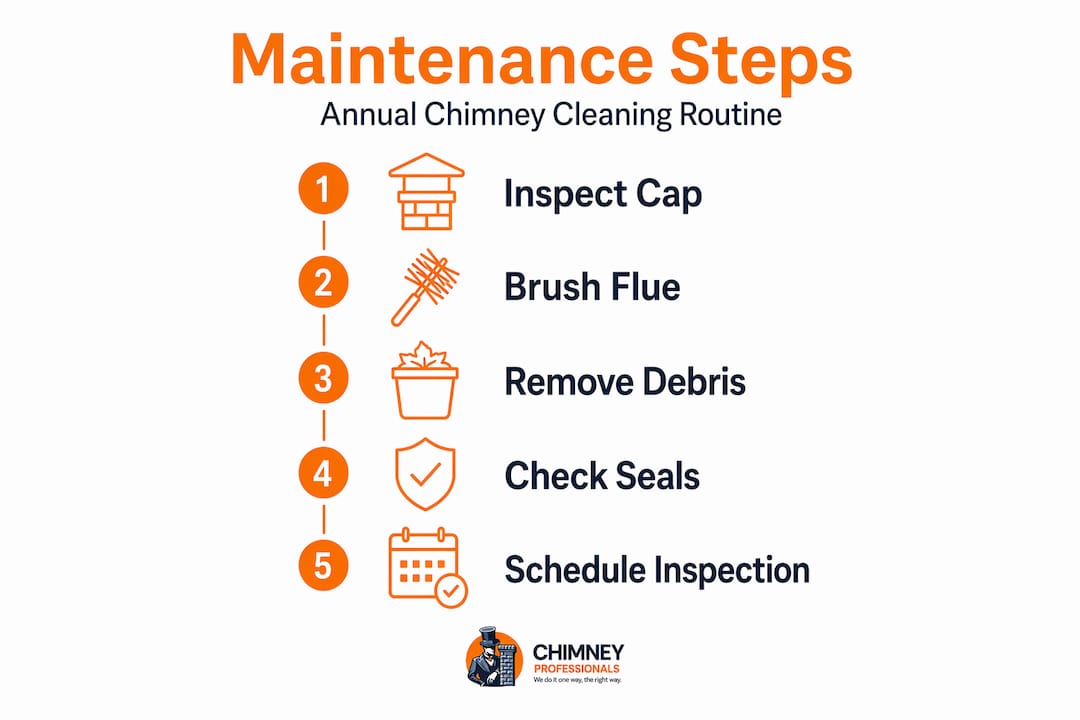
Performing the smoke test
After cleaning and reassembling everything, light a small amount of newspaper in the firebox and watch closely. Smoke should rise steadily up the flue with no backflow into the room. If smoke lingers or drifts back, the flue is not fully clear or there is a draft problem to investigate before running a full fire.
Year-round maintenance checklist
- Before the first fall fire: Visually inspect the firebox, damper, and smoke shelf. Run the smoke test described above.
- Monthly during the burn season: Check the firebox for soot buildup visible below the damper. Heavy accumulation forming quickly signals wet wood or inefficient burning.
- After major storms: Inspect the chimney cap and flashing for damage. HVAC and chimney systems both take a hit during severe Texas weather, and checking both after a storm is good practice.
- Spring: Schedule a professional inspection to catch any damage from the winter season before moisture from summer humidity worsens it.
Pro Tip: Burning only seasoned hardwood with a moisture content below 20 percent is one of the most effective flue cleaning tips available. Wet or green wood produces significantly more creosote per fire than properly dried wood. A wood moisture meter costs about $20 and can cut your cleaning frequency in half.
Even after a thorough DIY cleaning, an annual professional inspection remains valuable. Professionals carry cameras, combustion analyzers, and the training to spot issues that are invisible to an untrained eye. The typical cost of professional cleaning runs between $150 and $300 depending on flue size and condition. That cost is a fraction of what a chimney fire or carbon monoxide incident can produce in damage and risk.
Our take on chimney flue cleaning in Frisco
I have worked on chimneys across the Dallas-Fort Worth area for years, and Frisco homes present a specific pattern I do not see talked about enough. Homeowners here tend to use their fireplaces intensively during the short but cold winter months, then completely ignore the chimney for the other nine months of the year. That compressed burn season means creosote accumulates fast, often building up to a concerning level within a single winter.
What I have learned is that the homeowners who experience the most problems are not the ones who skip cleaning entirely. They are the ones who clean once and assume that covers them indefinitely. A chimney that gets heavy use from November through February in Frisco can need cleaning again by the following fall, sometimes sooner if the wood supply is not well seasoned.
The other thing I would push back on is the idea that DIY cleaning is "good enough" for most situations. It can be, if done thoroughly and followed by a professional camera inspection every year or two. But what I have seen repeatedly is that homeowners miss the smoke shelf, skip the camera, and walk away thinking the job is done. The flue looks clean from below. The problems are six feet higher where no one looked.
Trusting a certified technician for at least an annual inspection is not a luxury. It is the one step that catches what brushes cannot.
— chimneyprofessionalservices
Keep your Frisco fireplace safe with professional service
If you have worked through this guide and realized the job is more involved than expected, or if your cleaning revealed cracks, heavy deposits, or water stains, Chimney Professional Services is ready to help. Our certified inspectors serve Frisco and the entire DFW Metroplex, and we are available daily from 8 AM to 8 PM.
We offer Level 1 and Level 2 chimney sweeps with camera inspection included, so nothing stays hidden after we leave. For homes where cleaning has uncovered structural problems, our team handles chimney masonry repair from tuckpointing to full rebuilds, and our leak repair services address water intrusion before it turns into a major structural problem. Frisco homeowners can also explore our full range of fireplace and chimney services online or call to book directly.
FAQ
How often should Frisco homeowners clean their chimney flue?
The NFPA recommends annual chimney cleaning and inspection for all wood-burning fireplaces. Frisco homeowners who burn heavily during the short winter season may need cleaning at the start and end of the burn season.
What is creosote and why does it matter?
Creosote is a flammable tar that deposits on flue walls during wood combustion. It is the leading cause of chimney fires and requires annual removal to keep your fireplace safe.
Can I clean my chimney flue myself?
Yes, with the right tools and protective gear, a homeowner can perform a basic flue cleaning. However, a professional camera inspection is still recommended annually to catch liner cracks and heavy deposits that brushes miss.
How long does a chimney flue cleaning take?
A standard professional cleaning takes approximately 45 minutes to one hour, depending on flue length, condition, and the level of creosote buildup present.
What does chimney cleaning cost in 2026?
Professional chimney cleaning typically costs between $150 and $300 for most homes, with price variation based on flue size, condition, and whether additional services like camera inspection are included.