

Most homeowners assume a chimney only needs attention when something goes visibly wrong. That assumption is one of the costliest mistakes you can make as a property owner. Understanding how chimney repair extends home life means recognizing that your chimney is a structural, safety, and energy system all in one. When it deteriorates, the effects ripple through your walls, attic, heating costs, and indoor air quality. This article covers the real consequences of chimney neglect, what inspections actually reveal, the financial upside of timely repairs, and the practical maintenance steps that protect your home for decades.
Table of Contents
- Key takeaways
- How chimney issues impact your home's structure and longevity
- Inspections and repair timing: what you need to know
- Energy efficiency and the financial case for chimney repair
- Best practices to maximize chimney lifespan
- Chimney myths that put your home at risk
- My take on chimney repair and home longevity
- Protect your home with Chimney Professional Services
- FAQ
Key takeaways
| Point | Details |
|---|---|
| Chimney repair protects structure | Cracks, mortar failure, and moisture intrusion can damage surrounding masonry and framing if left unaddressed. |
| Inspections uncover hidden risks | Level 2 and Level 3 inspections reveal liner damage and hazards invisible to standard visual checks. |
| Repairs boost energy efficiency | Restoring proper airflow and sealing damage reduces heating costs and improves year-round comfort. |
| Repair offers strong financial ROI | Chimney and fireplace updates can increase home resale value by up to 12% with ROI ranging from 50% to 91%. |
| Routine maintenance prevents emergencies | Annual cleaning and seasonal checks stop small issues from becoming costly structural or safety failures. |
How chimney issues impact your home's structure and longevity
The connection between chimney condition and overall home health is more direct than most people realize. Your chimney runs from the firebox through the ceiling, attic, and roof. Every section it passes through is exposed to whatever damage the chimney sustains.
Common problems include cracked masonry, deteriorating mortar joints, and damaged flue liners. On their own, each sounds manageable. Combined, they create pathways for heat, moisture, and gases to reach wood framing and insulation. Damaged flue liners let heat, smoke, and combustible gases spread into surrounding structures, raising both house-fire risk and carbon monoxide exposure for your family.
Moisture is the other major threat. When water infiltrates through cracked mortar or deteriorating flashing, it accelerates freeze-thaw cycles inside the masonry. Each cycle expands micro-cracks further, weakening the entire structure from the inside out. Proper chimney waterproofing creates a barrier that keeps water out without trapping moisture already inside the masonry, which is a distinction that matters during Texas weather swings.

Pro Tip: If you notice white chalky staining on the outside of your chimney, called efflorescence, that is an early warning sign of water moving through masonry. Catching it at this stage is far less expensive than waiting for cracks to form.
| Chimney Component | Typical Lifespan | Repair Trigger | Replacement Trigger |
|---|---|---|---|
| Mortar joints | 25 years | Hairline cracks, gaps | Widespread crumbling |
| Flue liner (clay) | 50 years | Minor cracks | Collapsed sections |
| Flue liner (steel) | 20 years | Rust spots | Extensive corrosion |
| Chimney cap | 10 to 20 years | Dents, minor rust | Missing or fully broken |
| Flashing | 15 to 25 years | Small separations | Full rust through |
Inspections and repair timing: what you need to know
A visual check from the ground tells you very little. Real chimney assessment requires getting inside the flue, and even then, the depth of inspection matters enormously. NFPA 211 requires Level 2 inspections with video scanning when there is a fuel type change, a property sale, or a chimney fire event. Level 3 inspections go further, involving removal of components to access concealed areas where hazards hide.
Most homeowners only receive Level 1 inspections during routine service calls, which cover accessible portions and visible surfaces. That scope is appropriate for chimneys with no known issues and no changes in use. But when there is any reason to suspect hidden damage, stopping at Level 1 is a risk. Insufficient inspection scope can miss costly defects that directly affect your home's long-term condition.
Signs chimney repairs should not be delayed
- White staining or rust streaks on exterior masonry
- Crumbling or missing mortar between bricks
- Damaged, shifted, or missing chimney cap
- Water stains on the ceiling or walls near the fireplace
- Visible cracks in the firebox interior
- Smoky odors when the fireplace is not in use
- A past chimney fire, even a small one
Even a minor chimney fire creates enough heat to crack flue tiles and distort metal components, which means what looks like a routine issue after the fact can be a serious concealed hazard.
Pro Tip: Schedule your chimney inspection in late summer or early fall, before heating season begins. That window gives you time to complete any needed repairs before cold weather arrives, without rushing into emergency service calls.
Energy efficiency and the financial case for chimney repair
Chimney damage costs you money in ways that do not show up on a repair invoice. When mortar joints deteriorate and creosote builds up, your fireplace loses draw efficiency. Damaged mortar and creosote buildup reduce insulation performance and force your heating system to work harder, which raises your utility bills through the colder months.
Sealing gaps, repairing the liner, and clearing blockages restore the airflow that your fireplace was designed to maintain. That directly translates into more heat reaching your living space and less wasted fuel.
The resale value side of chimney repair is equally compelling. Chimney and fireplace updates can yield an ROI ranging from 50% to 91%, and a functional fireplace adds approximately 12% to a home's selling price. For most DFW homeowners, that is a meaningful return on an investment that also protects your family's safety. Here is how to approach that investment strategically:
- Get a professional inspection first. Know exactly what you are dealing with before spending a dollar on repairs.
- Prioritize structural and safety repairs. Liner damage, moisture intrusion, and mortar failure come before cosmetic work.
- Add waterproofing after structural repairs. Sealing masonry after repairs prevents the same damage from recurring.
- Document all repairs with photos and receipts. This adds transparency for future buyers and supports your home's market value.
- Pair chimney work with fireplace updates when selling. Combined improvements maximize the ROI impact at the time of listing.
| Repair Type | Average Cost | Estimated ROI | Primary Value Driver |
|---|---|---|---|
| Mortar tuckpointing | $400 to $1,000 | High | Structural longevity |
| Flue liner replacement | $2,500 to $5,000 | Medium to high | Safety and efficiency |
| Full chimney replacement | ~$9,300 | 50% to 91% | Resale and safety |
| Waterproofing | $150 to $400 | High | Damage prevention |
| Chimney cap installation | $150 to $600 | High | Moisture and pest protection |
Best practices to maximize chimney lifespan
Keeping your chimney in good condition is not complicated, but it does require consistency. The most impactful maintenance tasks fall into a few clear categories.
Tuckpointing mortar joints is one of the most cost-effective repairs available. Replacing deteriorated mortar before it crumbles completely preserves the structural bond between bricks and prevents water infiltration. Skilled masonry repair work at this stage costs a fraction of what full chimney rebuilds run when damage is allowed to spread.
Flue liner maintenance and repair protects everything inside your home. A properly functioning liner contains combustion byproducts and channels them safely out of the structure. A properly repaired chimney prevents smoke backup, improves indoor air quality, and significantly reduces carbon monoxide risk.
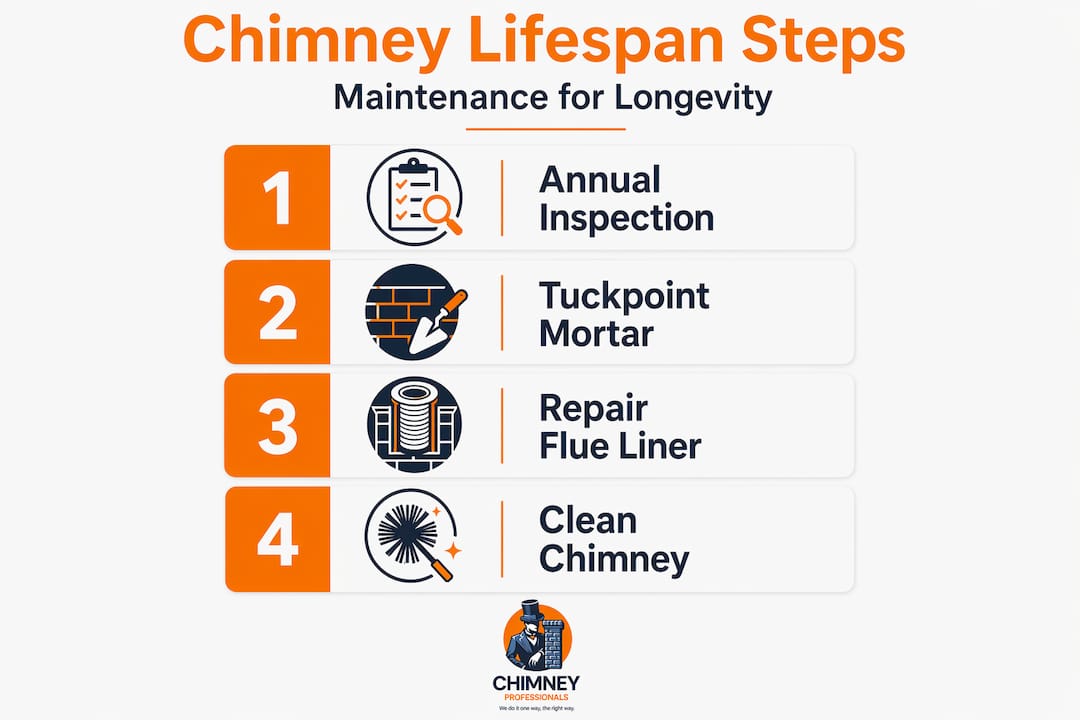
Regular chimney cleaning removes creosote, soot, and debris that accumulate with every fire. Removing these materials reduces ignition sources and prevents buildup that can restrict airflow or cause a flue fire over time.
Pro Tip: Install a quality chimney cap if you do not already have one. It is the single lowest-cost item that prevents the widest range of problems, including rain intrusion, animal nesting, and debris blockages.
Professional vs. DIY chimney repair: what to weigh
- Cleaning: DIY brushing is possible but misses creosote in hard-to-reach areas; professional sweeps use commercial-grade equipment and inspect simultaneously.
- Tuckpointing: Appears straightforward but requires the correct mortar type and ratio. Wrong mortar speeds up deterioration instead of stopping it.
- Liner repair: Should never be a DIY project. Errors create hidden fire hazards.
- Waterproofing: Can be DIY for minor surface applications but professional-grade products like Thermocrete penetrate deeper and last longer.
- Cap installation: Manageable for confident DIYers but roof access poses safety risks. Professional installation takes less than an hour.
Chimney myths that put your home at risk
One of the most dangerous assumptions homeowners carry is that a chimney with no obvious symptoms is a safe chimney. This belief is directly responsible for some of the most serious house fires and carbon monoxide incidents we see.
Consider this: your chimney's walls may be only 4 inches from wood framing that reaches temperatures dangerous enough to ignite when exposed to gases at 400°F. A small gap in mortar, an incorrectly installed repair, or a missing section of liner is all it takes to create that exposure. The framing does not have to touch open flame to catch fire.
"Missing or improper mortar near flue liners can allow hot gases and embers to directly contact combustible wood framing. Walls just 4 inches from a flue can reach ignition conditions without any visible warning signs inside the home." — Fire safety analysis, The Seattle Times
Another common misconception is that an older chimney that has never caused a problem is structurally sound. Chimneys built before modern safety codes may lack liners entirely, or may have liners that were never compliant. A chimney operating without issues for 30 years can have a cracked liner, deteriorating mortar, and compromised flashing simultaneously. None of those conditions announce themselves with smoke or odor until the damage is severe.
The importance of chimney upkeep extends to knowing that problems are nearly always present before they are visible. Proactive inspection and repair is what separates homeowners who catch issues at $500 repairs from those who face $15,000 structural remediation.
My take on chimney repair and home longevity
I have worked with countless homeowners across the Dallas-Fort Worth area who waited too long on chimney repairs, not out of negligence, but because they genuinely did not know the risks. What I have seen consistently is that the most expensive damage is never the result of one catastrophic event. It is the slow accumulation of moisture, mortar loss, and ignored liner wear that turns a $700 repair into a $6,000 project.
What I have learned over years in this industry is that chimney repair is one of the few home investments that pays you back on multiple fronts simultaneously. It protects your family from carbon monoxide and fire. It lowers your heating costs. And when you go to sell, a documented, well-maintained chimney builds buyer confidence and supports your asking price in a way that countertops and paint simply cannot.
My honest advice for any homeowner balancing a tight budget against a chimney repair estimate: start with the inspection. Know what you are actually dealing with. Most of the time, the structural repairs that matter most, mortar tuckpointing and liner assessment, are far more affordable than the worst-case scenario your mind has already calculated. Delay is the real cost driver, not the repair itself.
— chimneyprofessionalservices
Protect your home with Chimney Professional Services
At Chimney Professional Services, we provide the expert chimney care DFW homeowners rely on to protect their properties and their families. Our certified inspectors perform thorough Level 1 and Level 2 assessments to identify exactly what your chimney needs before we recommend any repair.
Whether your home needs masonry tuckpointing and rebuilds, emergency leak repair, professional waterproofing service, or a thorough chimney cleaning, our team delivers high-quality workmanship that holds up through Texas weather and beyond. We are open daily from 8 AM to 8 PM and work around your schedule. Do not wait until a small crack becomes a structural repair. Contact Chimney Professional Services today and schedule your inspection before the next heating season arrives.
FAQ
How does chimney repair extend the life of a home?
Chimney repair prevents moisture infiltration, structural deterioration, and fire hazards that can damage surrounding framing, masonry, and insulation. Addressing issues early keeps those systems intact and extends the overall lifespan of the home.
What chimney repairs have the best ROI for homeowners?
Mortar tuckpointing, waterproofing, and liner repair offer the highest returns because they prevent compounding damage. Combined chimney and fireplace updates can yield 50% to 91% ROI and add roughly 12% to a home's selling price.
How often should a chimney be inspected?
Annual inspections are the standard recommendation for regularly used chimneys. After a chimney fire, fuel type change, or home purchase, a Level 2 inspection with video scanning is required under NFPA 211 guidelines.
Can chimney damage affect indoor air quality?
Yes. A damaged or blocked chimney allows smoke, soot, and carbon monoxide to enter the living space instead of exiting through the flue. Proper repairs restore safe venting and directly improve indoor air quality.
Is chimney maintenance worth the cost for Dallas homeowners?
Absolutely. Beyond protecting your family from fire and carbon monoxide risks, routine chimney cleaning and timely repairs prevent the kind of cumulative damage that turns small maintenance costs into major structural expenses.