

Every chimney used for wood burning should be inspected at least once a year and cleaned whenever creosote or soot deposits reach 1/8 inch thick inside the flue. That standard comes directly from NFPA 211, the national code governing chimneys, fireplaces, and vents. How often chimney cleaned beyond that annual inspection depends on how frequently you burn, what fuel you use, and how well your fire burns. Understanding these variables helps you schedule maintenance before a problem develops, not after smoke backs up into your living room.
How often should a chimney be cleaned?
Chimney cleaning frequency is not a fixed calendar event. It is a condition-based decision guided by two authoritative bodies: the National Fire Protection Association (NFPA) and the Chimney Safety Institute of America (CSIA). Both agree that annual inspection is mandatory, but cleaning is only required when specific deposit thresholds are met.
The core rule from NFPA 211 is straightforward. Clean the flue when buildup reaches 1/8 inch or when glazed deposits appear. Glazed creosote is the most dangerous form because it resists standard brushing and burns at extremely high temperatures. Waiting until you can see heavy black residue on the firebox walls is waiting too long.
Usage levels create three practical categories for most homeowners:
- Light users (10 to 20 fires per season): Sweeping every 2 to 3 years is typically sufficient, but annual inspection still applies without exception.
- Moderate users (3 to 4 fires per week during heating season): Annual sweeping aligns with the inspection schedule and is the safest default.
- Heavy users (daily burning): Mid-season cleaning is often necessary, meaning two or more sweepings per year depending on fuel quality and burn habits.
Gas fireplace owners face a different standard. Gas systems require annual inspection but cleaning only every 3 to 5 years or when a deposit is actually found. Gas burns cleaner than wood, so creosote is rarely the concern. Blockages from debris or animal nesting are the more common issue.
Pro Tip: If you are unsure of your usage category, count your fires from last season. Twenty or fewer puts you in the light-use range. More than 50 fires means you should plan for at least one mid-season check.
What factors determine how frequently you clean a chimney?
Several variables directly control how fast deposits accumulate inside your flue. Fuel type is the single biggest driver. Burning green or unseasoned wood produces 2 to 3 times more creosote than properly dried hardwood. That difference alone can push a light user into the annual cleaning category.
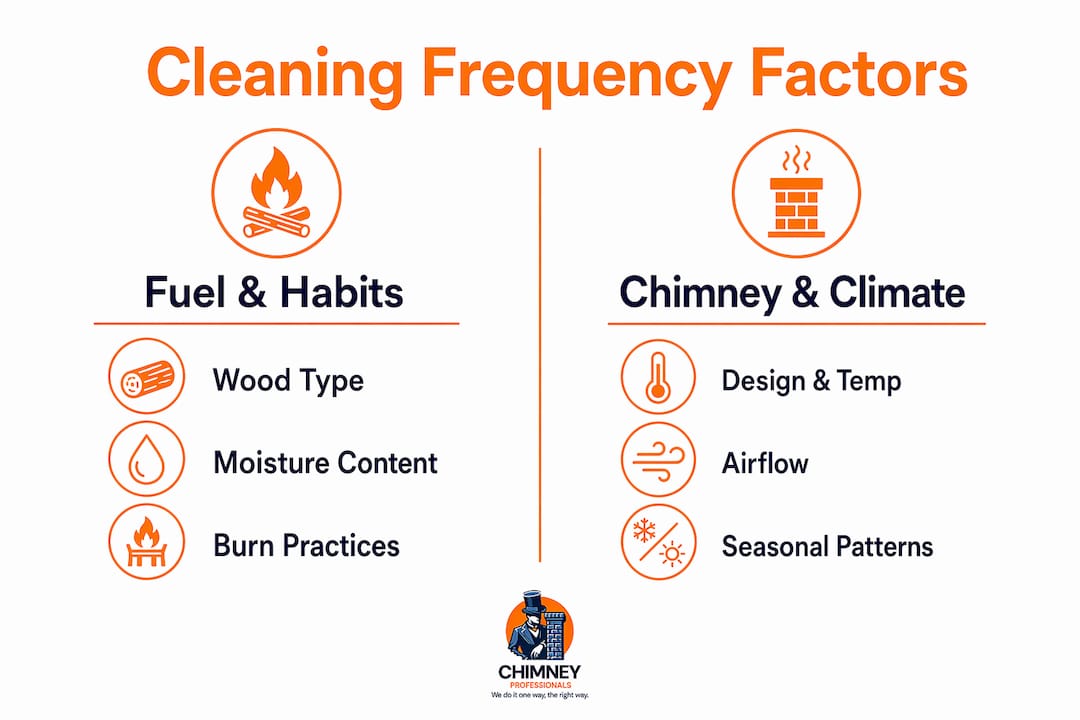
Fuel type and wood moisture content
Seasoned hardwoods like oak, hickory, and ash burn hotter and produce far less smoke residue than softwoods or green wood. Wood is considered seasoned when its moisture content falls below 20 percent, which typically requires six months to a year of proper storage. Burning wet wood creates dense, cool smoke that condenses quickly on the flue walls, depositing thick layers of creosote with every fire.
Burn habits and airflow
The CSIA identifies restricted air supply as a primary accelerant of creosote formation. Smoldering, low-oxygen fires produce far more unburned particles than hot, well-ventilated fires. Homeowners who habitually close the damper too early or load the firebox too tightly are compressing their cleaning schedule without realizing it.
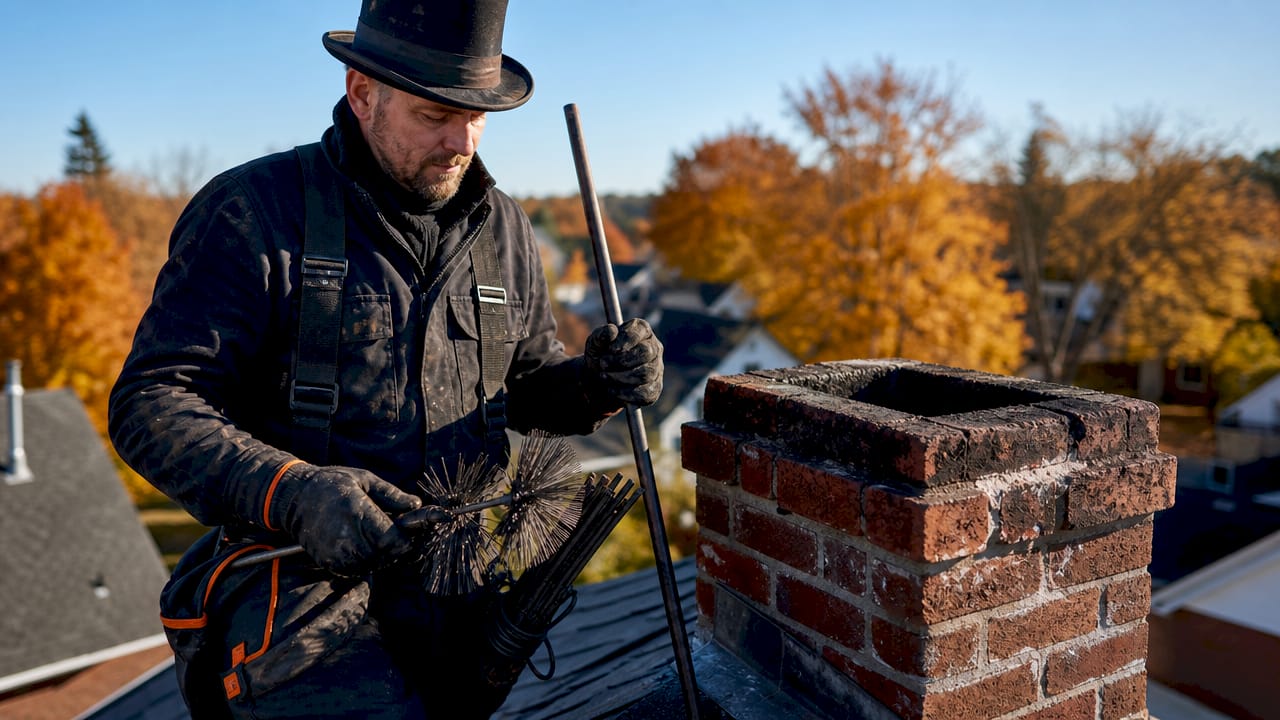
Chimney design and temperature
Taller chimneys and those running along exterior walls lose heat faster, creating cooler flue surfaces where smoke condenses more readily. A chimney that stays warm throughout its length deposits less creosote than one with cold zones. Insulated flue liners and properly sized flues reduce this effect significantly.
Climate and seasonal patterns
In the Dallas-Fort Worth area, heating seasons are shorter than in northern states, which means many homeowners fall into the light-use category. That can create a false sense of security. Even a short season with poor-quality wood or restricted burns can produce enough buildup to warrant cleaning before the next season begins.
What do NFPA 211 and CSIA say about chimney inspection schedules?
Many homeowners treat annual inspection and annual sweeping as the same service. They are not. This common misconception leads to two opposite problems: unnecessary cleaning that wastes money, or skipped inspections that miss structural hazards entirely.
Here is how the standards actually work:
- Annual inspection is mandatory under NFPA 211 for all chimneys in use, regardless of how rarely they are fired.
- Cleaning is condition-based, triggered by the 1/8-inch deposit threshold or the presence of glazed creosote, not by the calendar.
- Level 1 inspections cover all readily accessible areas of the chimney, checking for soundness, obstructions, and deposit levels. This is the standard for routine annual checks.
- Level 2 inspections are required after any chimney fire, change in fuel type, or property sale. They involve video scanning of the flue interior and are more thorough than a Level 1 review.
"Creosote manifests in different forms, including flaky, tar-like, and glazed deposits, each requiring different cleaning techniques. A professional inspection determines which type is present and what removal method is appropriate." — CSIA guidance on creosote chemistry.
Skipping the annual inspection because you burned infrequently is a mistake. Missed inspections allow cracked liners, animal nests, and hidden blockages to go undetected. These hazards cause house fires and carbon monoxide intrusion regardless of how little creosote is present. The inspection is the safety net. The sweeping is the maintenance.
What are the signs your chimney needs cleaning now?
Some warning signs indicate your chimney needs attention before the next scheduled inspection. Recognizing these early protects your home and your family.
- Smoke entering the room during a fire signals a blocked or restricted flue. Debris, nesting material, or heavy creosote buildup are the most common causes.
- A strong, acrid odor coming from the fireplace when it is not in use points to creosote deposits reacting with humidity. This smell intensifies in summer months.
- Visible black residue on the firebox walls or damper plate indicates active creosote accumulation that warrants inspection.
- Slow fire ignition or poor burn quality suggests restricted airflow, often caused by partial blockage or excessive soot on the flue walls.
- Animal sounds or debris falling into the firebox means a nest or obstruction is present. This requires immediate professional attention before any fire is lit.
- A recent chimney fire, even a small one, requires a Level 2 inspection before the fireplace is used again.
| Warning Sign | Likely Cause | Recommended Action |
|---|---|---|
| Smoke backing into room | Blockage or heavy buildup | Schedule inspection immediately |
| Persistent odor when not in use | Creosote reacting with moisture | Cleaning and possible liner check |
| Visible black deposits on damper | Active creosote accumulation | Condition-based sweeping needed |
| Slow or weak fire | Restricted airflow or partial blockage | Inspection to identify obstruction |
| Animal sounds or debris | Nest or foreign material in flue | Professional removal before use |
If you notice any of these signs of chimney problems, do not wait for the scheduled inspection date. Use the fireplace again only after a professional has cleared and assessed the flue.
Practical chimney maintenance tips to reduce cleaning frequency
Good habits between professional visits extend the time between cleanings and reduce the risk of rapid creosote buildup. These are not complicated changes. They are adjustments to how you burn and how you schedule service.
Pro Tip: Schedule your annual inspection in late summer or early fall, before you light the first fire of the season. Timing inspections before heating season means any needed repairs are completed before you need the fireplace, not during a cold snap when contractors are fully booked.
Follow these practices to keep your chimney in better condition year-round:
- Burn only dry, seasoned hardwood. Oak, hickory, and ash are the best choices for low-creosote burning. Avoid pine, cedar, and any wood that has been stored less than six months.
- Build hot fires with adequate airflow. Open the damper fully before lighting and keep it open until the fire is completely out. Hot fires produce less smoke and deposit far less residue.
- Avoid overnight smoldering fires. Restricted, low-oxygen burns are the fastest way to accelerate creosote buildup. If you want a long-lasting fire, use larger, well-seasoned logs rather than restricting the air supply.
- Work with a CSIA-certified chimney sweep. Professional sweeping includes an inspection component that a DIY cleaning cannot replicate. Certified sweeps also reduce insurance liability and identify issues that are invisible to untrained eyes.
- Keep a simple log. Record the date of each fire, the wood type, and any observations like smoke spillage or unusual odors. This record helps your sweep assess buildup patterns and recommend the right cleaning interval for your specific usage.
- Consider mid-season cleaning if you burn daily. Heavy users who burn every day during a Texas cold stretch should treat a mid-season check as standard practice, not an optional extra.
Key takeaways
Annual inspection is non-negotiable for every chimney in use, and cleaning is required when creosote or soot deposits reach 1/8 inch or when glazed deposits are present.
| Point | Details |
|---|---|
| Annual inspection is mandatory | NFPA 211 requires yearly inspection for all chimneys regardless of use frequency. |
| Cleaning is condition-based | Sweep when deposits reach 1/8 inch or glazed creosote appears, not on a fixed calendar. |
| Fuel quality drives buildup rate | Unseasoned wood produces 2 to 3 times more creosote, overriding light-use assumptions. |
| Gas chimneys need less sweeping | Gas systems require inspection annually but cleaning only every 3 to 5 years on average. |
| Warning signs demand immediate action | Smoke spillage, persistent odors, and visible deposits mean do not wait for the scheduled date. |
What we have learned from years of chimney inspections in DFW
After inspecting hundreds of chimneys across the Dallas-Fort Worth area, we have seen one pattern repeat more than any other. Homeowners who skip the annual inspection because they "barely used the fireplace" are the ones who call us with the most serious problems. A cracked liner, a bird nest, or a section of deteriorated mortar does not care how many fires you burned last winter. These issues develop regardless of use, and they only get worse between seasons.
We have also seen the opposite problem. Homeowners who sweep every single year without an actual inspection are spending money on cleaning a flue that does not need it, while missing structural issues that a sweep alone will not catch. Cleaning and inspection are two different services. Treating them as interchangeable is the most common and most costly mistake we see.
Our honest recommendation: prioritize the inspection every year without exception. Let the inspection results tell you whether cleaning is needed. If you burn frequently or use lower-quality wood, plan for annual sweeping as a default. If you are a light user burning seasoned hardwood, your sweep may only be needed every two to three years. The data from your inspection will tell you exactly where you stand.
New homeowners especially should schedule an inspection before lighting a single fire. You have no way of knowing the condition of a chimney you did not maintain yourself. That first inspection is the baseline that everything else is measured against.
— chimneyprofessionalservices
Schedule your chimney inspection with Chimney Professional Services
Chimney Professional Services serves homeowners across the Dallas-Fort Worth Metroplex with certified inspections, professional sweeping, and complete chimney leak repair to stop water damage before it compromises your structure. Every inspection is conducted by a certified chimney inspector, and every cleaning follows CSIA standards for deposit assessment and removal. Whether you need a routine Level 1 inspection before heating season, a mid-season sweep after heavy use, or urgent fireplace repair after a chimney fire, our team is available daily from 8 AM to 8 PM. Contact Chimney Professional Services today to book your appointment and head into the heating season with confidence.
FAQ
How often should a chimney be cleaned?
A chimney should be cleaned whenever creosote or soot deposits reach 1/8 inch thick inside the flue, or when glazed deposits are present. For most wood-burning households, this means annual cleaning, though light users burning seasoned hardwood may only need sweeping every two to three years.
Is annual chimney inspection required even if I rarely use the fireplace?
Yes. NFPA 211 requires at least one inspection per year for all chimneys in use, regardless of how infrequently they are fired. Inspections catch structural hazards like cracked liners and animal nests that exist independently of creosote buildup.
What is the best time for chimney cleaning and inspection?
Late summer or early fall is the best time for chimney cleaning and inspection. Scheduling before the heating season means any needed repairs are completed before you need the fireplace, and contractors are more available than during peak winter demand.
Does burning gas instead of wood change how often I need cleaning?
Gas fireplace chimneys require annual inspection but typically need cleaning only every three to five years, or when a deposit is actually found during inspection. Gas burns cleaner than wood, so creosote accumulation is rarely the primary concern.
What are the most common signs a chimney needs cleaning before the scheduled date?
Smoke entering the room during a fire, a persistent acrid odor when the fireplace is not in use, visible black deposits on the damper, and slow or weak fire performance all indicate the chimney needs attention before the next scheduled inspection.