
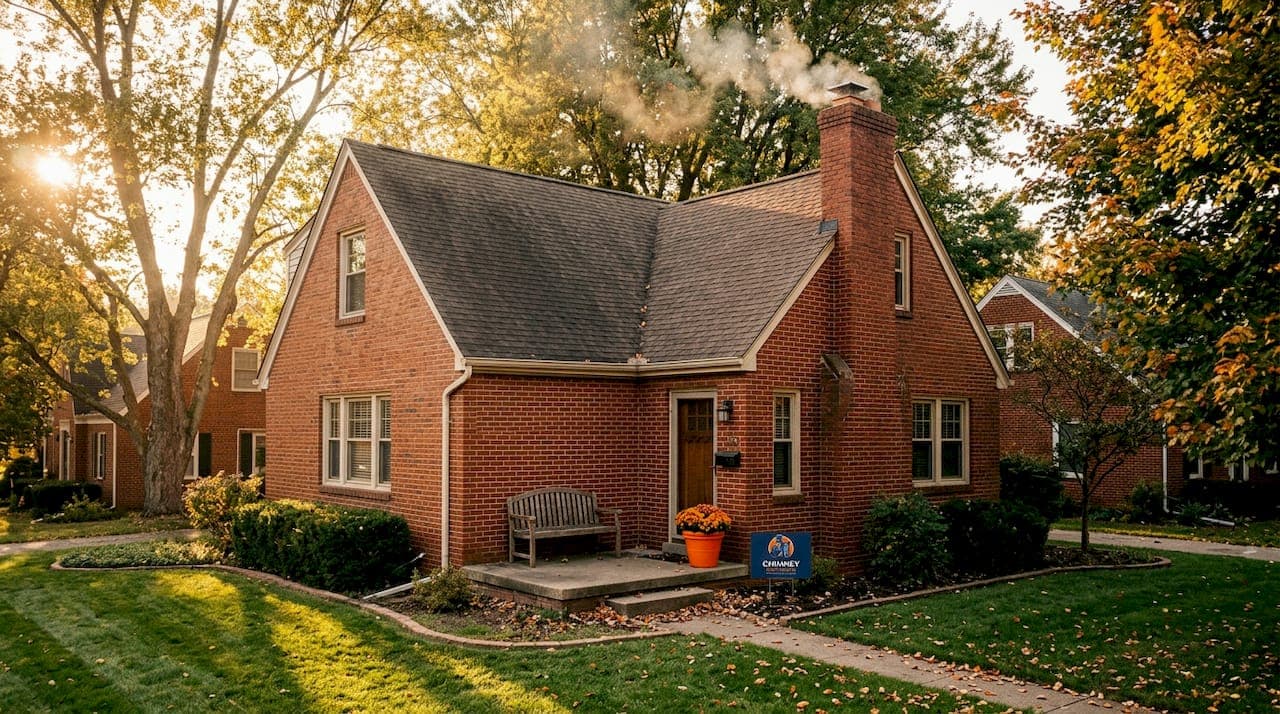
Most homeowners can describe their fireplace but have never thought twice about the chimney flue. That gap in knowledge carries real risk. Understanding what is chimney flue and how it functions is not just trivia about your home's structure. It directly determines whether your fireplace safely removes toxic combustion gases or silently channels them back into your living space. This guide covers the chimney flue definition, how it works, the types available, warning signs of failure, and what Dallas-Fort Worth homeowners specifically need to know before the next fire season.
Table of Contents
- Key takeaways
- What is a chimney flue, exactly?
- How the chimney flue works to protect your home
- Types of chimney flues and why liners matter
- Signs of flue problems and when to call a professional
- Our perspective on chimney flue safety
- Keep your flue safe with Chimney Professional Services
- FAQ
Key takeaways
| Point | Details |
|---|---|
| Flue is the inner passage | The flue is the interior channel inside your chimney, not the chimney structure itself. |
| Liner material matters | Clay tile, stainless steel, and concrete liners each serve specific appliances and heat levels. |
| Older homes carry higher risk | Pre-1960s chimneys often lack code-compliant liners and can fail without visible warning. |
| Blockages are a silent danger | A blocked flue can force carbon monoxide back into your home before you detect it. |
| Annual inspections are necessary | Professional cleaning and inspection catch liner cracks, creosote buildup, and blockages early. |
What is a chimney flue, exactly?
The short answer: the flue is the inner passage inside your chimney that directs smoke and combustion byproducts safely out of your home. The chimney is the exterior structure, typically built from brick or metal. The flue is what lives inside it.
Think of it this way. The chimney is the outer shell and the flue is the pipe or lined passage running through its core. Without a properly functioning flue, the chimney structure itself offers no ventilation protection. This distinction matters when diagnosing problems or budgeting for repairs.
Flues are built from materials rated for extreme heat and repeated thermal cycling. The most common options include:
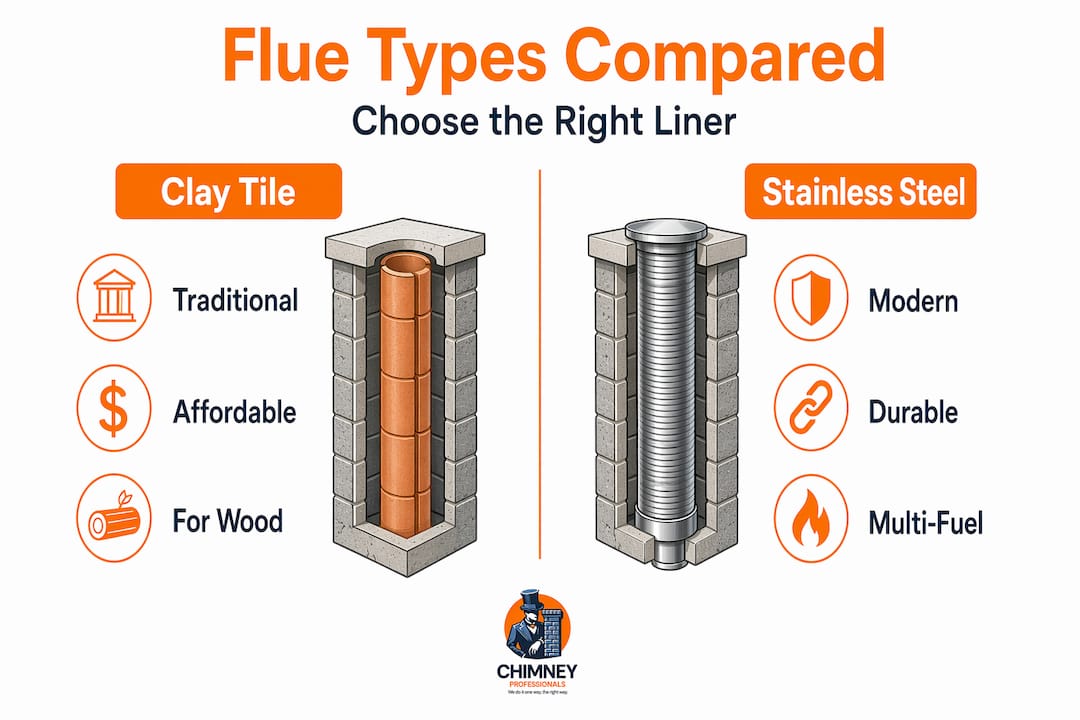
- Clay tile liners: The traditional standard, affordable and durable for wood-burning fireplaces when properly installed and maintained.
- Stainless steel liners: Flexible or rigid, commonly used for relining older chimneys or gas appliance venting. They resist corrosion and install more easily in existing structures.
- Concrete or cast-in-place liners: Poured directly into the flue space, creating a seamless passage. Brands like Thermocrete are used by certified installers for damaged or oddly shaped flues.
The flue runs vertically from your firebox or appliance connection at the bottom, up through the chimney structure, and terminates above the roofline. Its cross-sectional size is matched to the heat output and fuel type of the appliance it serves.
Pro Tip: Never assume your chimney has a flue liner just because it has been used for years. Many homes built before 1960 were constructed with raw masonry flues, and that unlined brick degrades under repeated heat exposure.
How the chimney flue works to protect your home
The chimney flue serves one core function: getting combustion byproducts out of your home before they harm you or damage your structure. It does this through a principle called the stack effect. Hot gases naturally rise via natural buoyancy and exit through the top of the flue, while cooler outside air is drawn in from below to feed the combustion process.
Here is how the process works from ignition to exhaust:
- Combustion begins in the firebox or appliance, generating heat, smoke, water vapor, carbon dioxide, and carbon monoxide.
- The damper opens to allow gases to enter the flue. Without a properly operating damper, draft is compromised and backdraft becomes a real risk.
- The flue channels gases upward using the temperature differential between hot exhaust and the cooler air outside the chimney.
- The chimney cap at the top prevents rain, debris, and animals from entering while allowing gases to exit freely.
Proper draft depends on flue size and design. A flue that is too small restricts exhaust flow and can cause smoke and carbon monoxide to spill back into the room. One that is too large can create slow draft, which allows creosote to condense and accumulate on the liner walls.
The flue also acts as a thermal barrier. A UL-listed flue liner protects chimney walls from heat damage and corrosion, extending the life of the entire masonry structure. Without that liner, the surrounding brick and mortar absorb intense, repeated heat, which eventually cracks and erodes the structure from the inside out.
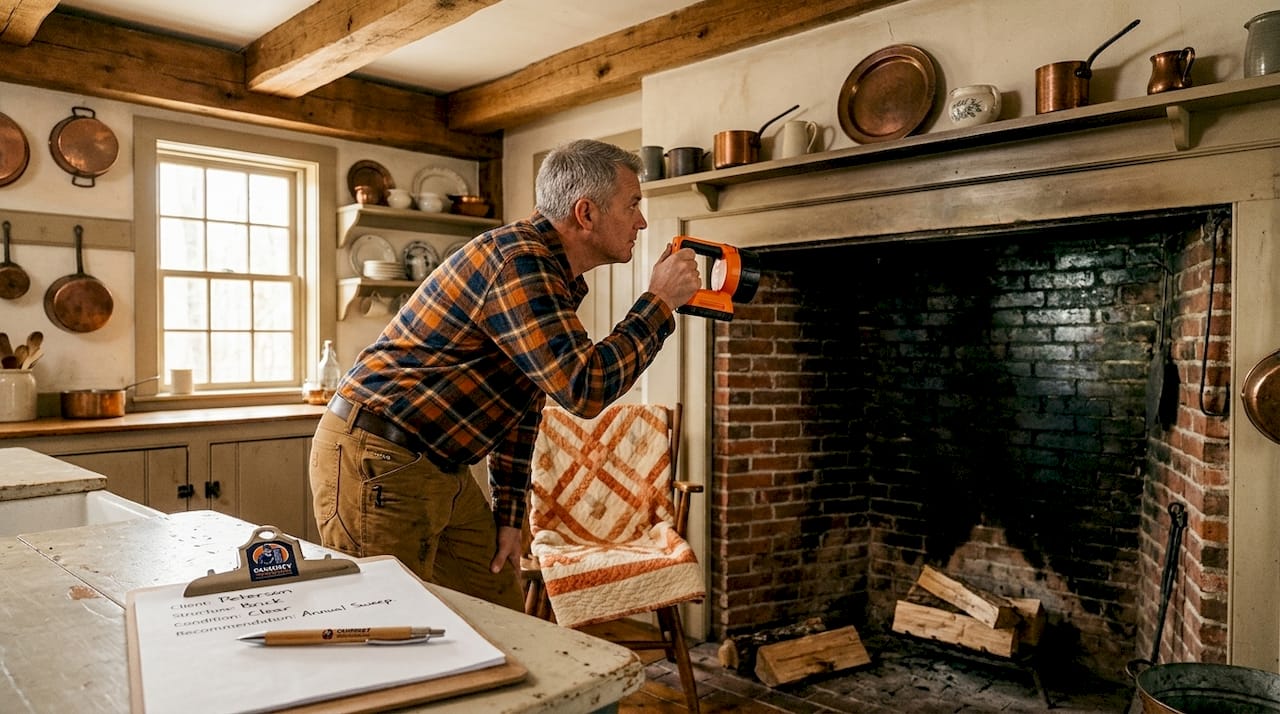
Carbon monoxide is odorless and colorless. An effective flue system prevents backdraft of toxic gases that homeowners would never detect without a functioning CO detector. This is why a compromised flue is not a cosmetic issue. It is a life-safety issue.
Types of chimney flues and why liners matter
Not every flue is the same, and choosing or inspecting the right type depends on your appliance, your chimney's age, and your local building code requirements.
| Flue type | Best used for | Liner material | Key consideration |
|---|---|---|---|
| Clay tile flue | Wood-burning fireplaces | Clay tile | Affordable, common in older homes, requires regular inspection |
| Metal liner system | Gas appliances, relining | Stainless steel | Flexible installation, excellent corrosion resistance |
| Cast-in-place liner | Damaged or irregular flues | Concrete (e.g., Thermocrete) | Seamless seal, requires authorized installer |
| Unlined masonry flue | Pre-code construction | None | Unsafe by modern standards, significant fire hazard |
Modern building codes require UL-listed flue liners made of clay tiles, stainless steel, or concrete for all wood-burning systems. These standards exist precisely because the consequences of an unlined flue are severe. Older homes frequently lack dedicated liners and rely on raw masonry, which is not rated for flue temperatures and fails over time.
One detail many homeowners miss: a single chimney can house multiple flues, each serving a separate appliance such as a fireplace, furnace, or water heater. Each flue needs to be properly sized and physically separated to prevent dangerous cross-contamination of combustion gases. If a gas furnace and a wood-burning fireplace share a flue, the results can be catastrophic.
Pro Tip: If you are buying a home built before 1980, request a chimney inspection that specifically documents liner presence, material, and condition. Do not take the seller's word for it.
Signs of flue problems and when to call a professional
Flue problems rarely announce themselves with obvious drama. Most develop gradually, and undetected flue damage can create catastrophic fire risks that homeowners mistake for normal wear. Knowing what to look for protects your household.
Common warning signs that your flue needs professional attention:
- White staining on exterior masonry (efflorescence): Indicates moisture is penetrating the chimney, which accelerates liner deterioration.
- Visible cracks in the firebox or smoke chamber: Often signal cracked liner sections above that require immediate inspection.
- Smoke entering the room when the fireplace is in use: Classic sign of a draft problem, blocked flue, or damaged liner allowing gases to escape laterally.
- Strong odor coming from the fireplace when not in use: Creosote buildup or animal nesting inside the flue, both of which are serious blockage and fire hazards.
- Pieces of clay tile falling into the firebox: A direct indicator that your clay liner is failing and needs urgent replacement.
- Carbon monoxide detector triggering with no obvious source: Your flue may be allowing exhaust gases to back up into the home.
Ignoring these signs carries compounding consequences. Creosote is highly flammable, and an improperly lined chimney dramatically increases fire risk after repeated use. Replacing a flue liner typically runs between $1,000 and $3,500 depending on material, chimney height, and liner type. That cost is significant, but it is far less than a chimney fire or a structural rebuild.
Professional services to consider include annual chimney cleaning and inspection, video flue scanning to identify liner cracks, mortar joint repair for deteriorating masonry, and full liner replacement or relining for structurally compromised flues. Scheduling a Level 2 chimney inspection before purchasing a home or after any significant weather event is strongly recommended.
Our perspective on chimney flue safety
I have inspected hundreds of chimneys across the Dallas-Fort Worth area, and the same pattern shows up repeatedly. Homeowners use their fireplaces for years without incident and conclude that consistent use is proof of safety. It is not. A flue can develop hairline cracks in the liner that allow heat to transfer directly to wood framing inside your walls without producing a single visible symptom until a fire starts.
What I've found most frustrating is that the fix is almost always straightforward when caught early. A minor liner crack repaired with the right sealant costs a fraction of what a full reline or masonry rebuild costs after years of neglect. The homeowners who call us in an emergency almost always describe the same thing: "We've been using it for years with no problem." That's precisely when complacency sets in.
My practical advice is this: stop treating your chimney like a passive feature of your home. It is a mechanical system that handles combustion gases and extreme heat. It requires regular professional evaluation just like your HVAC system does. An annual inspection from a certified chimney inspector costs between $100 and $250 in most DFW markets. The peace of mind alone is worth it, and the early problem detection often saves thousands.
The other thing I want homeowners to know is that chimney flue safety is not just about fire. Carbon monoxide poisoning from backdrafting flues is a genuine threat, and it is entirely preventable with proper maintenance and annual service. We have seen this situation arise more than once. Do not wait for a detector alarm to take it seriously.
— chimneyprofessionalservices
Keep your flue safe with Chimney Professional Services
If anything in this article made you think about the last time your chimney was professionally inspected, that is a good instinct to follow.
At Chimney Professional Services, our certified inspectors serve Dallas-Fort Worth homeowners with Level 1 and Level 2 chimney cleaning and inspections, video flue scanning, and full masonry repair and liner replacement for compromised flue systems. We also handle chimney leak repair when water damage has affected your flue's structural integrity. Whether you need a routine sweep before fire season or a full diagnostic after buying an older home, our team is available daily from 8 AM to 8 PM to work around your schedule. Contact us today to book your inspection and get a clear picture of your chimney's condition.
FAQ
What is the difference between a chimney and a flue?
The chimney is the external structure, typically brick or metal, that houses the system. The flue is the interior passage running through the chimney that actually vents smoke and combustion gases out of your home.
What materials are chimney flues made from?
Chimney flues are commonly lined with clay tile, stainless steel, or cast-in-place concrete materials such as Thermocrete. The right material depends on the appliance type, heat output, and whether you are relining an existing flue or building new.
How do I know if my chimney flue is blocked?
Common signs of a blocked chimney flue include smoke entering the room during fireplace use, strong odors from the fireplace when it is not in use, and in serious cases, carbon monoxide detector alerts with no other identifiable source.
How often should a chimney flue be inspected?
The National Fire Protection Association recommends annual chimney inspections. Homeowners who use their fireplace regularly or who have recently purchased an older home should schedule an inspection before the next burning season.
Do older homes always need a flue liner replacement?
Not always, but many homes built before 1960 lack code-compliant liners. A certified chimney inspector can assess whether your existing flue meets current safety standards or requires relining to protect your home and occupants.