
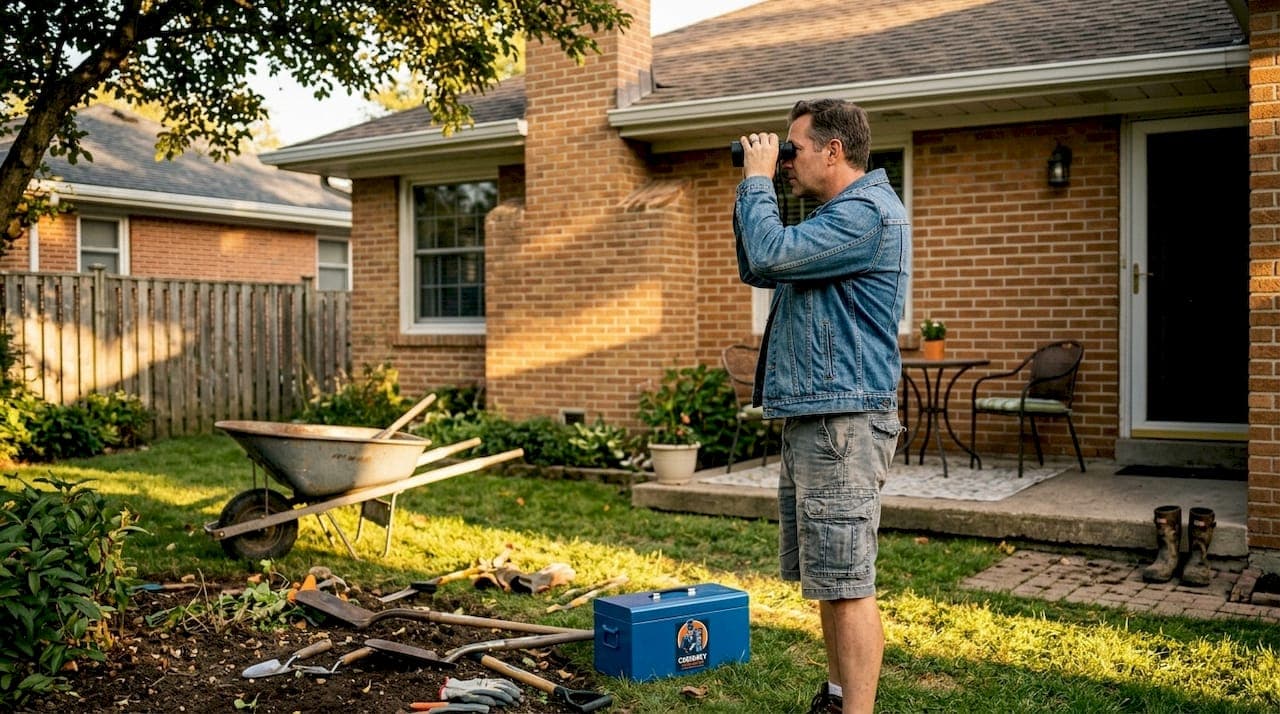
Most homeowners know to clean their gutters and check their roof after a storm. The chimney crown rarely makes that list, and that oversight can be expensive. Understanding what is chimney crown repair, why it becomes necessary, and how to act on it before small cracks turn into major structural damage is one of the most practical things you can do for your home. This guide covers everything you need to know, from how the crown works to what repair actually costs.
Table of Contents
- Key takeaways
- What a chimney crown is and why it fails
- Top chimney crown repair methods
- Costs, timelines, and typical repair outcomes
- Risks of neglect and chimney crown repair benefits
- My take on chimney crown maintenance
- Protect your chimney with professional crown repair
- FAQ
Key takeaways
| Point | Details |
|---|---|
| Crown function matters | The chimney crown seals the top of your chimney and diverts water away from the masonry and flue. |
| Cracks signal urgency | Cracks wider than 1/8 inch require prompt professional attention to prevent water from reaching your liner and brickwork. |
| Repair method depends on damage | Minor damage calls for sealant coatings, while severe cracking or improper construction requires full crown replacement. |
| Costs vary widely | Crown repair ranges from $150 for a sealant application to $2,500 or more for a full replacement. |
| Neglect compounds costs | Water infiltration through a damaged crown can trigger masonry spalling, damper rust, and liner failure that costs far more to fix than the crown itself. |
What a chimney crown is and why it fails
The chimney crown is the concrete or masonry slab that covers the very top of your chimney, surrounding the flue opening. Think of it as the roof for your chimney. Its job is to shed rainwater away from the flue liner and the brick or stone masonry below it, keeping moisture out of the structure entirely.
A properly built crown slopes away on all sides to direct water off the chimney rather than letting it pool. It should also extend 2 inches beyond the masonry with a drip edge, which keeps runoff from trickling straight down the brick face. Many older crowns skip both of these features, which is one of the most common reasons they fail ahead of schedule.
Material choice matters a great deal here. Portland cement is the preferred material for crown construction because of its durability and weather resistance. A significant number of older crowns were built with standard mortar mix, which deteriorates much faster and contributes to their short lifespan.
Common causes of crown deterioration
- Freeze-thaw cycles: Water seeps into small surface cracks, then expands during freezing temperatures, forcing those cracks wider each winter. In the Dallas area, this is less dramatic than in northern states, but it still happens during cold snaps.
- Improper construction: A flat or reverse-slope crown pools water rather than shedding it, accelerating breakdown from the day it was built.
- Settling and age: Normal house settlement creates stress fractures in the masonry, including the crown, over many years.
- Wrong materials at installation: Mortar-built crowns shrink and crack as they cure, often within just a few seasons.
What damage looks like from the ground
You do not need to climb onto your roof to get a basic read on your crown's condition. Using binoculars from the ground lets you spot visible cracks, missing sections, and discoloration without any rooftop access. Water stains on the exterior brickwork below the crown line are another reliable indicator that water is getting behind the masonry.
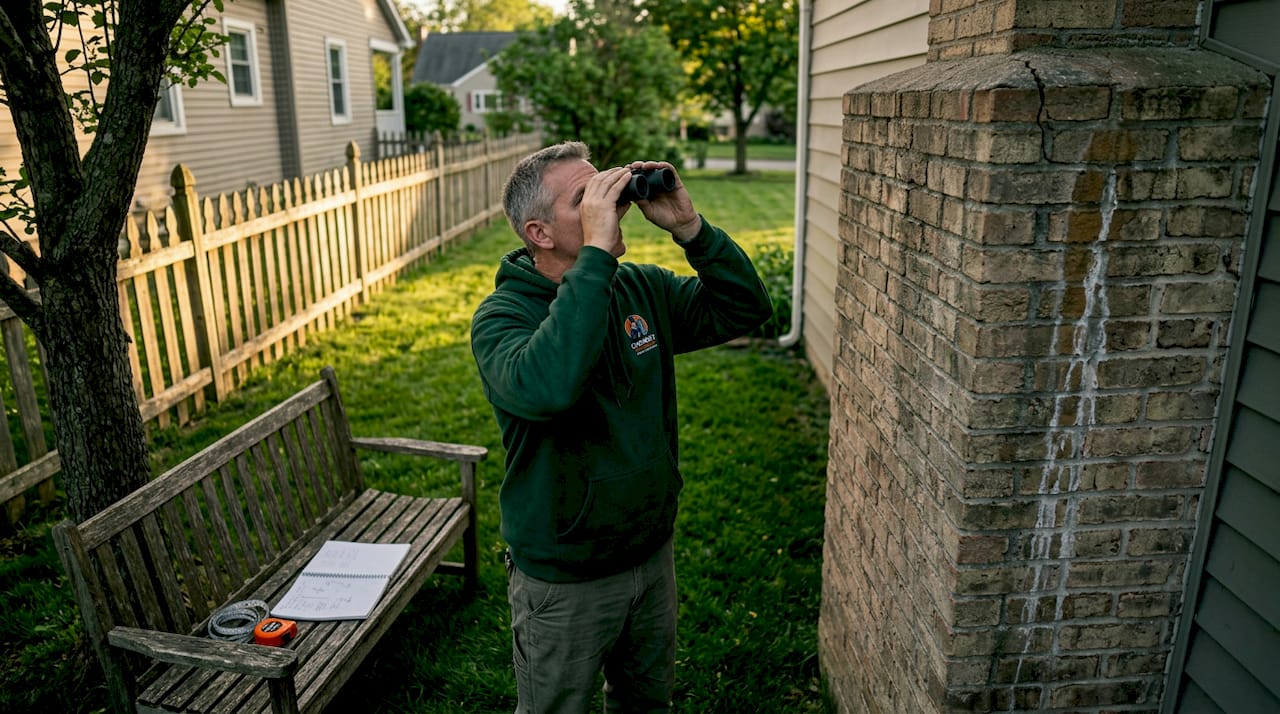
Pro Tip: Check your chimney crown after your first hard freeze of the year. Freeze events accelerate cracking, and catching new damage early keeps repair costs significantly lower.
Top chimney crown repair methods
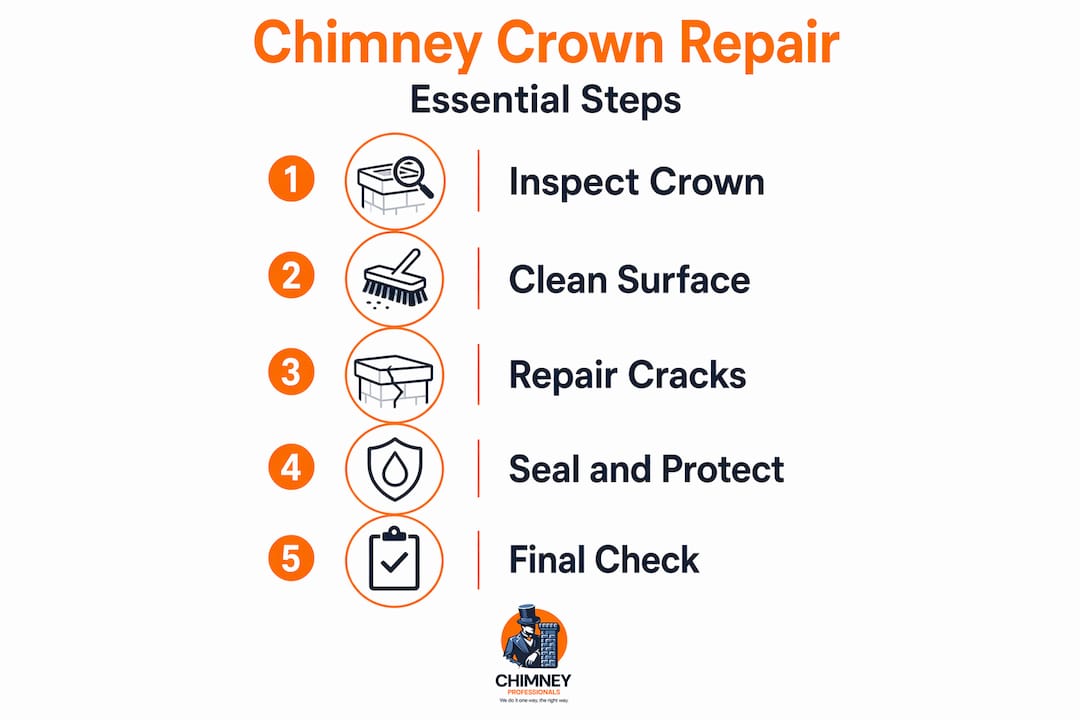
Knowing what is chimney crown repair also means understanding that it is not a single procedure. Repair approach depends on how severe the damage is. The three main options are sealant coatings, hydraulic cement patching, and full replacement.
The three core repair approaches
-
Sealant or elastomeric coating: This is the right choice for hairline cracks and surface crazing where the crown is structurally sound but the surface has begun to open up. A waterproof elastomeric sealant is brushed or rolled over the entire crown surface, sealing small fissures and creating a flexible, watertight barrier that moves with the masonry rather than cracking again. This is the most cost-effective approach when done before damage progresses.
-
Hydraulic cement patching: When cracks are wider than 1/8 inch or you have missing chunks of material, sealant alone will not hold. A professional cleans out the damaged area, removes loose material, and fills the void with hydraulic cement before applying a surface coating over the entire crown. This restores structural integrity to specific zones without replacing everything.
-
Full crown replacement: If the crown is severely fractured, built from the wrong materials, improperly sloped, or lacks the required overhang, rebuilding it entirely is the only durable solution. The old crown is broken out, the flue tile edges are prepared, and a new crown is formed using Portland cement with the correct slope and drip edge built in.
Preparation steps that determine repair quality
Surface prep separates a repair that lasts from one that fails within a season. Before any material is applied, the crown needs to be cleaned of debris, efflorescence, and loose particles. Wire brushing and blowing out cracks removes contamination that would prevent adhesion. Any standing water must be cleared and the surface allowed to dry before sealant or cement is applied.
Improper surface preparation is one of the primary reasons DIY crown repairs fail prematurely, often forcing the homeowner to pay for a professional repair anyway. Getting the prep right the first time is not optional.
Pro Tip: Avoid using standard mortar to patch a chimney crown. Mortar shrinks as it cures and will crack again quickly. Use a hydraulic cement or a product specifically designed for crown repair.
Costs, timelines, and typical repair outcomes
Understanding the financial side of crown repair helps you plan and prioritize. Here is a clear breakdown of what different repair types typically cost.
| Repair type | Typical cost range | Timeline |
|---|---|---|
| Sealant or coating application | $150 to $250 | 1 to 2 hours |
| Hydraulic cement patching | $200 to $350 | 2 to 4 hours |
| Full crown replacement | $300 to $2,500+ | Half day to full day |
These figures reflect cost ranges for crown work across typical residential projects. The wide range on full replacement reflects differences in chimney size, height, and local labor rates.
Factors that affect total cost and urgency
Several variables will push your costs toward the higher end of these ranges.
- Climate and freeze-thaw exposure: Even in Texas, cold snaps with rapid temperature swings stress masonry more aggressively than steady cool weather. A crown with compromised sealant going into a freeze cycle may experience a season's worth of additional damage overnight.
- Chimney height and roof pitch: Taller chimneys or steep roofs require additional safety equipment and labor time.
- Crown design defects: If the original crown was built without proper overhang or slope, a repair patch cannot fully correct those issues. Full replacement becomes the only path to a lasting result.
- Water damage already present: If moisture has already reached the flue liner or surrounding masonry, the repair scope expands beyond the crown itself.
A sealant application done proactively on a crown that is just beginning to show surface cracking is genuinely one of the best preventive maintenance investments you can make. Addressing the problem at that stage can add years to the crown's lifespan and costs a fraction of what replacement demands later.
Risks of neglect and chimney crown repair benefits
The chimney crown repair benefits go well beyond keeping water out of the top of your chimney. Water is the primary enemy of the entire chimney system, and a damaged crown is the most direct path for moisture to enter.
Once water gets past the crown, the damage it causes spreads through multiple components simultaneously.
- Flue liner deterioration: Moisture accelerates cracking and spalling in clay tile liners. A compromised liner creates a fire hazard because it can no longer contain heat and combustion gases safely.
- Masonry spalling: Repeated wet-dry and freeze-thaw cycles cause bricks and mortar joints to flake and crumble. You can find full details on how this plays out in our chimney masonry repair guide.
- Rusted damper components: Water settling into the firebox area corrodes the damper plate and frame, eventually making it inoperable.
- Structural damage: Water damage through a compromised crown is frequently the root cause of the majority of chimney structural failures, including leaning or separating chimneys that require partial or full rebuilds.
"Annual chimney inspections catch crown cracks, flue damage, and masonry issues early, preventing costly downstream repairs." Source
Older homes deserve special attention here. Many of them have unlined chimneys or liners that have never been updated. How aging affects chimney liner performance is directly tied to how well the crown above it has been maintained. A deteriorating crown accelerates liner failure in older systems, turning what could be a routine crown repair into a full liner restoration project.
Scheduling a professional chimney inspection every year is the most reliable way to catch crown problems at the sealant stage rather than the replacement stage. Catching a hairline crack early costs roughly 90% less than addressing the damage that accumulates if you wait.
My take on chimney crown maintenance
I have inspected and repaired chimneys across the Dallas-Fort Worth area for years, and the pattern I see most often is this: homeowners assume their chimney is fine because the fireplace works. The crown is out of sight, so it stays out of mind until a leak shows up inside the house. By that point, the repair scope has almost always grown well beyond what it would have been at first detection.
What frustrates me most is the misconception around DIY crown repairs. I respect homeowners who want to take care of their property, and I understand why a $15 tube of caulk looks like a solution when you spot a crack. But quality repairs consistently deliver higher long-term value compared to inexpensive quick fixes. The wrong product applied over a crack with inadequate prep work traps moisture underneath, accelerates the deterioration it was meant to stop, and gives the homeowner a false sense that the problem is handled.
The other thing I would push back on is the idea that Texas homeowners have it easy compared to northern climates. Our winters are milder, yes. But our temperature swings within a single day can be dramatic. A crown that went through a 70-degree temperature shift in 24 hours has experienced significant stress. Those cycles add up.
The homeowners who come back to us year after year with minimal issues are the ones who schedule an inspection before problems start, not after. A $150 sealant application done at the right time protects a $2,500 replacement. That math is hard to argue with.
— chimneyprofessionalservices
Protect your chimney with professional crown repair
If your chimney crown has not been inspected in the last year, now is the time to get it done. At Chimney Professional Services, our certified team serves homeowners across the Dallas-Fort Worth Metroplex with thorough chimney inspections, professional-grade crown and masonry repair, and waterproofing that keeps moisture out for the long term.

We also provide chimney leak repair for situations where water has already entered the system, along with waterproofing services to protect restored crowns and masonry from future damage. We're open daily from 8 AM to 8 PM, so scheduling around your life is simple. Contact Chimney Professional Services today to book your evaluation and get a clear picture of your crown's current condition.
FAQ
What is chimney crown repair?
Chimney crown repair is the process of restoring or replacing the concrete slab at the top of a chimney that protects the masonry and flue from water damage. Repair methods range from applying an elastomeric sealant to full crown reconstruction depending on the severity of damage.
How do I know if my chimney crown needs repair?
Use binoculars to check for visible cracks, missing sections, or water stains on the brick below the crown line. Cracks wider than 1/8 inch or any evidence of water inside the firebox after rain are clear indicators that repair is needed.
How much does chimney crown repair cost?
Costs range from approximately $150 to $250 for a sealant application, $200 to $350 for cement patching, and $300 to $2,500 or more for a full crown replacement, depending on damage severity, chimney height, and local labor rates.
Can I repair a chimney crown myself?
Minor surface cracks can be addressed with the right sealant product, but improper surface prep or wrong materials cause premature failure and often result in higher costs down the line. A professional inspection first helps you understand whether DIY is viable or whether the damage requires a licensed repair.
How long does a repaired chimney crown last?
A professionally applied sealant coating on a sound crown can last 10 to 15 years with routine maintenance. A full replacement using Portland cement with proper slope and overhang, combined with periodic waterproofing, can last 20 to 30 years under normal conditions.