
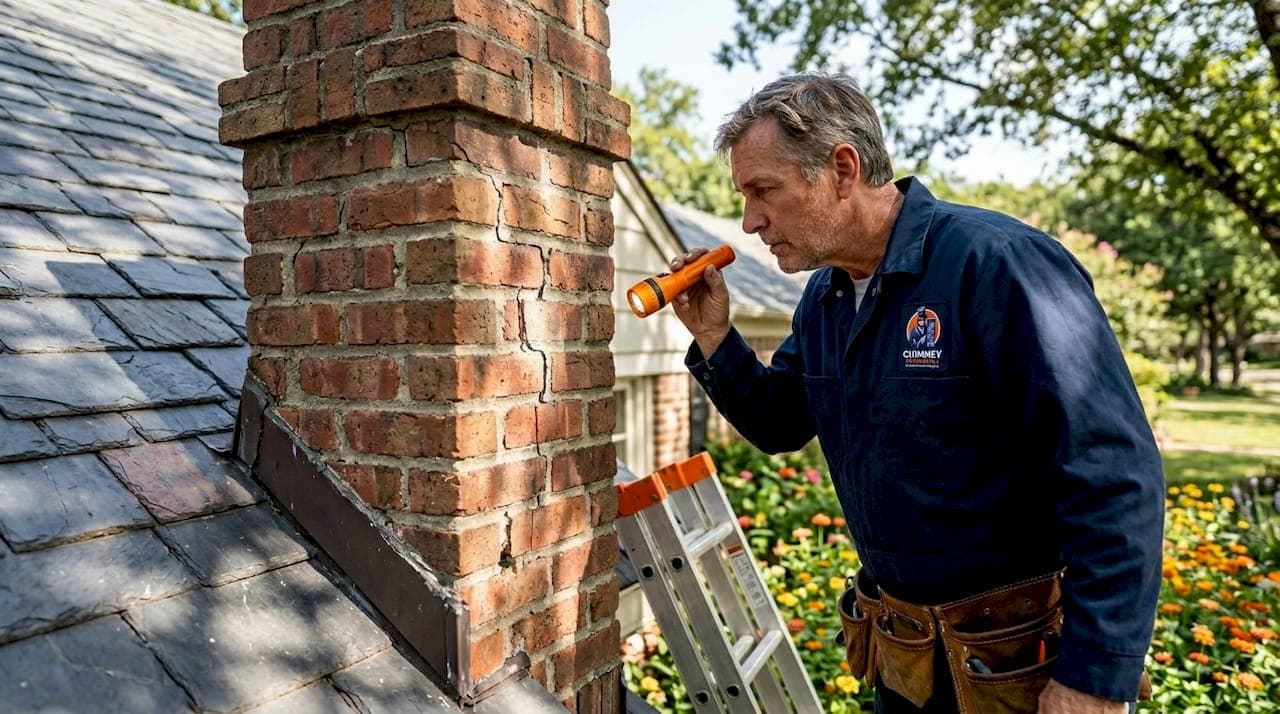
A visual chimney damage assessment is a Level 1 inspection that evaluates accessible exterior and interior components without specialized tools, focusing on indicators such as brick cracks, mortar condition, efflorescence, and flashing integrity. For Dallas-Fort Worth homeowners and buyers, understanding how chimney damage is assessed visually is the first practical step toward protecting your home from moisture intrusion, structural failure, and fire risk. The NFPA 211 standard defines this inspection type as the baseline for any occupied home with a regularly used fireplace. Knowing what to look for, and what you cannot see without professional equipment, keeps you informed and safe.
What are the key visible signs of chimney damage?
The most telling signs of chimney damage appear on the exterior masonry, the chimney crown, the flashing, and inside the firebox. Recognizing these signs during a visual chimney inspection gives you a clear picture of your chimney's condition before problems escalate.
Exterior masonry and mortar
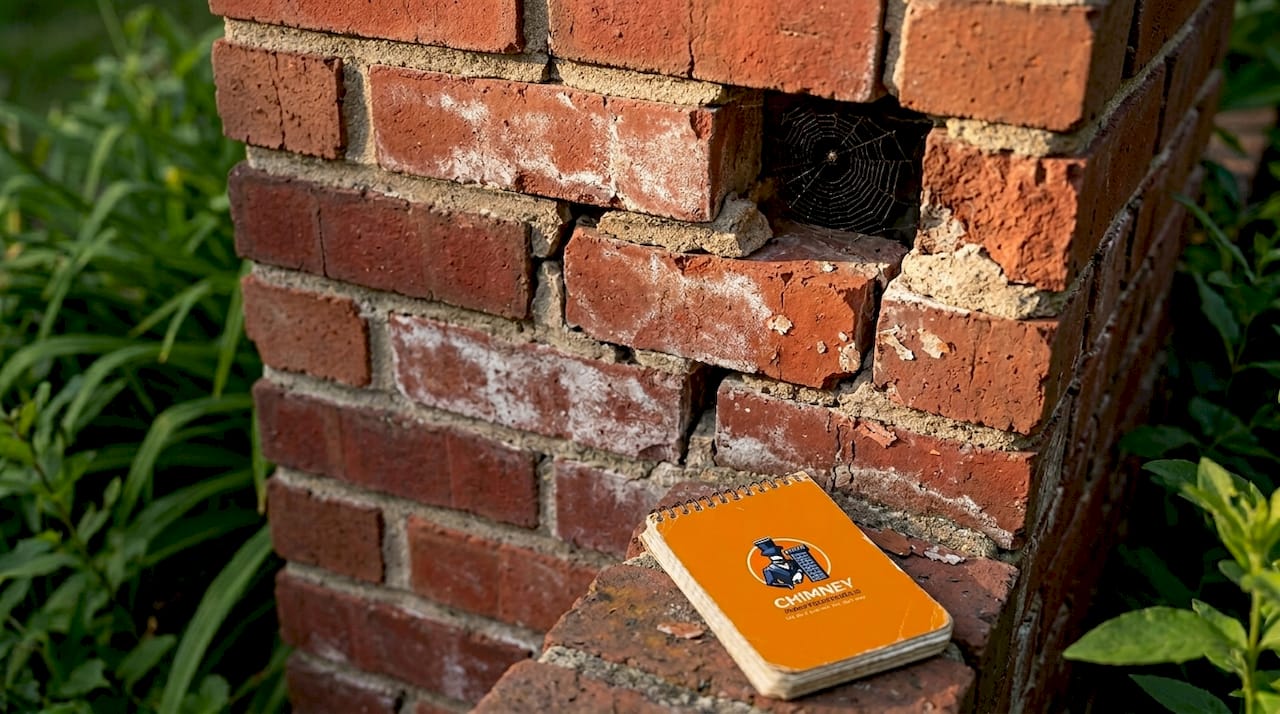
Cracks in bricks and gaps in mortar joints are the most common visual signs of chimney wear. Mortar is softer than brick and deteriorates first, especially under repeated moisture exposure. When mortar joints crumble or pull away from the brick face, water enters the masonry core and accelerates structural breakdown. Look for horizontal cracks along mortar lines, vertical cracks running through brick faces, and any sections where mortar is visibly missing.
Spalling bricks are another serious indicator. Spalling occurs when moisture trapped inside the brick freezes and expands, forcing the outer face of the brick to flake, chip, or pop off entirely. Bulging sections of the chimney wall signal that internal pressure from moisture or structural settlement has pushed the masonry outward. Both conditions require prompt professional attention.
Efflorescence
Efflorescence appears as white, powdery deposits on the brick surface and signals active moisture infiltration through mortar joints or bricks. It is not structurally harmful on its own, but it confirms that water is moving through the masonry. In DFW, where rain and humidity are seasonal realities, efflorescence is a reliable early warning sign that freeze-thaw damage or mortar erosion is underway.
Chimney crown and cap
The chimney crown is the concrete or mortar slab that seals the top of the chimney stack. Cracks in the crown allow rainwater to pool and seep directly into the flue. A damaged or missing chimney cap compounds this problem by leaving the flue opening fully exposed to rain, debris, and animals.
Flashing condition
Flashing is the metal seal where the chimney meets the roofline. Rust, separation, and gaps in flashing are direct pathways for water to enter the attic and ceiling structure. Flashing failures can cause water stains on ceilings far from the chimney itself, making them easy to misattribute to roof problems.
Firebox interior
Inside the firebox, look for rust on the damper or firebox walls, heavy soot accumulation, and visible cracks in the refractory panels. Rust indicates moisture is reaching metal components. Thick, dark soot deposits on firebox walls may point to incomplete combustion or restricted airflow.
Pro Tip: Take a photo of every defect you spot, including efflorescence patches, crown cracks, and flashing gaps. Photographic records from multiple angles help a certified inspector prioritize repairs and give you a baseline for tracking changes over time.
How to conduct an effective visual chimney inspection
A thorough visual inspection takes approximately 15 to 20 minutes and requires only basic tools: a flashlight, binoculars, and a smartphone camera. The goal is to examine the chimney from three distinct vantage points: ground level, the firebox interior, and the rooftop or attic.
Follow these steps for a structured assessment:
-
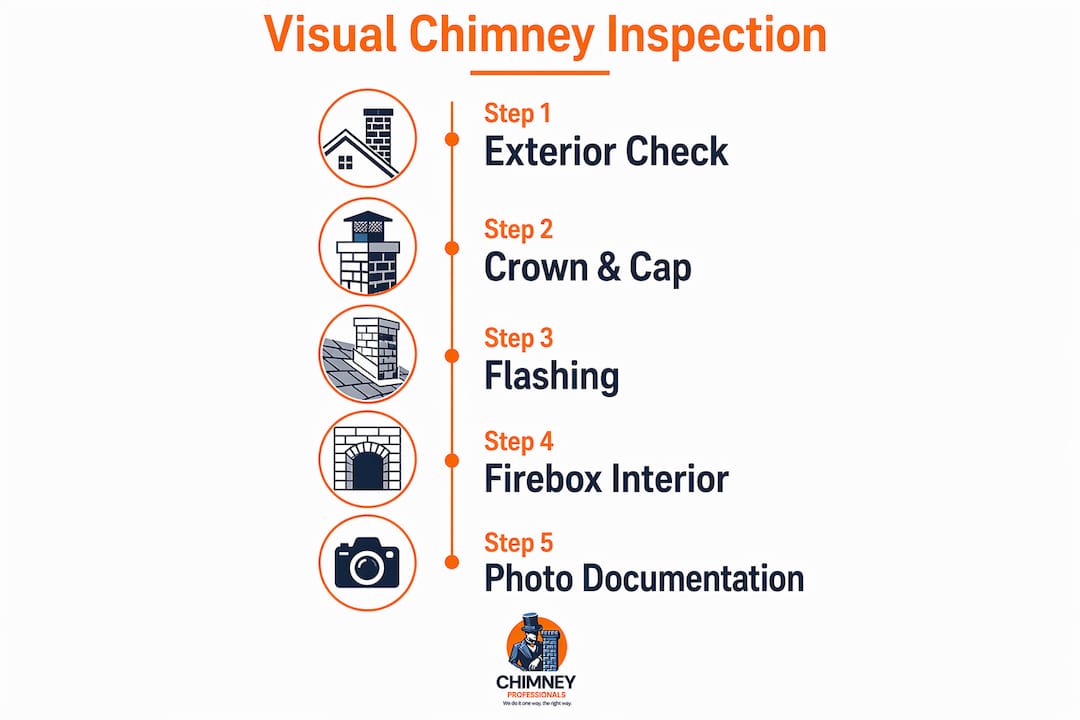
Start at the firebox. Shine a flashlight upward through the firebox opening. Look for visible cracks in the firebox walls, rust on the damper plate, and any debris or animal nesting material in the lower flue. Note any strong odor of creosote, which signals significant buildup on the flue walls above.
-
Move to ground level outside. Use binoculars to scan the full height of the chimney exterior. Look for missing or crumbling mortar, spalling bricks, staining, efflorescence, and any visible lean or tilt in the chimney stack. Check the chimney cap and crown from this angle as well.
-
Inspect the roofline from a safe position. If you can safely access the roof or a second-floor window, examine the flashing where it meets the chimney base. Look for lifted edges, rust stains, gaps in sealant, and any separation between the flashing and the chimney or roof surface.
-
Check the attic if accessible. Water stains on attic rafters or sheathing near the chimney penetration point to flashing or crown failures that may not yet be visible from outside.
-
Document everything with photos. Photographing defects from multiple angles, both from the firebox and the top of the chimney, reduces the risk of overlooking subtle damage. These images assist professional evaluation and repair planning.
-
Note the chimney's age and recent weather history. Chimneys in DFW homes built before 1990 often used softer mortar mixes that deteriorate faster. After heavy rain or a hail event, a visual check is especially worthwhile.
Pro Tip: Never climb onto a steep or wet roof to inspect flashing. Use binoculars from a ladder positioned safely at the eave, or ask a certified chimney inspector to complete the rooftop portion of the assessment.
What are the limits of visual inspection and when to escalate?
Visual inspection covers only the accessible, readily visible portions of the chimney system. It cannot detect flue liner cracks, internal obstructions, or concealed junction failures without video scanning or physical access. Understanding where visual assessment ends and professional inspection begins protects you from false confidence.
The NFPA 211 standard defines three inspection levels, each with a distinct scope and cost range.
| Inspection level | Scope | Typical cost | Time required |
|---|---|---|---|
| Level 1 | Accessible exterior and interior components, no equipment beyond lighting | $100 to $950 | Up to 1 hour |
| Level 2 | All Level 1 areas plus video scanning of flue liner, attic, and crawl space | More than Level 1 | Approximately 2 hours |
| Level 3 | All Level 2 areas plus removal of components to access concealed areas | Highest cost | May require multiple days |
For real estate transactions in Dallas-Fort Worth, a Level 2 inspection with video scanning is the standard requirement. Visual checks alone can miss critical flue liner damage that poses a direct fire or carbon monoxide risk. If you are buying a home with a fireplace, a Level 1 visual assessment is a useful starting point, but it does not replace a full Level 2 evaluation before closing.
Escalate to a Level 2 or Level 3 inspection when you observe any of the following: bulging or leaning chimney sections, multiple spalling bricks, active water stains inside the home near the chimney, or evidence of a recent chimney fire such as warped metal components or a strong burned odor. For a detailed breakdown of inspection costs in DFW, local pricing reflects both the inspection level and the accessibility of your chimney system.
Common causes of chimney damage in Dallas-Fort Worth
Dallas-Fort Worth's climate creates specific chimney deterioration patterns that homeowners here see more often than in drier regions. Identifying the visual warning signs tied to these local causes helps you catch problems before they become costly repairs.
-
Freeze-thaw cycles. DFW winters bring enough cold snaps to freeze moisture trapped in masonry. Water expands as it freezes, widening existing cracks and forcing mortar joints apart. Moisture intrusion leads to efflorescence, spalling, and mortar erosion that become visible after each cold season.
-
Flashing failure from thermal movement. The DFW region experiences significant temperature swings between summer and winter. This thermal expansion and contraction causes the roof deck and chimney to move at different rates, gradually pulling flashing away from its sealed position. Rust stains on the chimney exterior near the roofline and water stains on interior ceilings are the most visible results.
-
Creosote and soot accumulation. Wood-burning fireplaces in DFW homes accumulate creosote on flue walls with regular use. Heavy, dark deposits visible on firebox walls or a strong acrid smell when the fireplace is cold indicate that creosote buildup has reached a level requiring professional cleaning. Creosote is the leading fuel source for chimney fires.
-
Mortar degradation from age and moisture. Older DFW homes, particularly those built before 1980, often have lime-based mortar that softens and erodes faster than modern Portland cement mixes. Missing mortar between bricks is visible to the naked eye and is one of the most straightforward signs of chimney damage to identify.
-
Vegetation near the chimney base. Moss, vines, or heavy plant growth on or near the chimney exterior holds moisture against the masonry surface continuously. This accelerates mortar erosion and brick staining. Visible green or dark organic growth on the chimney is a reliable indicator of chronic moisture exposure.
For a broader look at exterior and interior chimney symptoms specific to DFW homes, the pattern of damage you see often points directly to the underlying cause.
Key takeaways
A visual chimney inspection is a reliable first-line screening tool, but it must be paired with professional assessment when structural or flue-liner damage is suspected.
| Point | Details |
|---|---|
| Start with accessible components | Inspect the firebox, exterior masonry, crown, and flashing before calling a professional. |
| Efflorescence signals moisture | White powdery deposits on brick confirm active water infiltration and early mortar erosion. |
| Level 2 is required for real estate | Video scanning detects flue liner damage that visual checks cannot reveal. |
| Document with photos | Photographs from multiple angles help professionals prioritize repairs and track changes. |
| Escalate for structural signs | Bulging bricks or leaning chimney sections are immediate safety hazards requiring professional evaluation. |
What we've learned from years of DFW chimney assessments
After inspecting chimneys across Dallas, Fort Worth, Plano, and surrounding communities, we at Chimney Professional Services have seen one pattern repeat itself more than any other: homeowners wait too long because the early signs look minor. A small patch of efflorescence or a hairline crack in the crown seems harmless. By the time water stains appear on the ceiling or a brick falls from the stack, the repair cost has multiplied several times over.
The most common mistake we see is treating a visual inspection as a one-time event rather than a seasonal habit. In DFW, the best times to conduct a visual check are late fall before fireplace season begins and early spring after the last freeze. These two windows catch the damage most likely to worsen with use or weather.
We also see homeowners attempt roof-level inspections without proper safety equipment, which creates injury risk without adding much diagnostic value. A pair of binoculars from ground level and a flashlight inside the firebox will reveal the majority of actionable visual signs. Save the rooftop work for a certified professional.
The Level 1 vs. Level 2 distinction matters more than most homeowners realize. A visual check is a screening tool, not a safety certification. If you are buying a home or have not had a professional inspection in more than two years, a Level 2 assessment with video scanning is the responsible choice.
— chimneyprofessionalservices
Get a certified chimney inspection in Dallas-Fort Worth
Chimney Professional Services provides certified chimney inspections, masonry repair, and leak repair services across the Dallas-Fort Worth Metroplex. Our team is available daily from 8 AM to 8 PM, and every inspection is conducted by a certified chimney inspector who follows NFPA 211 standards. Whether you have spotted efflorescence, a cracked crown, or suspect flashing failure after a recent storm, we give you a clear, honest assessment and a repair plan that fits your budget. Contact Chimney Professional Services today to schedule your inspection and protect your home before small signs become serious damage.
FAQ
What does a visual chimney inspection cover?
A visual chimney inspection, also called a Level 1 inspection, covers all accessible exterior and interior components including the firebox, damper, chimney crown, flashing, and exterior masonry. It does not include video scanning of the flue liner or removal of any components.
Is chimney inspection necessary if I rarely use my fireplace?
Yes. Moisture damage, animal intrusion, and mortar deterioration occur regardless of fireplace use. An annual visual check catches crown cracks, flashing gaps, and efflorescence before they allow water into the home's structure.
What are the most serious visual signs of chimney damage?
Bulging or leaning chimney sections, multiple spalling bricks, and active water stains inside the home near the chimney are the most urgent visual warning signs. These conditions indicate that the fireplace should not be used until a professional completes a full assessment and any necessary repairs.
How often should I conduct a visual chimney check in DFW?
Conduct a visual check twice per year: once in late fall before fireplace season and once in early spring after the last freeze. DFW's freeze-thaw cycles and seasonal rain make these two windows the most productive times to catch new damage.
When does a visual inspection require a professional follow-up?
Schedule a professional Level 2 inspection when you observe structural damage, active water intrusion, heavy creosote deposits, or when buying or selling a home. A water damage assessment is also recommended after any significant storm event.