
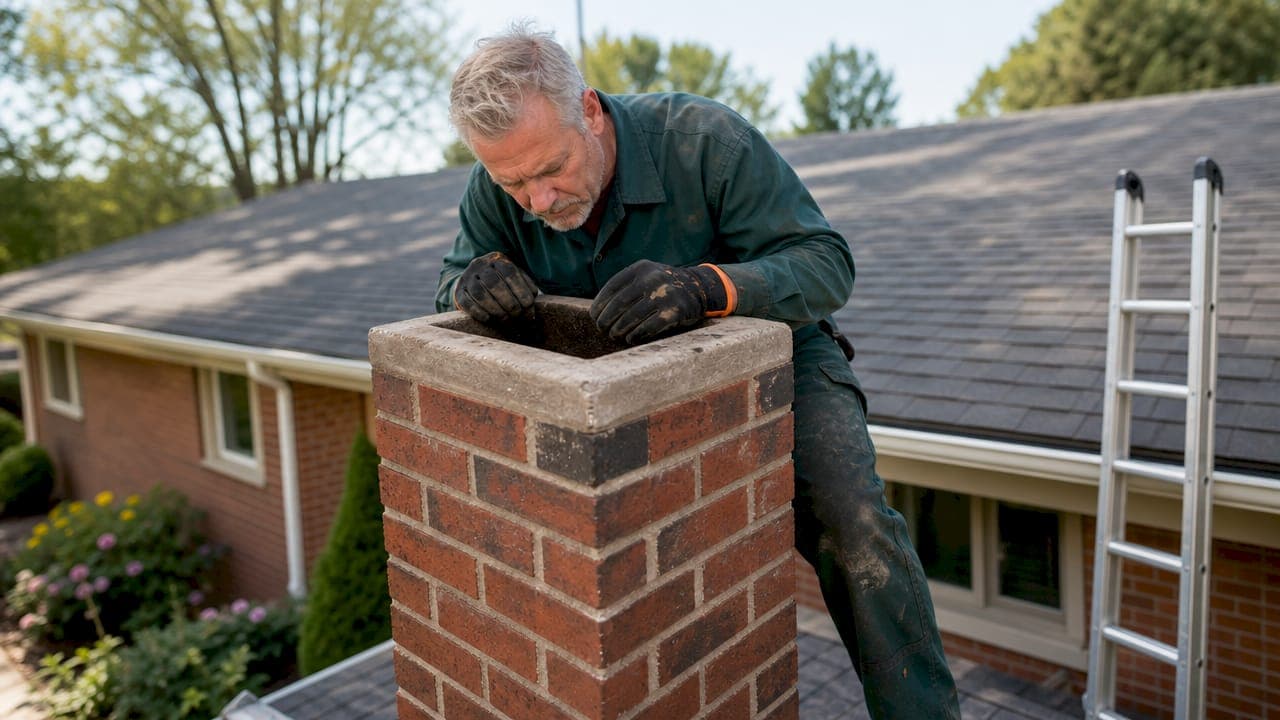
Chimney cleaning prevents fires by removing creosote, the highly flammable byproduct of wood combustion that coats the inside of your flue and ignites without warning. Approximately 25,000 chimney fires occur in the U.S. every year, and the vast majority are preventable through annual professional cleaning. The NFPA and the Chimney Safety Institute of America (CSIA) both identify creosote buildup as the primary driver of residential chimney fires. Understanding why chimney cleaning prevents fires is the first step toward protecting your home, your family, and your investment.
Why chimney cleaning prevents fires: the creosote problem
Creosote is the leading cause of chimney fires according to the NFPA, forming as a natural byproduct every time you burn wood in your fireplace. When smoke, gases, and unburned wood particles rise through the flue, they cool and condense on the interior walls, leaving behind a sticky, tar-like residue. Over time, that residue hardens into creosote. Left unchecked, it becomes one of the most dangerous materials inside your home.
Creosote develops in three distinct stages, each more hazardous than the last:
- Stage 1: A light, flaky deposit that brushes away easily during a standard cleaning. Low fire risk but a clear sign combustion is occurring.
- Stage 2: A harder, tar-like coating that requires rotary cleaning tools to remove. Significantly more flammable than Stage 1.
- Stage 3: A glazed, shiny crust that bonds tightly to the flue liner. This stage is extremely difficult to remove and poses the highest fire risk of all three.
Industry standards set by the NFPA identify 1/8 inch of creosote buildup as the threshold at which the flue requires immediate cleaning. At that thickness, a single hot fire can ignite the deposit and send flames racing up the chimney wall.
Chimney fires fueled by creosote can burn at extreme temperatures hidden inside your walls, causing structural damage that is completely invisible from the outside. That hidden damage is what makes creosote so dangerous. You may not know a fire occurred until a subsequent inspection reveals cracked flue tiles or compromised mortar.
How professional chimney cleaning removes fire hazards
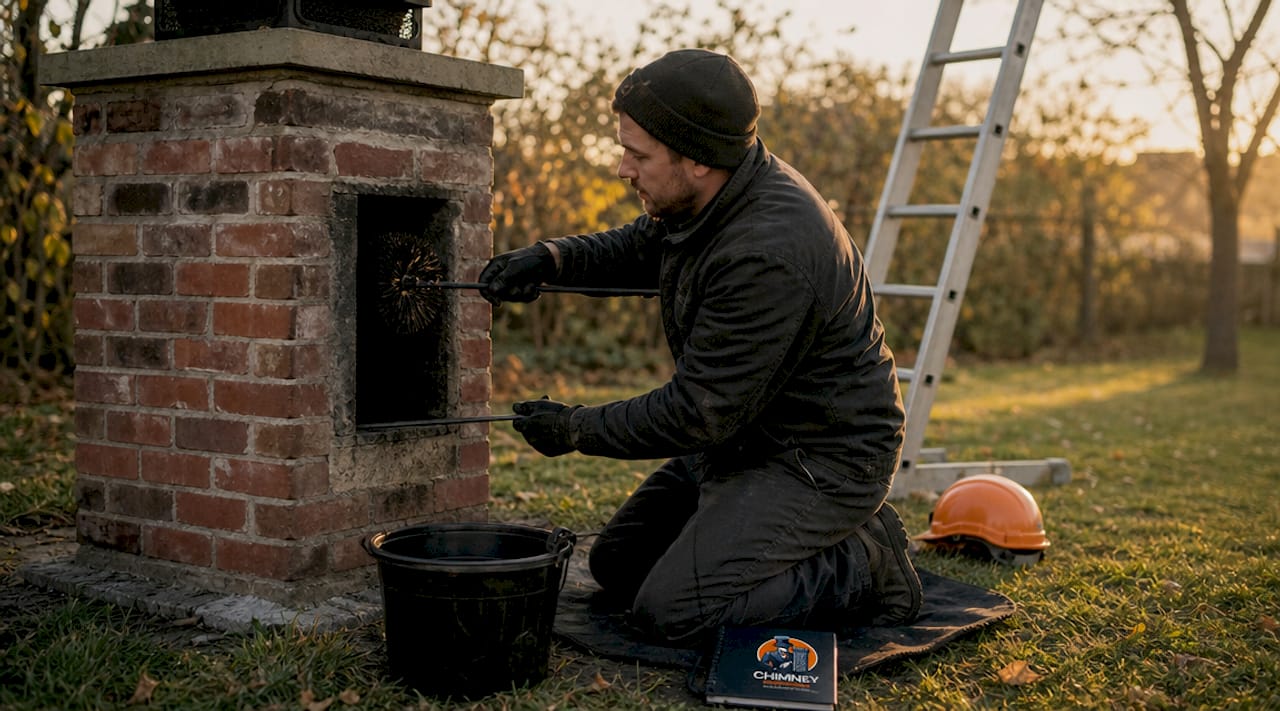
Professional chimney cleaning, formally called a chimney sweep, goes far beyond running a brush through the flue. Certified technicians use flue-size-matched brushes and HEPA vacuums that safely remove hardened creosote at every stage, including Stage 2 deposits that DIY tools cannot reach. This distinction matters because DIY cleaning often fails to address the most dangerous buildup, leaving your flue in a false state of cleanliness.
A professional cleaning follows a structured process:
- Pre-cleaning inspection: The technician examines the firebox, damper, flue liner, and chimney cap for visible damage, blockages, or Stage 3 creosote before any cleaning begins.
- Mechanical brushing: Flue-size-matched rotary or wire brushes are worked from the top down, dislodging creosote and debris from the liner walls.
- HEPA vacuum containment: Industrial HEPA vacuums capture all loosened material at the firebox opening, preventing soot and creosote dust from entering your living space.
- Blockage removal: Nests from birds or squirrels, leaves, and debris are cleared from the flue and smoke chamber.
- Post-cleaning inspection: The technician confirms the flue is clear, documents any damage found, and recommends repairs if needed.
Blockages from animal nests, leaves, and debris restrict airflow and increase both fire and carbon monoxide risks. Removing them during a professional cleaning addresses two separate hazards in a single visit. The inspection component is equally important. Catching a cracked flue tile or deteriorating mortar joint early prevents a minor repair from becoming a major structural failure.
Pro Tip: Ask your technician specifically whether they use a HEPA-rated vacuum during the cleaning. Standard shop vacuums recirculate fine creosote particles into your home's air, which is both a health concern and a mess.
How often should you clean your chimney to prevent fires?
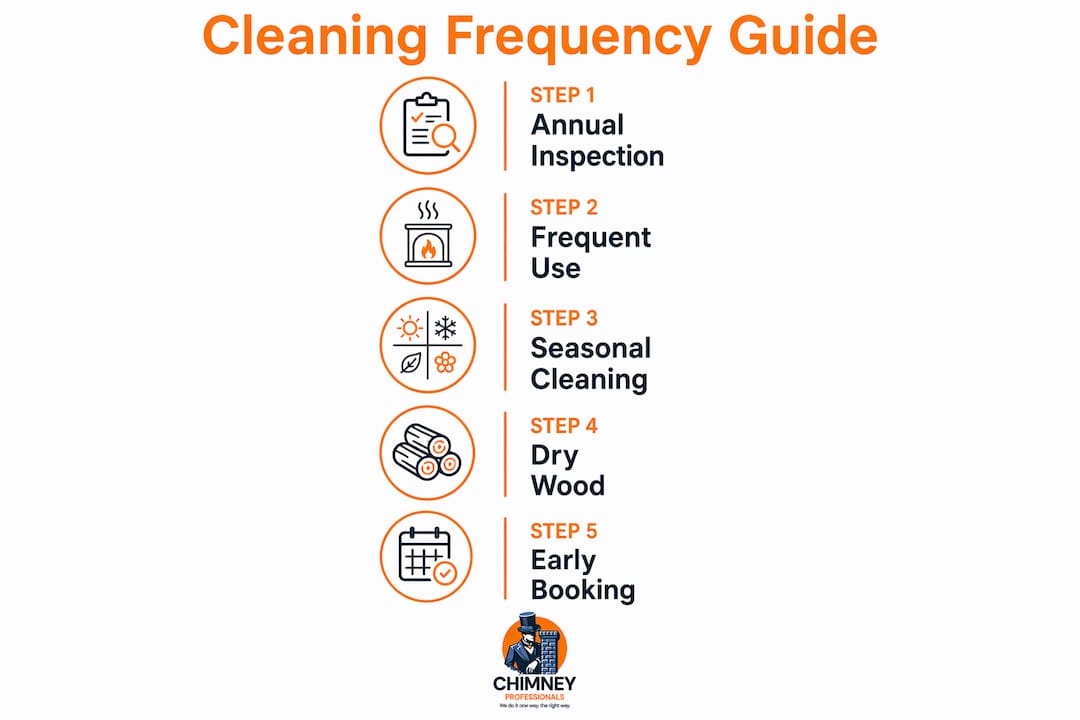
NFPA Standard 211 mandates that chimneys be inspected at least once a year to confirm they are free from deposits and obstructions. That annual inspection is the baseline. Cleaning frequency depends on how often you use your fireplace and what you burn.
| Fireplace type and usage | Recommended cleaning frequency |
|---|---|
| Wood-burning, used 3+ times per week | Every season, or mid-season for heavy use |
| Wood-burning, occasional use (under 10 fires/year) | Once annually before the burning season |
| Gas fireplace, regular use | Annual inspection; cleaning as needed |
| Chimney unused for 1+ years | Before first use, regardless of last cleaning date |
Even chimneys unused for long periods accumulate hazards like moisture, debris, and animal nests that pose fire and carbon monoxide risks the first time you light a fire. Many Dallas-Fort Worth homeowners assume an unused fireplace is a safe fireplace. That assumption is incorrect.
Wood choice also drives cleaning frequency. Burning unseasoned or softwoods produces substantially more creosote than seasoned hardwood, which means a homeowner burning pine or green oak may need cleaning twice as often as one burning properly dried hickory or oak. If you burn frequently or use lower-quality wood, schedule a mid-season check rather than waiting for the annual appointment.
Pro Tip: Schedule your annual chimney cleaning in late summer or early fall, before the first cold snap. Booking early avoids the seasonal rush and gives you time to address any repairs before you need the fireplace.
What other safety benefits come from regular chimney maintenance?
Chimney cleaning fire prevention is the primary benefit, but it is not the only one. A clean, clear flue delivers measurable improvements to your home's safety and efficiency across several areas.
Restricted airflow from blockages causes smoldering, inefficient fires that accelerate creosote buildup, creating a dangerous feedback cycle. Removing those blockages restores proper draft, which means your fire burns hotter and cleaner, producing less creosote in the first place. The benefit compounds over time.
Carbon monoxide protection is equally significant. A blocked or partially obstructed flue forces combustion gases, including carbon monoxide, back into your living space instead of venting them outside. Carbon monoxide is colorless and odorless, making it impossible to detect without a working CO detector. Regular cleaning eliminates the blockages that cause backdrafting, and the inspection component catches flue damage that could allow gas to seep through cracks in the liner. For more on how chimney maintenance protects your home's air quality, the guide on indoor air quality covers this in detail.
Additional benefits of regular chimney maintenance include:
- Extended chimney lifespan: Removing moisture-trapping debris and addressing minor masonry damage early prevents the freeze-thaw deterioration that cracks flue liners and spalls brickwork.
- Improved heating efficiency: A clean flue draws properly, meaning your fire produces more usable heat with less wood.
- Reduced odor: Creosote and organic debris produce a persistent, acrid smell that enters your home during humid weather. Cleaning eliminates the source.
- Insurance compliance: Many homeowners' insurance policies require documented annual chimney maintenance. A cleaning receipt from a certified technician protects your coverage.
Professional chimney cleaning costs $150 to $300, a fraction of the $2,000 to $10,000 or more that fire damage repairs typically cost. That cost comparison makes annual cleaning one of the most cost-effective home safety investments available.
Practical steps to maintain chimney safety between cleanings
Annual professional cleaning is non-negotiable, but what you do between appointments also affects your fire risk. These steps reduce creosote production and help you catch problems before they become emergencies.
- Burn only seasoned hardwood. Wood dried for at least 12 months burns hotter and produces far less creosote than green or unseasoned wood. Oak, hickory, and ash are reliable choices for Dallas-area homeowners.
- Avoid burning treated or painted wood. Chemical-treated lumber, plywood, and painted wood release toxic compounds and accelerate deposit buildup inside the flue.
- Never burn cardboard or paper in large quantities. These materials produce large embers that can travel up the flue and ignite creosote deposits higher in the chimney.
- Monitor your draft. If smoke backs up into the room, the fire struggles to stay lit, or you notice an unusual odor, these are signs of restricted airflow. Schedule an inspection promptly.
- Check the firebox after each use. Look for unusual debris, excessive soot fall, or any signs of cracking in the firebox walls. Early detection keeps small issues from becoming costly repairs.
Pro Tip: A simple moisture meter, available at most hardware stores, tells you whether your firewood is dry enough to burn safely. Wood with moisture content above 20% produces significantly more creosote. Aim for 15% or lower.
Daily chimney use without annual cleaning risks advancing creosote to Stage 2 or Stage 3 within a single season, at which point removal becomes more difficult and costly. Consistent habits between cleanings extend the life of your cleaning appointment and keep your risk level low throughout the burning season. The resource on signs you need chimney repair is a useful reference for identifying when a mid-season inspection is warranted.
Key takeaways
Chimney cleaning prevents fires by eliminating creosote buildup and blockages before they reach the ignition threshold, making annual professional service the single most effective fire prevention measure for any wood-burning home.
| Point | Details |
|---|---|
| Creosote is the core hazard | Creosote buildup at 1/8 inch thickness creates an immediate fire risk inside the flue. |
| Annual cleaning is the standard | NFPA Standard 211 requires at least one inspection and cleaning per year for all chimneys. |
| Professional tools matter | Certified technicians use flue-matched brushes and HEPA vacuums that DIY methods cannot replicate. |
| Wood choice affects risk | Burning seasoned hardwood reduces creosote production and extends the effectiveness of each cleaning. |
| Cost comparison is clear | A $150 to $300 cleaning prevents $2,000 to $10,000 or more in potential fire damage repairs. |
Our take on chimney cleaning as a fire prevention investment
We have inspected thousands of chimneys across the Dallas-Fort Worth area, and the pattern is consistent. Homeowners who skip annual cleaning do not usually know they are at risk until we show them Stage 2 or Stage 3 creosote on a camera inspection. At that point, the cleaning is harder, the cost is higher, and the close call is real.
The conventional wisdom that a fireplace used only a few times a year does not need regular cleaning is one of the most dangerous misconceptions we encounter. Even light use accumulates creosote, and an unused chimney can harbor a bird nest or moisture damage that creates a carbon monoxide hazard on the first fire of the season. There is no safe threshold for skipping the annual appointment.
We also hear homeowners say they will schedule a cleaning "when something seems wrong." The problem with that approach is that creosote and structural damage rarely announce themselves before a fire or a CO event. The inspection during a professional cleaning is specifically designed to find what you cannot see. Treating chimney maintenance as cheap insurance rather than a reactive repair is the mindset that keeps homes safe year after year.
If you use your fireplace regularly, burn anything other than properly seasoned hardwood, or have not had a cleaning in over a year, the risk is already building. Scheduling now costs far less than addressing the consequences later.
— chimneyprofessionalservices
Schedule your chimney cleaning with Chimney Professional Services
Chimney Professional Services serves homeowners across the Dallas-Fort Worth Metroplex with certified chimney inspections, professional sweeps, and masonry repair that preserves your chimney's structure and safety. Every job is completed by a certified chimney inspector who follows current NFPA standards and Texas fire safety codes. Whether you need a routine annual cleaning, a mid-season inspection, or fireplace repair after discovering damage, our team is available daily from 8 AM to 8 PM to work around your schedule. Contact Chimney Professional Services today to book your appointment and protect your home before the next burning season begins.
FAQ
What is creosote and why is it dangerous?
Creosote is a flammable residue that forms on chimney flue walls during wood combustion. It is the leading cause of chimney fires according to the NFPA, and it becomes a serious fire hazard once it reaches 1/8 inch thickness.
How often should a chimney be cleaned to prevent fires?
NFPA Standard 211 requires at least one chimney inspection and cleaning per year. Homeowners who burn wood frequently or use unseasoned wood may need cleaning twice per season.
Can a chimney fire happen without you knowing?
Yes. Chimney fires can burn at high temperatures hidden inside walls, causing structural damage that is invisible from the outside. A post-fire inspection by a certified technician is the only reliable way to confirm whether a fire occurred.
Is professional chimney cleaning better than DIY?
Professional cleaning is more effective because certified technicians use flue-size-matched brushes and HEPA vacuums that remove hardened Stage 2 and Stage 3 creosote that standard DIY tools cannot safely address.
What wood should I burn to reduce chimney fire risk?
Burn only seasoned hardwood with a moisture content at or below 20%, such as oak, hickory, or ash. Unseasoned wood and softwoods produce significantly more creosote, increasing your fire risk between cleanings.