

Annual chimney inspections are defined by the NFPA and CSIA as the minimum standard for safe fireplace operation, covering wood, gas, and pellet systems. The benefits of regular chimney inspections extend well beyond a clean flue: they prevent house fires, expose hidden structural failures, and protect indoor air quality before problems become expensive emergencies. A certified chimney sweep working to CSIA standards can identify hazards that no homeowner can spot from the firebox opening. At Chimney Professional Services, we see firsthand how a single annual inspection catches the issues that would otherwise cost thousands to fix.
1. How regular chimney inspections prevent fires
Creosote is a flammable byproduct of wood combustion that coats the interior of your flue with every fire you burn. It accumulates in three stages, from a light dusty deposit to a hard, tar-like coating, and creosote buildup is the leading cause of chimney fires in the United States. Stage 3 creosote is nearly impossible to remove without professional tools, and it ignites at temperatures exceeding 2,000°F. A single chimney fire can crack your flue liner, damage your roofline, and spread to the framing of your home.
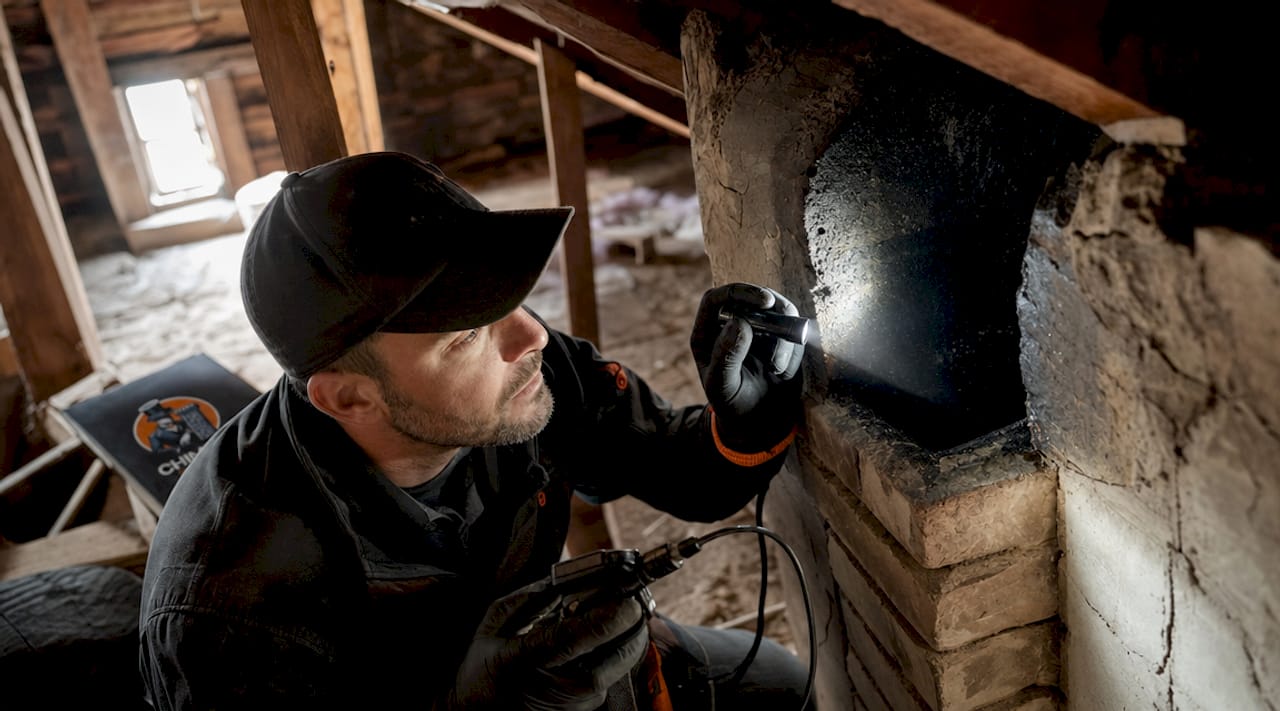
Professional inspections detect and facilitate creosote removal before it reaches dangerous levels. DIY visual checks from the fireplace opening are not sufficient to detect serious buildup or flue cracks, because the upper flue sections and smoke chamber are simply not visible without specialized tools. A CSIA-certified inspector uses rotary brushes, video scanning equipment, and lighting systems to assess every inch of the flue.
Fire risk signs that inspections routinely catch include:
- Stage 2 or Stage 3 creosote deposits in the upper flue
- Glazed creosote on the smoke shelf or smoke chamber
- Cracked or spalled flue tiles that allow heat transfer to combustibles
- Blockages from bird nests, leaves, or debris
- Damaged or missing chimney caps that allow moisture and animals inside
Pro Tip: Schedule your chimney sweep and inspection together. Cleaning without inspection misses structural issues, and inspection without cleaning leaves fire hazards in place. The two services work as a unit.
2. Detection of hidden structural damage before it becomes costly
Hidden structural damage is the most financially consequential issue that regular chimney maintenance benefits can prevent. Cracks in flue liners, deteriorating mortar joints, and failed flashing are invisible from ground level and from inside the firebox. Undetected flue liner cracks allow heat and carbon monoxide to escape into wall cavities and living spaces, creating hazards that build silently over months.
The financial argument for early detection is straightforward. A cracked flue tile caught during an annual inspection costs a few hundred dollars to repair. A full flue relining after years of neglect costs between $2,500 and $7,000 depending on liner material and flue length. Masonry tuckpointing on a section of deteriorated mortar costs far less than rebuilding a collapsed chimney crown or replacing water-damaged brickwork.
Structural issues that inspections discover and homeowners typically miss include:
- Spalling bricks caused by freeze-thaw water infiltration
- Mortar joint erosion along the exterior chimney stack
- Damaged or improperly installed flashing at the roofline
- Efflorescence (white mineral staining) indicating active water intrusion
- Deteriorated chimney crowns that allow water to pool and penetrate
Pro Tip: Always hire a CSIA-certified inspector for your annual evaluation. Over 1,300 professionals hold the CCS® credential, and that training specifically covers the hidden warning signs that general contractors and uncertified sweeps routinely overlook.
3. Improvement in fireplace efficiency and indoor air quality
A clean, structurally sound chimney draws air efficiently, which directly affects how well your fireplace burns and how much fuel you use. Blockages, creosote deposits, and structural damage all restrict the draft, the upward flow of combustion gases through the flue. A restricted draft causes smoke to back-puff into your living space, increases carbon monoxide risk, and forces your fireplace to burn less completely. A clean chimney improves draft and fuel efficiency, saving money and reducing smoke and indoor air pollution.
Gas fireplaces are not exempt from this problem. Blocked flues on gas appliances allow carbon monoxide to accumulate in the home, a colorless and odorless gas that causes poisoning at concentrations that standard household detectors may not catch quickly enough. Professional sweeping combined with inspection confirms that the chimney vents properly and safely for every fuel type.
Indoor air quality benefits linked to regular chimney maintenance include:
- Reduced particulate matter entering living spaces from incomplete combustion
- Lower carbon monoxide risk from properly venting gas appliances
- Elimination of mold and organic debris from animal nests or moisture intrusion
- Improved smoke control during wood fires, reducing respiratory irritants
- Better overall air quality at home for households with children, elderly residents, or allergy sufferers
4. Understanding the three levels of chimney inspection
The chimney inspection industry uses a three-tier classification system established by the NFPA. Knowing which level applies to your situation helps you schedule the right service and budget accurately.
| Inspection Level | Scope | Typical Trigger | Average Cost |
|---|---|---|---|
| Level 1 | Visual check of accessible areas, basic condition assessment | Annual routine inspection | ~$250, 1 to 2 hours |
| Level 2 | Level 1 plus video scanning of flue interior | Real estate transactions, storm damage, appliance change | Starting at $350 |
| Level 3 | Level 1 and 2 plus demolition of obstructing components | Suspected hidden damage, major structural concern | Varies, typically $1,000+ |
A standard Level 1 inspection costs around $250 and covers all accessible areas of the chimney system. Level 2 inspections are required for real estate transactions or damage evaluation and include specialized video scanning that reveals flue liner conditions invisible to the naked eye. Level 3 inspections involve removing portions of the chimney structure to access concealed areas and are reserved for situations where serious hidden damage is suspected.
Timing matters as much as level selection. Scheduling inspections in the off-season, such as spring or early summer, gives you easier appointment availability and often lower prices compared to peak fall months. Off-season scheduling also provides time to complete any necessary repairs before the heating season begins. For DFW homeowners, the window between March and June is ideal. Demand is lower, and contractors have more flexibility to complete masonry or liner work before temperatures drop.
For a detailed comparison of when each level applies, the Level 1 vs Level 2 guide from Chimney Professional Services covers the decision criteria clearly.
5. Insurance, real estate, and liability considerations
Most homeowner's insurance policies require documented chimney inspections and maintenance. Failure to maintain your chimney can lead to denial of fire claims if an investigation reveals that neglected creosote or a known structural defect caused the loss. This is not a theoretical risk. Insurance adjusters specifically look for maintenance records when evaluating chimney-related fire claims.
Real estate transactions add another layer of urgency. A failed chimney inspection during a home sale can delay or cancel the transaction entirely. Buyers' agents in the Dallas-Fort Worth market routinely request Level 2 inspections as a condition of sale, particularly for homes with wood-burning fireplaces or older masonry chimneys. Sellers who have current inspection records and documented repairs close faster and with fewer renegotiations.
The liability argument applies to landlords and property managers as well. Tenants who suffer carbon monoxide exposure or fire damage in a rental property with a neglected chimney create significant legal exposure for the property owner. Documented annual inspections are a straightforward way to demonstrate due diligence.
6. Warning signs that require immediate inspection
Some situations cannot wait for the annual schedule. Signs of chimney issues including cracks, soot staining, water marks, animal intrusion, and strange odors warrant immediate professional inspection to prevent hazards from escalating.
| Warning Sign | Risk Level | Recommended Action |
|---|---|---|
| Visible cracks in firebox or exterior masonry | High | Schedule inspection within 1 week |
| Soot staining above the firebox opening | High | Stop using fireplace, call inspector |
| Water stains on ceiling near chimney | Medium-High | Inspect for flashing and crown damage |
| Animal sounds or debris in firebox | Medium | Inspect for blockage and cap damage |
| Strong odor from fireplace when not in use | Medium-High | Inspect for creosote or moisture issue |
| White efflorescence on exterior bricks | Medium | Inspect for active water infiltration |
Carbon monoxide intrusion is the highest-risk scenario on this list. A cracked flue liner in a gas fireplace or furnace chimney can allow CO to enter living spaces without any visible sign. If your CO detector activates and you have a gas appliance venting through a chimney, stop using the appliance immediately and call for a professional inspection before resuming use. Early intervention on any of these warning signs avoids costly repairs like full relining or chimney rebuilding.
Key takeaways
Annual chimney inspections are the single most cost-effective action a fireplace owner can take to prevent fires, structural failures, and carbon monoxide hazards before they occur.
| Point | Details |
|---|---|
| Fire prevention is the top benefit | Inspections detect and remove creosote before it reaches ignition-level Stage 2 or Stage 3 deposits. |
| Hidden damage costs more when delayed | Flue liner cracks and mortar failures caught early cost hundreds; ignored, they cost thousands. |
| Inspection level must match the situation | Level 1 suits annual checks; Level 2 is required for real estate sales and post-storm evaluations. |
| Off-season scheduling saves time and money | Spring inspections offer better availability and allow repairs to be completed before heating season. |
| Insurance and liability depend on documentation | Undocumented neglect can void fire claims and create legal exposure for homeowners and landlords. |
What we've learned from years of DFW chimney inspections
After inspecting chimneys across the Dallas-Fort Worth Metroplex, the pattern we see most often is not dramatic structural collapse. It is gradual, invisible deterioration that homeowners had no reason to suspect. A hairline crack in a clay flue tile. Mortar joints that look solid from the ground but crumble when probed. Flashing that was never sealed correctly on a 15-year-old roof replacement.
The homeowners who call us after a chimney fire or a carbon monoxide scare almost always say the same thing: the fireplace seemed fine. That is exactly the problem. Chimneys fail quietly. The inspection is the only mechanism that interrupts that silence before it becomes a crisis.
We also hear from homeowners who delayed inspections because they assumed the cost was not worth it for a fireplace they use only a few times a year. That logic does not hold. A gas fireplace used twice a month still vents combustion gases through a flue that can crack, corrode, or block. A wood fireplace used six times a season still deposits creosote. Frequency of use reduces the rate of accumulation, but it does not eliminate the risk.
Our honest recommendation: schedule your inspection in spring, combine it with a sweep if you burned wood this past season, and get the written report. That document protects you with your insurer, your buyer if you sell, and your family every time you light a fire.
— chimneyprofessionalstx
Schedule your professional chimney inspection in DFW
Chimney Professional Services provides certified chimney inspections, sweeps, and repairs across the Dallas-Fort Worth Metroplex, with appointments available daily from 8 AM to 8 PM.
If your inspection reveals structural damage, our team handles everything from masonry tuckpointing and rebuilds to fireplace repair and relining. We also specialize in chimney leak repair for storm-damaged or water-infiltrated systems. Every job is completed by a certified chimney inspector, and every report meets Texas fire safety code requirements. Book your off-season inspection now to secure your preferred appointment time and complete any repairs before fall.
FAQ
How often should a chimney be inspected?
The NFPA and CSIA recommend annual chimney inspections for all fireplace types, including wood, gas, and pellet systems. Waiting for visible problems typically means costly damage has already occurred.
What does a chimney inspection include?
A Level 1 inspection covers all accessible areas of the chimney system and takes 1 to 2 hours. A Level 2 inspection adds video scanning of the flue interior and is required for real estate transactions or after storm damage.
Can I inspect my own chimney?
No. Creosote accumulation and flue liner cracks are not visible during casual homeowner inspections, and DIY checks cannot diagnose these issues effectively. Professional tools and CSIA training are required to identify the hazards that cause fires and carbon monoxide intrusion.
When is the best time to schedule a chimney inspection?
Spring is the optimal time to schedule, as off-season appointments offer better availability and often lower prices than peak fall months. Scheduling early also allows time to complete repairs before the heating season begins.
Does homeowner's insurance require chimney inspections?
Most policies require documented chimney maintenance, and failure to maintain your chimney can result in denial of fire-related claims. Keeping annual inspection records protects your coverage and supports your claim if a fire occurs.