

Annual chimney inspection is the single most effective safety measure a family can take to prevent carbon monoxide poisoning, chimney fires, and expensive structural repairs. The role of annual chimney inspection for families goes far beyond a routine checkup. Both the National Fire Protection Association through NFPA 211 and the Chimney Safety Institute of America (CSIA) mandate yearly inspections for every chimney, fireplace, and vent regardless of how often you use them. For DFW families, where mild winters can create a false sense of security about fireplace safety, this annual chimney safety check is not optional. It is the standard your home and your family deserve.
What is the role of annual chimney inspection for families?
Annual chimney inspection is defined by the industry as a systematic evaluation of your chimney's interior, exterior, flue, and appliance connections performed by a certified professional. The goal is to identify hazards before they become emergencies. A Level 1 inspection, which is the standard annual chimney safety check, covers everything visible without specialized equipment. It takes roughly 30 minutes and costs around $250.
During a Level 1 inspection, a certified inspector examines the chimney crown, flashing, mortar joints, firebox, damper, and flue liner for signs of deterioration. They check for creosote buildup, which is the primary fuel source for chimney fires. They also look for animal nests, debris blockages, and moisture intrusion that can silently compromise your home's structure.
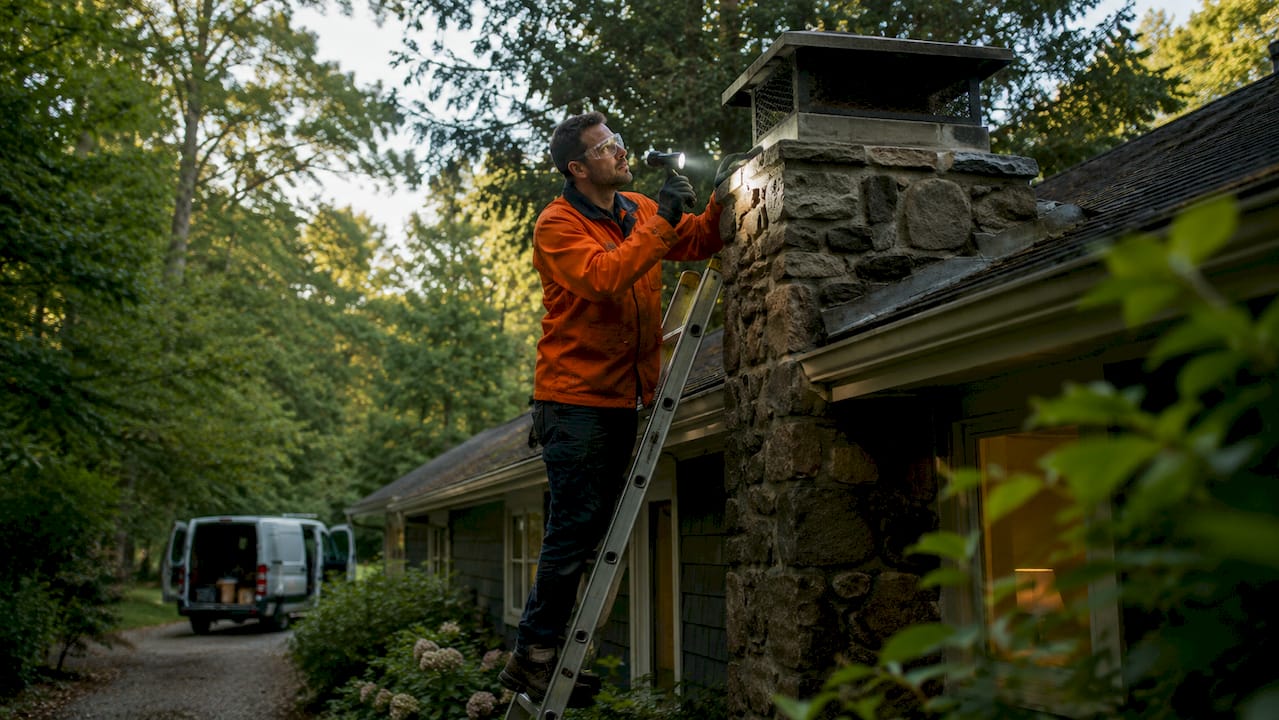
The detection of these issues directly prevents two of the most serious household hazards: chimney fires and carbon monoxide intrusion. Carbon monoxide is odorless and colorless, so your family cannot detect it without professional tools or a working CO detector. A certified inspector catches the structural conditions that allow CO to leak into living spaces before anyone is harmed.
Pro Tip: Install a carbon monoxide detector on every level of your home, including near sleeping areas. A CO detector works alongside your annual inspection but does not replace it.
What happens during a chimney inspection and what does it cover?
A professional chimney inspection follows a clear sequence. Understanding each step helps you know exactly what you are paying for and why it matters.
- Exterior check: The inspector examines the chimney cap, crown, flashing, and masonry for cracks, spalling, or water damage. DFW's heat cycles and occasional freeze events accelerate mortar deterioration faster than many homeowners expect.
- Interior firebox and damper: The inspector checks the firebox walls, smoke shelf, and damper operation. A stuck or corroded damper allows outside air and animals into your home year-round.
- Flue liner inspection: The liner is the most critical component. Cracks in a clay tile liner allow heat and combustion gases to reach combustible framing materials inside your walls.
- Creosote assessment: CSIA-certified inspectors identify creosote deposits at three stages of accumulation. Stage 3 creosote, which has a tar-like consistency, requires professional chemical treatment and is a direct fire risk.
- Appliance connection check: For gas fireplaces and inserts, the inspector verifies that the venting system connects properly and shows no signs of backdrafting.
Each of these checks addresses a specific failure point. Missing even one can leave your family exposed to a hazard that a 30-minute professional visit would have caught.
Pro Tip: Ask your inspector to show you photos of any findings on-site. Reputable certified inspectors document their work digitally, so you have a clear record for insurance or future reference.
Level 1 vs. Level 2 chimney inspection: which does your family need?
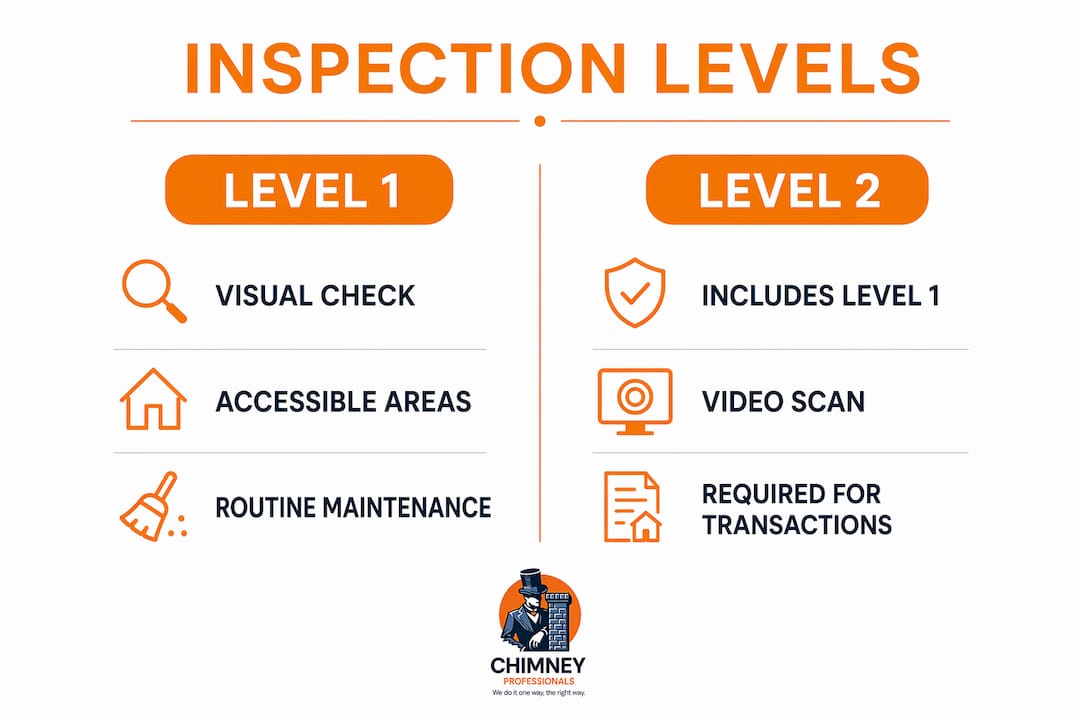
The difference between a Level 1 and Level 2 inspection is not a matter of preference. Inspection levels are condition-based, defined strictly by NFPA 211 standards and the circumstances surrounding your chimney's use and history.
| Feature | Level 1 | Level 2 |
|---|---|---|
| Scope | Visual inspection of accessible areas | All Level 1 areas plus video scanning of flue |
| Cost | Around $250 | Starts at $350 |
| Duration | About 30 minutes | 60–90 minutes |
| When required | Annual routine maintenance | Property sales, storm damage, appliance changes |
| Equipment used | Flashlight, mirror, basic tools | Video camera system, specialized equipment |
A Level 2 inspection is mandatory for real estate transactions because standard home inspectors lack the specialized equipment to evaluate flue liner integrity. Video scanning reveals cracks, gaps, and deterioration that are completely invisible to the naked eye. If you are buying or selling a DFW home, a Level 2 is not an upgrade. It is a requirement.
Level 2 is also triggered after any significant weather event, a chimney fire, a change in heating appliance, or suspected structural damage. Our team at Chimney Professional Services follows NFPA 211 guidelines precisely to determine which level your home requires. You can review the full breakdown in our Level 1 vs. Level 2 guide to understand the triggers before your appointment.
Pro Tip: Never let a contractor talk you into a Level 2 inspection without a clear reason tied to NFPA 211 criteria. The level is determined by your chimney's condition and history, not by upselling.
How chimney inspections fit into your family's home maintenance plan
Annual inspections are the foundation of responsible chimney ownership, but they work best as part of a broader home maintenance strategy. Think of your chimney the same way you think about your HVAC system or roof: it requires scheduled attention to stay safe and functional.
- Schedule an inspection every year without exception. NFPA 211 requires annual checks for all chimneys regardless of use frequency. Even a chimney you used only twice last winter needs a professional evaluation.
- Bundle your inspection with a chimney sweep. Cleaning and inspection together address both the structural condition and the combustion byproduct buildup in one visit. This approach saves time and often reduces the combined cost.
- Address repairs immediately after inspection. Minor cracks in mortar joints cost a fraction of what full masonry rebuilds cost. Catching them at the inspection stage and repairing them promptly is the most cost-effective approach available to families.
- Check your chimney cap and crown after storms. DFW experiences hail, high winds, and sudden temperature swings. A damaged cap allows water and animals into the flue between inspections.
- Keep records of every inspection and repair. Documentation protects your home's resale value and gives future inspectors a baseline for comparison.
Annual inspections prevent costly repairs by catching small problems before they compound. A family that skips inspections to save $250 per year often faces repair bills in the thousands when a minor crack becomes a water-damaged firebox or a creosote fire damages the flue liner.
Best practices for DFW families scheduling their annual chimney safety check
DFW families have a specific scheduling advantage that families in colder climates do not. Because North Texas winters are mild and fireplace season is shorter, late summer and early fall represent the ideal window for booking your annual inspection.
- Book in August or September. Scheduling in early fall gives you the best appointment availability and ensures your chimney is cleared and ready before the first cold front arrives in November.
- Plan biannual cleanings if you burn wood frequently. DFW families who use wood-burning fireplaces three or more times per week need chimney cleaning every six months to manage creosote safely. One inspection per year is still the standard, but cleaning frequency increases with use.
- Hire only CSIA-certified inspectors. Certification from the Chimney Safety Institute of America means the inspector has passed rigorous testing on chimney anatomy, fire prevention, and safety ethics. CSIA-certified professionals catch small cracks and deposits that uncertified inspectors routinely miss.
- Verify familiarity with local codes. Texas fire safety codes and DFW municipal requirements add a layer of compliance beyond NFPA 211. Your inspector should know both.
- Ask about digital reporting. A written or digital inspection report gives you documentation for insurance claims, future repairs, and home sales.
Pro Tip: Call your chimney service provider in July to lock in an August or September appointment. By October, most certified inspectors in the DFW area are fully booked through the holiday season.
Common myths about chimney inspections that put families at risk
Several persistent misconceptions lead DFW families to skip their annual chimney safety check. Each one carries real consequences.
Myth 1: "We barely use our fireplace, so we don't need an inspection." Unused chimneys face structural threats from moisture infiltration, animal nesting, and material deterioration that have nothing to do with how often you light a fire. A bird or squirrel nest in an uncapped flue creates a blockage that can cause carbon monoxide to back-draft into your home the first time you use the fireplace.
Myth 2: "I can inspect my own chimney with a flashlight." A homeowner cannot safely assess flue liner integrity, detect microscopic mortar cracks, or identify Stage 2 or Stage 3 creosote without professional training and tools. Carbon monoxide risks are invisible to the naked eye. Certified inspections exist precisely because the hazards are not visible without specialized knowledge and equipment.
Myth 3: "My home inspector checked it when I bought the house." General home inspectors are not trained chimney specialists. They perform a surface-level visual check that misses flue liner damage, creosote accumulation, and appliance connection issues. A CSIA-certified chimney inspection is a separate and more thorough process.
Skipping your annual inspection does not eliminate the risk. It only delays your awareness of it.
Key takeaways
Annual chimney inspection is the most reliable way for DFW families to prevent chimney fires, carbon monoxide exposure, and expensive structural repairs before they occur.
| Point | Details |
|---|---|
| Annual inspections are mandatory | NFPA 211 requires yearly chimney checks for every home regardless of fireplace use frequency. |
| Level 1 covers routine maintenance | A standard Level 1 inspection costs around $250 and takes about 30 minutes with a certified professional. |
| Level 2 is triggered by specific events | Property sales, storm damage, and appliance changes require a Level 2 inspection with video scanning. |
| Early fall is the best time to book | Scheduling in August or September secures availability and prepares your chimney before winter use. |
| DIY inspections miss critical hazards | Only CSIA-certified inspectors have the tools and training to detect CO risks, liner cracks, and creosote stages. |
Why annual inspections matter more than most DFW families realize
We have inspected hundreds of chimneys across the Dallas-Fort Worth area, and the pattern we see most often is not neglect. It is underestimation. Families assume that because their fireplace looks fine from the living room, it is fine. That assumption is where the real risk lives.
The chimneys that concern us most are the ones that have gone three or four years without a professional evaluation. By that point, what started as a hairline crack in the flue liner has allowed moisture to work its way into the masonry. What started as light creosote has hardened into a Stage 2 deposit that requires more than a standard sweep to remove. These are not rare cases. They are the predictable result of skipping the annual service your chimney needs.
DFW's climate creates a specific set of conditions that make this worse. Our summer heat expands masonry materials, and our occasional winter freezes contract them. That cycle stresses mortar joints and crowns in ways that accumulate over time. A family that books their inspection every August is catching those stress points before they become failures.
The families who call us for emergency repairs in January almost always say the same thing: they knew they should have scheduled an inspection earlier. We would rather be the team that prevents that call than the one that responds to it.
— chimneyprofessionalstx
Schedule your DFW chimney inspection with Chimney Professional Services
Chimney Professional Services provides CSIA-certified Level 1 and Level 2 inspections across the Dallas-Fort Worth Metroplex, fully compliant with NFPA 211 standards. Our team performs thorough evaluations with digital reporting so your family has a clear record of your chimney's condition. We offer bundled inspection and cleaning packages timed for DFW's seasonal needs, with transparent pricing and same-day availability throughout the week.
Whether you need a routine annual inspection, a pre-sale Level 2 evaluation, or fireplace repair in Dallas, our certified inspectors are available daily from 8 AM to 8 PM to work around your family's schedule. Contact Chimney Professional Services today to book your appointment and protect your home before the fireplace season begins.
FAQ
How often should a family inspect their chimney?
NFPA 211 requires an annual inspection for every chimney, fireplace, and vent regardless of use frequency. One inspection per year is the standard for all DFW families.
What is the difference between a Level 1 and Level 2 chimney inspection?
A Level 1 inspection is a visual check of accessible areas costing around $250. A Level 2 inspection adds video scanning of the flue liner and is required for property sales, storm damage, or appliance changes.
Can I inspect my own chimney to save money?
Homeowners cannot safely detect carbon monoxide risks, flue liner cracks, or advanced creosote stages without professional tools and CSIA certification. DIY inspections miss the hidden hazards that cause fires and CO exposure.
When is the best time to schedule a chimney inspection in DFW?
Late summer or early fall, specifically August or September, is the best window for DFW families. Early fall scheduling secures appointment availability and ensures your chimney is ready before the first cold front.
Does an unused chimney still need an annual inspection?
Yes. Unused chimneys face damage from moisture, animal nesting, and material deterioration independent of fireplace use. A blocked or cracked flue is dangerous the first time you light a fire after a long gap.