
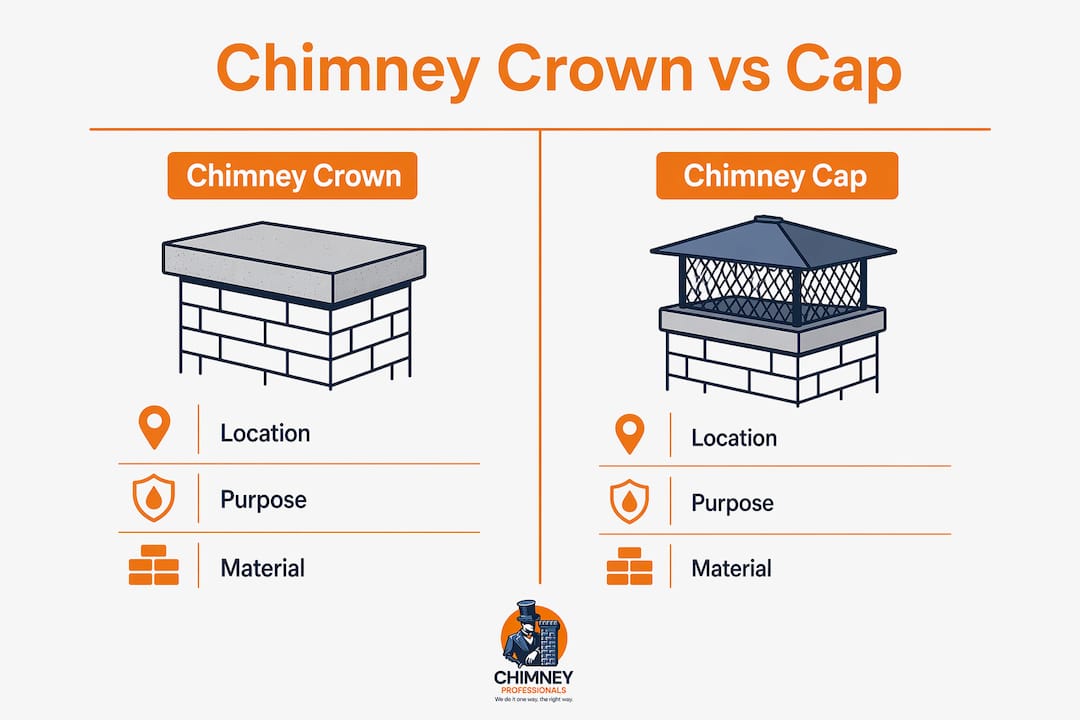
A chimney crown is a concrete or masonry slab that seals the top of your chimney structure, while a chimney cap is a metal cover installed above the flue opening to block rain, animals, and sparks. These two components are not interchangeable. Confusing them is one of the most common mistakes homeowners make, and it leads to expensive repairs. Understanding the difference between a chimney crown and cap tells you exactly what to inspect, what to repair first, and why both must work together to keep your chimney and home safe.
What is a chimney crown and why does it matter?
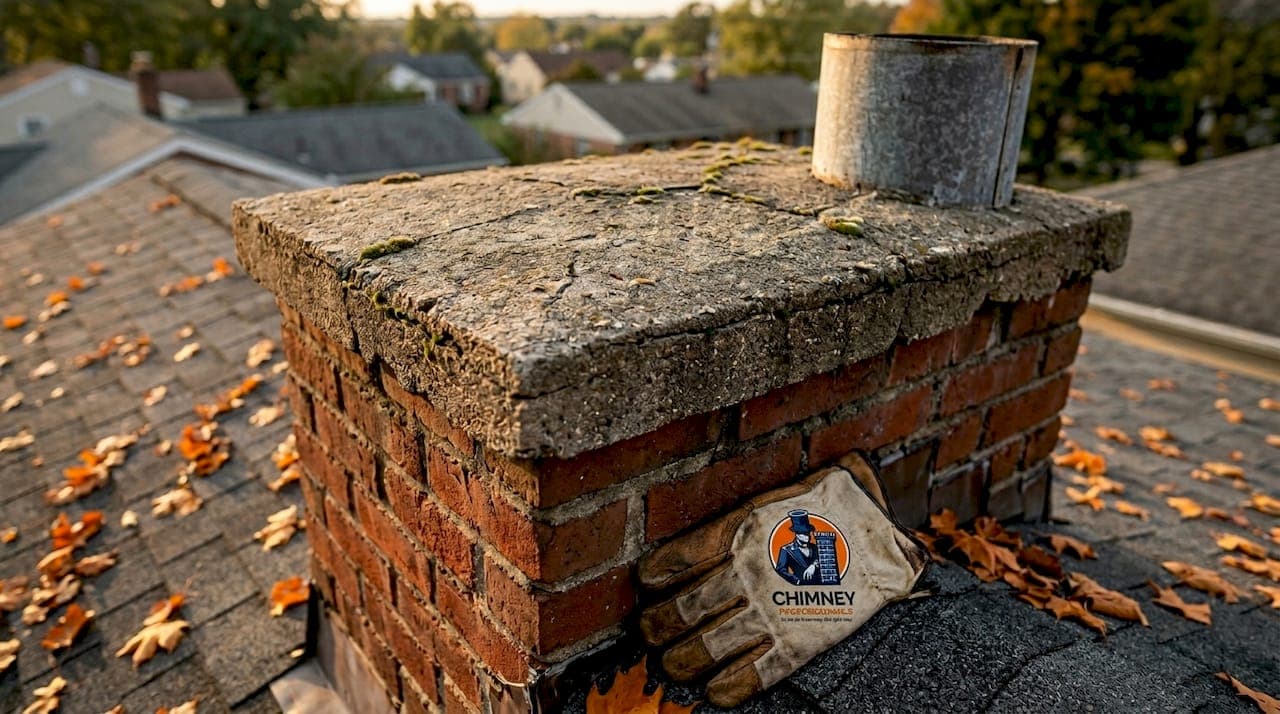
The chimney crown is a concrete or mortar slab that covers the entire top surface of a masonry chimney, surrounding the flue opening. Its job is to direct water away from the chimney's bricks and mortar joints, preventing moisture from seeping into the structure below. Without a sound crown, water works its way into the masonry and causes progressive damage that compounds with every rain cycle.
How crown damage develops
Crowns are exposed to direct sun, rain, and temperature swings year-round. In climates with freeze-thaw cycles, water enters hairline cracks, freezes, expands, and widens those cracks with each cold snap. Over time, this process causes brick spalling, mortar joint failure, and interior moisture problems. Signs of crown damage include visible surface cracks, spalling bricks on the chimney exterior, condensation inside the flue liner, and water stains on interior walls near the fireplace.
Crown materials and repair options
Crowns are built from concrete, mortar, or purpose-formulated crown coat products. Standard mortar crowns are the most common but also the most prone to cracking because mortar lacks the flexibility of concrete. Repair options range from applying a waterproof sealant over minor cracks, to resurfacing with a flexible crown coat product, to a full crown rebuild for severe structural damage. Addressing crown damage early prevents expensive chimney structural repairs that can run into thousands of dollars.
Here is what to watch for when assessing your chimney crown:
- Hairline or wide cracks across the crown surface
- Chunks of crown material missing or crumbling at the edges
- Spalling or flaking bricks directly below the crown
- Water stains on the ceiling or walls near the fireplace
- Efflorescence (white mineral deposits) on chimney bricks
Pro Tip: A roof inspection before any chimney repair work is smart practice. A pre-repair roof check can reveal related flashing or drainage issues that compound crown damage if left unaddressed.
What is a chimney cap and what does it do?
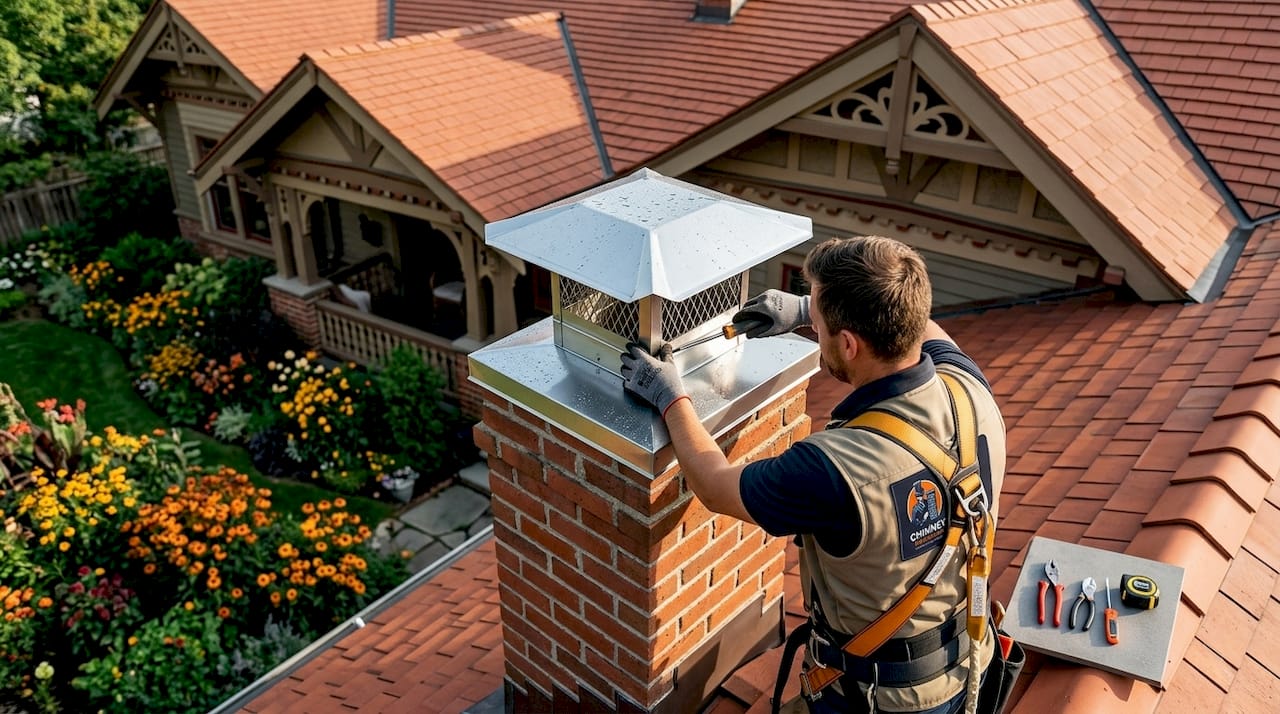
A chimney cap is a metal cover, typically made from stainless steel, copper, or galvanized steel, that mounts above the flue opening at the top of the chimney. Its primary function is to cover the flue so that rain, debris, birds, squirrels, and other animals cannot enter. Chimney caps also protect the chimney liner from moisture damage and slow creosote buildup by keeping the flue dry between fires.
Cap types and material choices
Caps are not one-size-fits-all. The right cap depends on your chimney's flue size, the number of flues, and your local weather conditions. Types of chimney caps include single-flue caps that cover one opening, multi-flue caps that cover the entire chimney top with one unit, and wind-resistant models designed for areas with strong prevailing winds. Proper size and fit are critical. A cap that is too small leaves gaps, and one that is too large can restrict airflow and affect draft.
Stainless steel caps are the most durable and corrosion-resistant option for most climates. Copper caps are premium, long-lasting, and develop a distinctive patina over time. Galvanized steel caps are the most affordable but tend to rust within a few years in humid or coastal environments.
Spark arrestors and code requirements
Chimney caps with mesh screens serve a second safety function beyond animal exclusion. IRC 2018 Section R1003.9.1 requires spark arrestors on masonry chimneys in areas where local authorities determine them necessary, with mesh openings between 3/8 inch and 1/2 inch. This specific range matters because smaller openings clog with creosote and restrict draft, while larger openings allow burning embers to escape. For homeowners in wildfire-prone areas, including parts of the Dallas-Fort Worth Metroplex that border open land, spark arrestor compliance is not optional. It is a fire safety requirement.
Pro Tip: Inspect your cap's mesh screen every fall before fireplace season. Creosote and debris clog screens faster than most homeowners expect, and a blocked screen reduces draft noticeably.
Watch for these signs that your chimney cap needs attention:
- Visible rust or corrosion on the cap body or mesh
- Loose or missing mounting brackets
- Torn, bent, or missing mesh screen sections
- Evidence of animal nesting inside the flue
- Cap that has shifted or blown off after a storm
Chimney crown vs cap: side-by-side comparison
The difference between a chimney crown and cap becomes clearest when you compare them directly. Both protect the chimney, but they operate at different levels and address different threats.
| Feature | Chimney Crown | Chimney Cap |
|---|---|---|
| Location | Covers the entire chimney top surface | Mounts above the flue opening only |
| Material | Concrete, mortar, or crown coat product | Stainless steel, copper, or galvanized steel |
| Primary function | Seals chimney masonry from water infiltration | Blocks rain, animals, debris, and sparks from entering the flue |
| Typical lifespan | 20 to 50 years with proper maintenance | 5 to 20 years depending on material and climate |
| Common damage causes | Freeze-thaw cycles, UV exposure, settling | Rust, storm impact, animal interference |
| Repair or replacement | Sealant, resurfacing, or full rebuild | Direct replacement, usually a straightforward swap |
A damaged cap removed by a storm exposes both the crown and the flue to water intrusion, accelerating deterioration of both components. This is why replacing a missing or damaged cap promptly is one of the highest-value, lowest-cost maintenance tasks a homeowner can perform.
Do you need both a chimney crown and a cap?
Yes. A chimney crown and a chimney cap protect different parts of the chimney from different threats, and neither one compensates for the absence of the other. The crown protects the masonry structure. The cap protects the flue interior. Together, they form a complete weather and pest barrier at the top of the chimney.
The sequence of repairs matters just as much as having both components in place. Installing a cap over a cracked crown does not prevent water from entering the chimney. Water bypasses the cap's mounting area through crown cracks and reaches the liner, causing deterioration that a new cap cannot stop. Crown repair or sealing must come first.
Here is a practical checklist for homeowners evaluating their chimney's top components:
- Inspect the crown for cracks or crumbling edges before every fireplace season
- Check the cap for rust, loose brackets, and intact mesh after every major storm
- Repair crown damage before installing or replacing a cap
- Confirm your cap's mesh meets local spark arrestor requirements if you live near open land or wildfire-risk zones
- Schedule a professional chimney inspection if you notice water stains, spalling bricks, or draft problems
When DIY falls short
DIY cap installation is possible for a homeowner comfortable working at roof height, but it carries real risk if the crown condition is not properly assessed first. DIY cap installation over a compromised crown leads to poor water protection and accelerated damage despite the cost of a new cap. A certified chimney inspector can identify crown damage that is not visible from the ground and recommend the correct repair sequence before any cap work begins. For homeowners in the Dallas-Fort Worth area, a professional chimney inspection combined with a roof check gives you the full picture of your home's weather protection.
Key takeaways
A chimney crown protects the masonry structure from water damage, and a chimney cap protects the flue opening from rain, animals, and sparks. Both are required for complete chimney protection, and crown repair must always precede cap installation.
| Point | Details |
|---|---|
| Crown seals the masonry | The chimney crown is concrete or mortar that directs water away from bricks and mortar joints. |
| Cap covers the flue opening | A metal chimney cap blocks rain, animals, debris, and sparks from entering the flue. |
| Repair sequence matters | Crown damage must be repaired before installing a new cap, or water will still enter through crown cracks. |
| Spark arrestor mesh is code-regulated | IRC 2018 requires mesh openings between 3/8 and 1/2 inch for spark arrestors in applicable areas. |
| Both components have distinct lifespans | Crowns last 20 to 50 years; caps last 5 to 20 years depending on material and climate exposure. |
What we see most often in the field
After years of inspecting chimneys across the Dallas-Fort Worth Metroplex, we at Chimney Professional Services see one pattern more than any other: homeowners replace a chimney cap and assume the job is done, not realizing the crown underneath is cracked and still letting water in. The cap looks new and solid from the ground, but the damage continues below it. By the time interior water stains appear, the liner or masonry has already taken a hit.
The other misconception we encounter regularly is that a chimney cap is only for keeping birds out. That is a small part of what a well-fitted stainless steel cap with proper mesh actually does. In North Texas, where summer storms are intense and wildfire risk exists in outlying areas, spark arrestor compliance and rain protection are the real reasons a quality cap matters.
Our honest recommendation: do not budget for a new cap without first budgeting for a crown inspection. A crown resurfacing with a flexible crown coat product costs far less than a liner replacement caused by years of undetected water infiltration. Prioritize the crown, then select a cap that fits your flue correctly and meets local code. That sequence protects your investment and keeps your home safe.
— chimneyprofessionalservices
Protect your chimney with expert crown and cap service
If you have noticed cracks in your chimney crown, a rusted or missing cap, or water stains near your fireplace, Chimney Professional Services is ready to help. Our certified inspectors serve the Dallas-Fort Worth Metroplex daily from 8 AM to 8 PM, and we assess both crown and cap condition before recommending any repair.

We provide professional chimney masonry repair including crown resurfacing and full rebuilds, along with expert chimney leak repair to stop water damage fast. Every cap installation we perform is sized correctly, code-compliant, and installed on a sound crown. Contact Chimney Professional Services today to schedule your inspection and get the protection your chimney needs.
FAQ
What is the main difference between a chimney crown and a cap?
A chimney crown is a concrete or masonry slab that covers the entire top of the chimney structure to shed water away from the bricks and mortar. A chimney cap is a metal cover that sits above the flue opening to block rain, animals, and sparks from entering the flue.
Can I install a chimney cap without repairing the crown first?
Installing a cap over a damaged crown does not stop water infiltration. Water enters through crown cracks and bypasses the cap's mounting area, continuing to deteriorate the liner and masonry below.
What type of chimney cap is best for most homes?
Stainless steel single-flue or multi-flue caps are the most durable and corrosion-resistant choice for most climates. Copper caps offer a longer lifespan but at a higher cost, while galvanized steel caps are budget-friendly but prone to rust within a few years.
Do chimney caps need to meet any code requirements?
Yes. IRC 2018 Section R1003.9.1 requires spark arrestors on masonry chimneys in areas designated by local authorities, with mesh screen openings between 3/8 inch and 1/2 inch. Homeowners in wildfire-prone zones must confirm their cap meets this specification.
How often should a chimney crown and cap be inspected?
Both components should be inspected at least once a year, ideally before fireplace season in the fall. After any major storm, check the cap for displacement or damage and look for new cracks in the crown from ground level or during a professional inspection.