
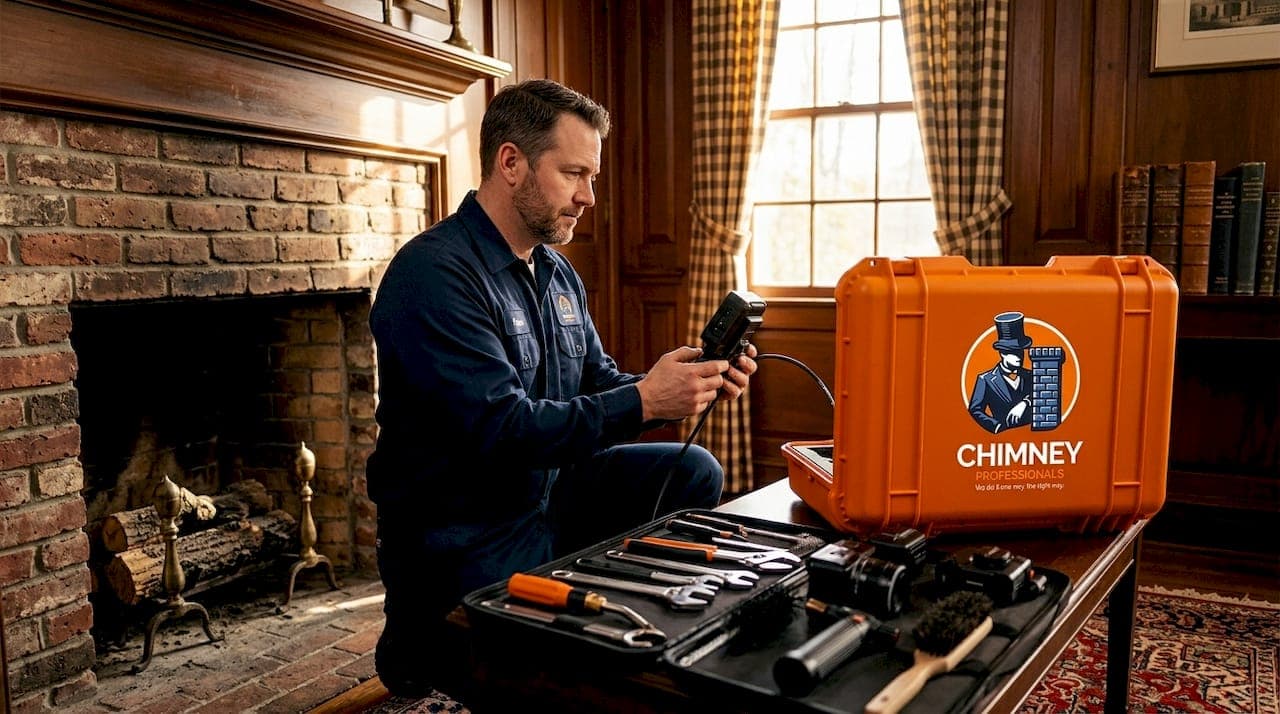
A Level 2 chimney inspection is a structured examination defined by NFPA 211 that covers all Level 1 checks plus a mandatory video scan of the flue interior and a physical review of accessible concealed spaces including attics, crawl spaces, and basements. This inspection standard exists because the naked eye simply cannot detect the cracks, liner failures, and blockages that cause house fires and carbon monoxide poisoning. For homeowners in the Dallas-Fort Worth area and property managers overseeing multiple units, understanding what this inspection covers, when it is required, and what it costs is the difference between a safe property and a serious liability.
What does a Level 2 chimney inspection cover?
A Level 2 inspection includes everything in a Level 1 inspection and then goes significantly further in both physical access and technology. Level 1 is a basic visual check of readily accessible areas: the firebox, damper, smoke chamber, and exterior crown. Level 2 adds a thorough examination of accessible concealed areas and, critically, a camera-based scan of the entire flue liner from top to bottom.
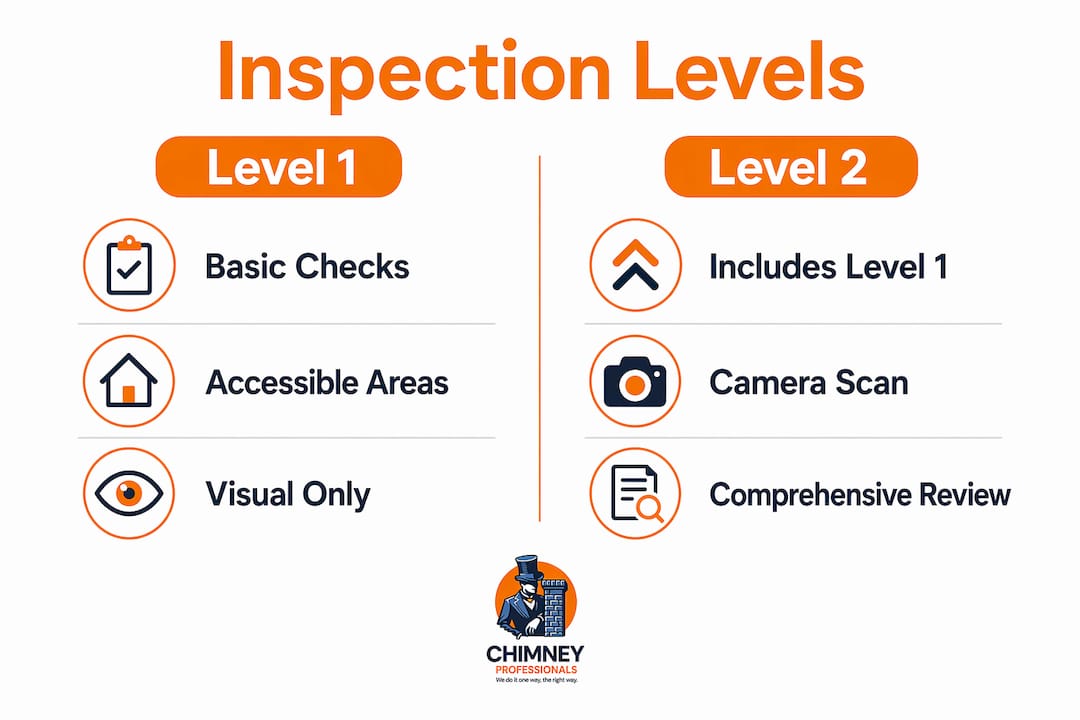
The technology requirement is not optional. NFPA 211 Section 15.4.2.3 states that the internal surfaces of all flue liners must be inspected using image scanning technology. A flashlight and mirror do not meet this standard. This distinction matters because many home inspectors and general contractors offer chimney evaluations that skip the camera scan entirely, which means those evaluations do not qualify as Level 2 inspections regardless of what they are called.
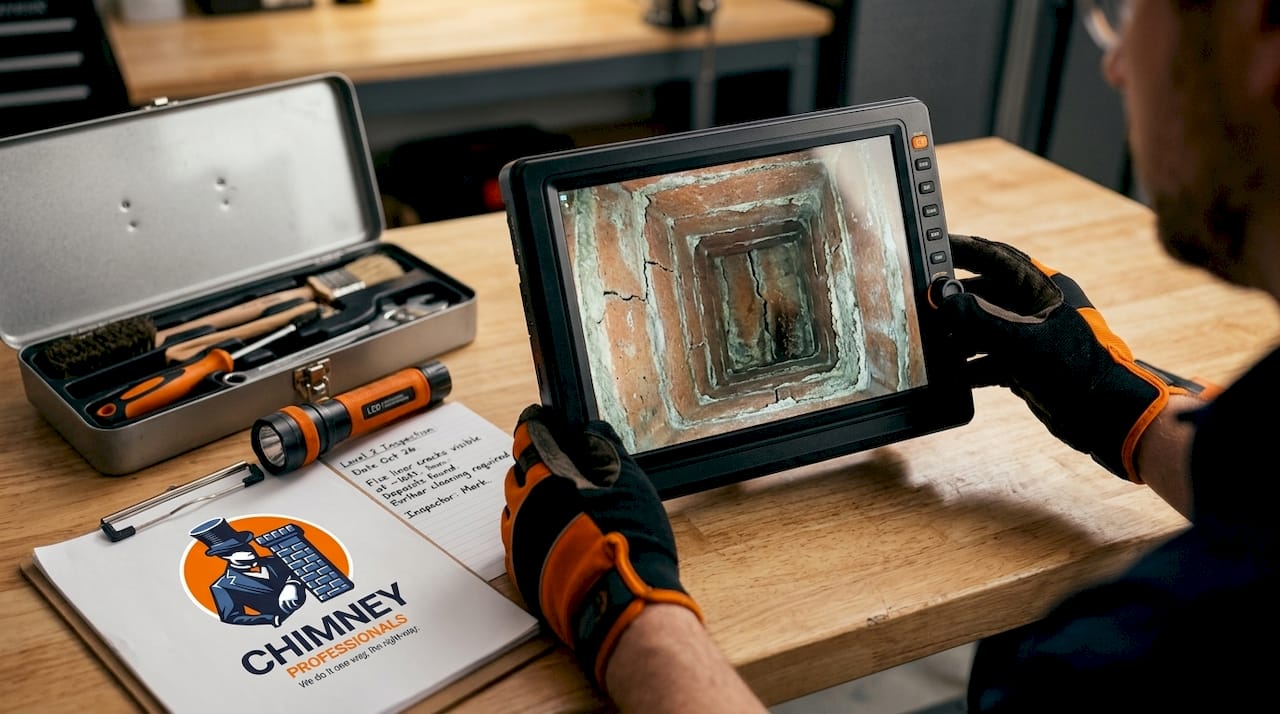
The table below shows the key differences between the two inspection types:
| Feature | Level 1 | Level 2 |
|---|---|---|
| Accessible exterior and interior areas | Yes | Yes |
| Attic, crawl space, basement access | No | Yes |
| Video or image scan of flue liner | No | Required |
| Clearances to combustibles | Basic check | Detailed check |
| Appliance connections review | Basic | Thorough |
| Documentation standard | General notes | Written report with video evidence |
Pro Tip: When hiring an inspector, ask directly whether they use a dedicated chimney camera system. If they hesitate or mention using a flashlight, that inspection will not meet the NFPA 211 Level 2 standard.
When is a Level 2 chimney inspection required?
NFPA 211 identifies specific trigger events that make a Level 2 inspection mandatory rather than optional. These triggers exist because certain changes or incidents create conditions where hidden damage is highly probable and a basic visual check is not sufficient to confirm safety.
The most common triggers include:
- Real estate transactions. Any property sale or transfer requires a Level 2 inspection. Buyers deserve to know the condition of the chimney system before closing, and sellers benefit from documented proof of compliance.
- Change in heating appliance or fuel type. Switching from a wood-burning fireplace to a gas insert, or upgrading to a higher-efficiency appliance, changes the heat output, flue gas temperature, and condensation characteristics. These changes can render a previously adequate liner unsafe.
- Chimney fires. A chimney fire generates temperatures that can exceed 2,000 degrees Fahrenheit inside the flue. After a chimney fire, a Level 2 inspection is required to detect heat damage such as cracked liners or mortar failure that would not be visible from outside.
- Earthquakes or structural events. Ground movement can shift masonry and crack liner sections without any visible exterior damage. A video scan is the only reliable way to confirm the flue is still intact.
- System modifications or relining. Any time the chimney system is modified, including adding a liner, changing the flue configuration, or altering the connection point, a Level 2 inspection confirms the modification was completed correctly.
Property managers overseeing rental units or multi-family properties should treat these triggers as compliance gates. A tenancy change that involves a new heating appliance, or a storm event that may have caused structural movement, warrants scheduling a Level 2 inspection before the next occupant uses the fireplace.
How a Level 2 chimney inspection is performed
The inspection follows a defined sequence that combines physical access with technology-assisted documentation. Here is how a qualified inspector works through the process:
-
Exterior review. The inspector examines the chimney crown, cap, flashing, mortar joints, and masonry for visible deterioration, water damage, or displacement. This mirrors the Level 1 exterior check but is documented more formally.
-
Accessible interior spaces. The inspector accesses the attic, crawl space, and basement to examine chimney sections that pass through those areas. This step checks clearances to combustibles, framing contact, and any signs of moisture intrusion or structural movement.
-
Firebox and smoke chamber. The firebox walls, damper, smoke shelf, and smoke chamber are examined for cracks, spalling, and creosote buildup. The inspector checks that the firebox dimensions and damper operation meet current standards.
-
Video scan of the flue liner. A specialized chimney camera is lowered through the flue from the top or inserted from the firebox below. The camera captures the full interior surface of the liner, revealing cracks, gaps, blockages, and deterioration that no other method can detect.
-
Appliance connections and clearances. The inspector verifies that any connected appliances are properly sized for the flue, that connections are sealed, and that clearances to combustible materials meet code requirements.
-
Written report with video documentation. The inspector produces a detailed written report that includes findings from each step, photographs, and the video footage from the flue scan. This documentation is the foundation for any repair decisions and serves as a legal record for real estate transactions or insurance claims.
The video documentation piece is what separates a genuine Level 2 inspection from a quick visual check. Many evaluations fail the Level 2 standard because they omit the comprehensive video scan and accessible space checks that discover critical concealed damage. When you receive a report, confirm it includes video footage and written findings for each inspection area.
What are the benefits of a Level 2 inspection for homeowners?
The core benefit is early detection of hidden defects before they become emergencies. Video scanning of the flue reveals blockages, cracks, and creosote buildup that pose direct fire and carbon monoxide hazards. Catching a cracked liner before the heating season costs far less than responding to a chimney fire or a carbon monoxide incident.
The specific benefits break down as follows:
- Fire hazard prevention. Cracked or deteriorated flue liners allow combustion gases and heat to reach surrounding wood framing. A Level 2 inspection identifies these conditions before they ignite.
- Carbon monoxide protection. Gaps in the liner or blocked flues can redirect carbon monoxide into living spaces. Camera inspection confirms the flue path is clear and sealed.
- Appliance change verification. When you install a new gas insert or wood stove, the inspection confirms the existing flue is compatible with the new appliance's output and venting requirements.
- Real estate compliance. Buyers, sellers, and their agents rely on Level 2 documentation to confirm chimney condition at closing. This protects all parties and satisfies lender requirements in many transactions.
- Informed repair decisions. A thorough inspection report tells you exactly what needs repair, what can wait, and what is in good condition. You can review chimney repair priorities with confidence rather than guessing.
- Reduced liability for property managers. Documented inspections demonstrate due diligence. If a tenant reports a chimney-related issue, a recent Level 2 report is evidence that the system was professionally evaluated.
Pro Tip: Schedule your Level 2 inspection in late summer or early fall before the heating season begins. Inspectors are less booked, and you have time to complete any repairs before the first cold front arrives in the Dallas-Fort Worth area.
If the video scan produces ambiguous or suspicious results, a qualified inspector will recommend escalating to a Level 3 inspection. Level 3 escalation involves removing or opening chimney components to confirm damage that the camera cannot fully characterize. This protocol ensures that safety-critical repairs are based on verified conditions rather than assumptions.
Key takeaways
A Level 2 chimney inspection is the only NFPA 211-compliant method for confirming chimney safety during property transfers, appliance changes, or after damaging events, because it combines physical access to concealed spaces with mandatory video scanning of the flue liner.
| Point | Details |
|---|---|
| Camera scan is non-negotiable | NFPA 211 requires image scanning technology; a flashlight or mirror does not qualify. |
| Specific events trigger Level 2 | Property sales, appliance changes, chimney fires, and earthquakes all require a Level 2 inspection. |
| Documentation protects all parties | A written report with video footage supports repair decisions, real estate transactions, and insurance claims. |
| Level 1 is not a substitute | Level 1 inspections miss concealed damage in attics, crawl spaces, and the flue interior. |
| Escalation to Level 3 is protocol | Ambiguous video findings require a Level 3 inspection, not guesswork. |
Why we take Level 2 inspections more seriously than most
After years of performing chimney inspections across the Dallas-Fort Worth Metroplex, our team at Chimney Professional Services has seen a consistent pattern: the properties that end up with the most serious damage are the ones where a Level 2 inspection was skipped or substituted with a basic visual check. A home inspector glancing into the firebox with a flashlight is not the same as a certified chimney professional running a camera through the full length of the flue liner. Those are fundamentally different evaluations, and confusing them is a real safety risk.
We also see homeowners underestimate the trigger events. A minor chimney fire that "didn't seem that bad" still generates enough heat to crack a clay tile liner in ways that are invisible from outside. An earthquake tremor that barely rattled the dishes can shift masonry enough to create a gap in the flue. These are exactly the conditions that a Level 2 inspection is designed to catch.
Our practical advice: treat the NFPA 211 trigger list as a checklist, not a suggestion. If any of those events have occurred since your last inspection, schedule a Level 2 before using the fireplace again. The cost of the inspection is a fraction of the cost of a chimney fire or a carbon monoxide incident. And when you do schedule, verify that your inspector uses dedicated camera equipment and will provide a written report with video documentation. If they cannot confirm both, find someone who can.
— chimneyprofessionalservices
Schedule your Level 2 inspection with Chimney Professional Services
Chimney Professional Services performs Level 2 chimney inspections across the Dallas-Fort Worth Metroplex using advanced camera systems that meet NFPA 211 standards. Our certified inspectors examine every accessible area of your chimney system and deliver a written report with full video documentation so you know exactly what you are working with.
When our inspection reveals masonry damage, liner deterioration, or water intrusion, our repair team is ready to address it. We specialize in chimney masonry repair including tuckpointing and rebuilds, as well as fireplace repair services for both gas and wood-burning systems. We are open daily from 8 AM to 8 PM and work around your schedule. Contact Chimney Professional Services today to book your Level 2 inspection and protect your home before the next heating season.
FAQ
What is the difference between Level 1 and Level 2 chimney inspections?
A Level 1 inspection covers readily accessible exterior and interior areas with a basic visual check, while a Level 2 inspection adds examination of accessible concealed spaces and a mandatory video scan of the flue liner interior per NFPA 211.
How much does a Level 2 chimney inspection cost?
Costs vary by region and chimney complexity, but Level 2 inspections typically run higher than Level 1 due to the camera equipment and extended inspection scope. Contact a certified chimney inspector in your area for an accurate quote.
Do I need a Level 2 inspection when buying a home?
Yes. NFPA 211 requires a Level 2 inspection during any property sale or transfer. This protects buyers from inheriting hidden chimney defects and gives sellers documented proof of the system's condition at closing.
Can a home inspector perform a Level 2 chimney inspection?
A home inspector can perform a general chimney assessment, but a true Level 2 inspection requires a certified chimney professional with dedicated camera equipment. Most home inspectors do not carry chimney camera systems and cannot meet the NFPA 211 imaging requirement.
What happens if a Level 2 inspection finds serious damage?
If the video scan reveals ambiguous or serious damage, the inspector will recommend a Level 3 inspection that involves opening or removing chimney components to confirm the extent of the problem before repairs begin.