
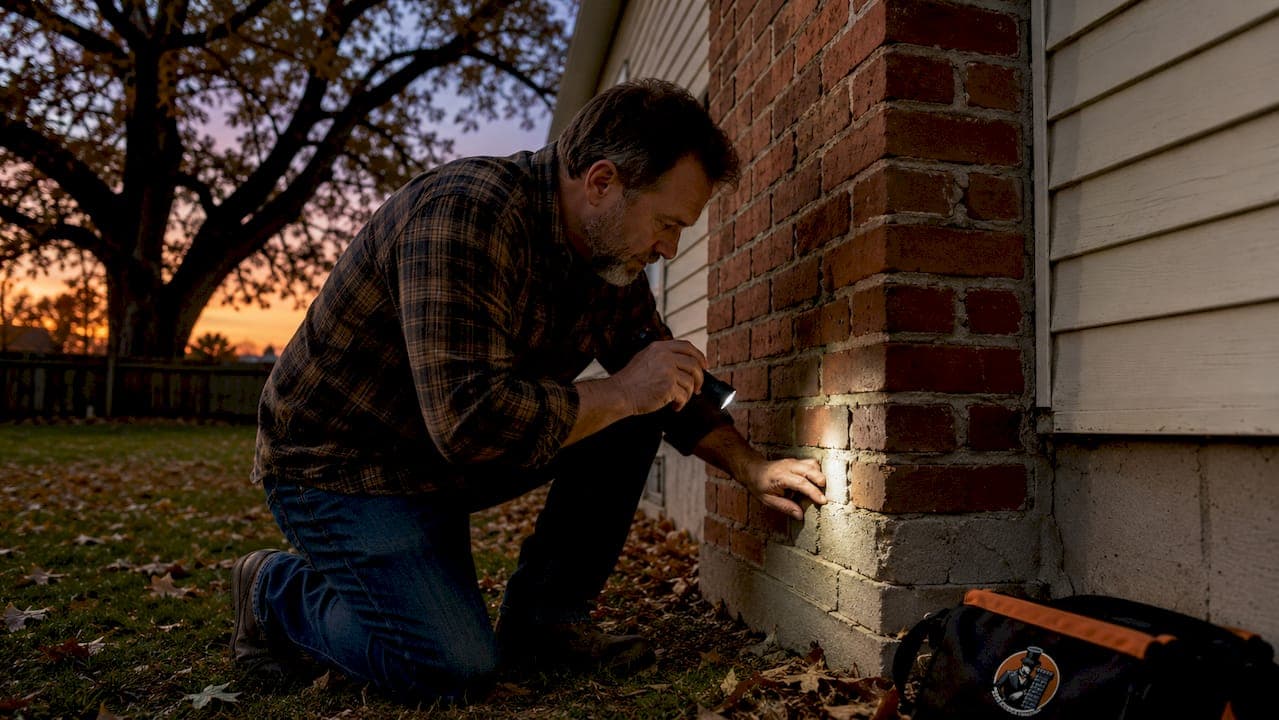
Foundation chimney damage signs are visible indicators that your chimney structure and possibly your home's foundation are compromised and need prompt attention. These symptoms, which include stair-step cracks, separation gaps, visible leaning, and interior water stains, are collectively called chimney foundation settlement indicators by structural professionals. Catching them early is the difference between a targeted masonry repair and a full foundation intervention. This guide walks you through every major warning sign, explains what each one means structurally, and tells you when to call a certified inspector.
1. What are the most common visible foundation chimney damage signs?
The most reliable foundation chimney damage signs appear directly on the masonry and at the chimney-to-house connection. Multiple symptoms occurring together confirm active foundation movement rather than isolated cosmetic wear.
Here are the primary physical indicators to look for:
- Stair-step or diagonal cracks in brick. Stair-step and diagonal cracks in brick or mortar indicate foundation movement and should never be dismissed. Vertical cracks are generally less severe, while horizontal or stair-step patterns signal soil pressure or active settling.
- Separation gaps between chimney and house exterior. A visible gap between the chimney masonry and the adjacent house wall is a direct sign of differential settlement. Counterflashing separation is often the first visible indicator, and daylight or water stains near interior chimney walls follow quickly.
- Spalling bricks and crumbling mortar joints. Spalling occurs when moisture freezes inside brick, forcing the face to flake off. Deteriorating mortar joints accelerate this process and weaken the entire chimney column.
- Interior trim gaps and drywall stress near the fireplace. Corner cracks, drywall tape stress, and interior trim gaps around the fireplace opening are interior chimney damage indicators that mirror what is happening structurally outside.
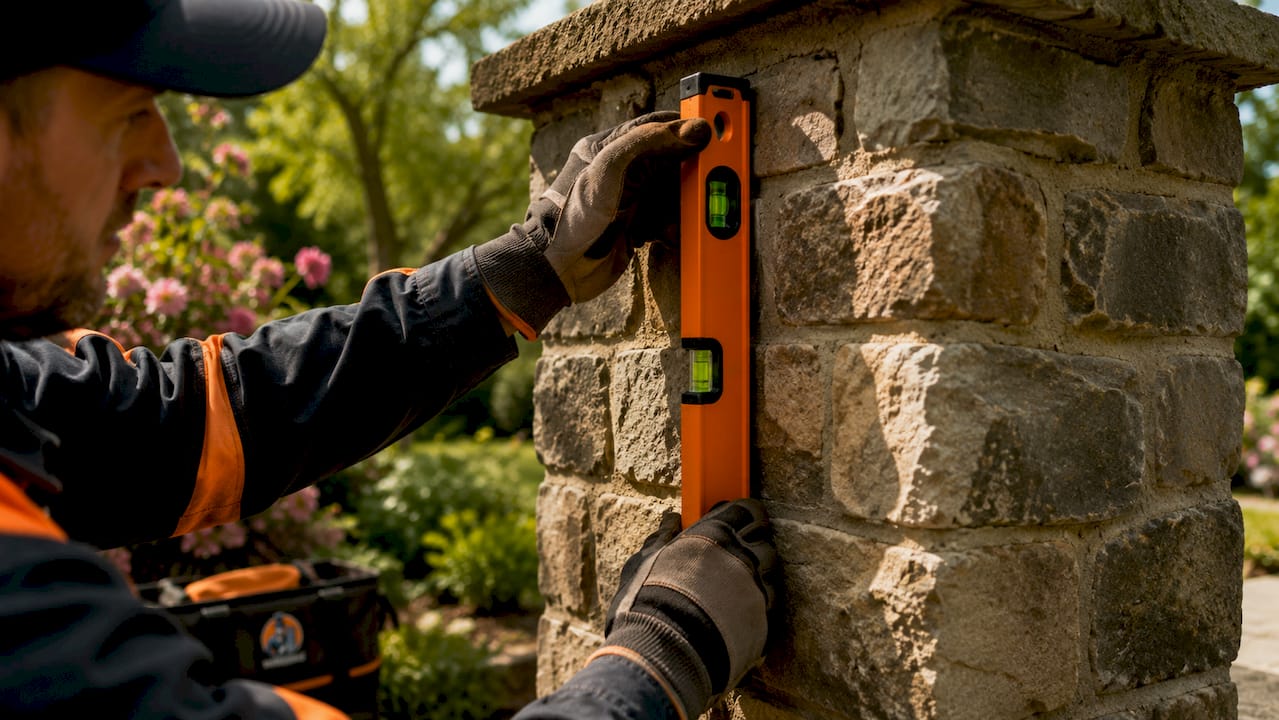
- Visible lean or tilt in the chimney column. Any tilt away from the house is a structural warning that requires immediate evaluation.
Pro Tip: Stand at the corner of your home and sight down the chimney column from base to cap. A straight chimney should align cleanly with the house wall. Any outward bow or lean is worth photographing and reporting to a professional.
2. How do water stains and moisture issues indicate chimney foundation damage?
Moisture intrusion is one of the most destructive aging chimney deterioration signs, and it often precedes visible structural failure. Interior water stains, rust in the firebox or damper, and roof flashing separation all indicate that water is penetrating the chimney system and saturating surrounding materials.
Watch for these moisture-related chimney damage indicators:
- Water stains on ceilings or walls near the chimney. Brown or yellow staining on interior drywall adjacent to the chimney signals active water infiltration through the masonry or flashing.
- Rust on the damper or firebox walls. Rust forms when moisture consistently enters the firebox. This is a reliable sign that the chimney cap, crown, or flashing is failing.
- Flashing separation at the roofline. When chimney flashing pulls away from the masonry or roof deck, water channels directly into the framing and foundation area below.
- Mold or musty odors near the fireplace. Persistent moisture leads to mold growth inside the firebox or on adjacent framing, which accelerates wood rot and weakens the structural support around the chimney base.
Moisture can cause wood rot, mold, and accelerated structural deterioration around the chimney and home. That deterioration compounds over time, meaning a small flashing gap today can become a rotted subfloor or compromised foundation footing within a few seasons.
Pro Tip: Inspect your attic directly above the chimney after every heavy rain. Wet insulation or stained rafters near the chimney penetration are early moisture warning signs that are invisible from inside the living space.
3. Why does chimney leaning or separation often signal serious foundation problems?
A leaning or separating chimney is not a cosmetic issue. Chimneys sit on separate footings from the main house foundation, which means their movement is structural evidence of differential settlement rather than surface-level wear.
Differential settlement occurs when the soil beneath one footing compresses or shifts at a different rate than the soil under an adjacent footing. In the Dallas-Fort Worth area, expansive clay soils are a primary driver of this movement, particularly after periods of drought followed by heavy rain. The chimney footing and the house foundation respond differently to that soil change, and the gap between them widens as a result.
Here is how to read the geometry of that gap:
- Gap wider at the top. This pattern means the chimney footing is sinking. The chimney is settling downward and pulling away from the house at the top first.
- Gap wider at the bottom. This pattern means the house foundation is moving away from the chimney. The house itself is settling or shifting laterally.
- Uniform gap from top to bottom. This suggests the chimney has rotated outward, which points to footing failure or soil erosion beneath the chimney base.
"Any visible lean in a chimney requires immediate professional evaluation due to the risk of collapse or safety hazards. Early detection of tilt and timely repair can prevent extensive property damage and injuries." — Residential ResQ
Identifying lean includes checking alignment with house walls, measuring tilt angle, and looking for associated interior drywall cracks or water damage. Do not wait to see if a lean gets worse. Active movement accelerates once the footing loses its bearing capacity.
4. How to systematically assess and document chimney damage signs before calling a pro
Thorough documentation before your professional inspection gives the inspector a clearer picture of how fast the problem is progressing. Photographing and measuring gap and crack progression over time reveals active movement, highlights urgency, and directly informs the repair approach.
Follow these steps to build a useful record:
- Photograph every crack and gap. Use a ruler or coin in the frame for scale. Take photos from the same angle each time so changes are easy to compare.
- Measure separation gaps at the top and bottom. Record both measurements in inches. Note the date. Recheck every 30 days during active weather changes.
- Check doors and windows near the chimney. Sticking doors, sticking windows, diagonal cracks near openings, and sloping floors near the chimney confirm that the settlement extends beyond the chimney itself.
- Note any changes in fireplace function. Smoke backing into the room, drafting problems, or a damper that no longer seals properly can all indicate that the firebox has shifted out of alignment.
- Record the date of any DFW storms or drought periods. Weather events often trigger or accelerate foundation movement in North Texas. Correlating symptom changes with weather gives inspectors valuable diagnostic context.
| What to document | How to record it | How often |
|---|---|---|
| Crack width and orientation | Ruler in photo, written notes | Monthly |
| Separation gap at top and bottom | Tape measure, dated entry | Monthly |
| Door and window operation | Written notes, video | After major weather events |
| Interior stains or new drywall cracks | Dated photos | Monthly |
| Fireplace draft or damper function | Written notes | Each use |
Regular chimney inspections by a certified professional should accompany your own monitoring. Self-documentation supplements professional evaluation. It does not replace it.
5. Comparing foundation chimney damage signs by severity and repair urgency
Not every crack demands an emergency call, but some symptoms require you to stop using the fireplace immediately. The table below organizes the most common chimney damage indicators by severity so you can prioritize your next step.
| Sign | Severity | Immediate action required? | Typical repair approach |
|---|---|---|---|
| Hairline mortar cracks | Low | No | Monitor; tuckpointing at next inspection |
| Stair-step brick cracks | Moderate | Schedule soon | Masonry repair and foundation assessment |
| Separation gap under 1/4 inch | Moderate | Schedule soon | Flashing repair, monitor footing |
| Separation gap over 1/2 inch | High | Yes | Foundation stabilization and masonry rebuild |
| Visible lean or tilt | Critical | Yes, stop using fireplace | Professional structural evaluation immediately |
| Active water intrusion | High | Yes | Chimney leak repair and moisture remediation |
| Spalling bricks with exposed cores | Moderate | Schedule soon | Brick replacement and waterproofing |
Insurance often covers chimney repair when damage is sudden and caused by a covered event such as a storm. Gradual wear-and-tear foundation damage is typically excluded. Review your policy before assuming coverage applies, and document the timeline of any DFW storm chimney damage signs carefully to support a claim.
Key takeaways
Recognizing foundation chimney damage signs early, specifically crack patterns, separation gaps, visible lean, and moisture intrusion, is the most reliable way to prevent minor settlement from becoming a structural emergency.
| Point | Details |
|---|---|
| Crack patterns matter | Stair-step and diagonal cracks signal foundation movement; vertical cracks are generally less urgent. |
| Gap geometry tells a story | A gap wider at the top means chimney settlement; wider at the bottom means the house foundation is shifting. |
| Moisture accelerates damage | Water intrusion through flashing or the crown leads to wood rot and accelerated foundation deterioration. |
| Document before you call | Dated photos and measurements of cracks and gaps give inspectors critical diagnostic data. |
| Lean is an emergency | Any visible chimney tilt requires immediate professional evaluation and fireplace shutdown. |
What we have learned from years of DFW chimney assessments
After inspecting hundreds of chimneys across the Dallas-Fort Worth Metroplex, the pattern we see most often is this: homeowners notice one sign, dismiss it as normal aging, and call us only after a second or third symptom appears. By that point, what could have been a tuckpointing job has become a partial rebuild.
The most common misconception we encounter is that chimney cracks are cosmetic. They are not. Professional inspectors document crack orientation, width, and progression to differentiate between soil pressure damage and foundation settlement. Those distinctions determine the repair method and the cost. A homeowner cannot make that call from a ladder.
We also see homeowners underestimate moisture. A rusted damper or a faint ceiling stain near the chimney gets painted over. Six months later, the framing around the firebox is rotted and the repair cost has tripled. Thermal imaging and moisture meters can reveal hidden saturation points that are invisible to the naked eye. That technology is part of every thorough inspection we conduct.
Our honest advice: do not wait for multiple symptoms to stack up before calling. One stair-step crack combined with a sticking door near the chimney is already a pattern worth investigating. The sooner you get a professional assessment, the more options you have for repair.
— Chimney Professional Services
Protect your home with expert masonry repair from Chimney Professional Services
Chimney Professional Services specializes in diagnosing and repairing the full range of foundation-related chimney issues across the Dallas-Fort Worth area. Our certified inspectors assess crack patterns, separation gaps, and moisture intrusion to determine whether your chimney needs tuckpointing, a partial rebuild, or a full foundation stabilization referral.

From targeted masonry repair and tuckpointing to complete chimney rebuilds, our team delivers durable, code-compliant work backed by real expertise. We are open daily from 8 AM to 8 PM and work around your schedule. If you have spotted any of the signs described in this article, contact Chimney Professional Services today to book your professional inspection before the problem progresses.
FAQ
What are the first signs of chimney foundation damage?
The earliest foundation chimney damage signs are stair-step cracks in the brickwork and a visible separation gap between the chimney and the house exterior wall. Counterflashing pulling away from the masonry is often the first indicator homeowners can spot from ground level.
How serious is a gap between my chimney and house?
A gap under 1/4 inch warrants monitoring and a scheduled inspection. A gap over 1/2 inch indicates active differential settlement and requires professional evaluation and likely foundation stabilization before further masonry repair.
Can chimney foundation damage cause interior problems?
Yes. Corner cracks, drywall tape stress, and trim gaps near the fireplace are interior symptoms of chimney foundation settlement. Sticking doors and diagonal wall cracks near the chimney also confirm that the movement extends into the broader foundation.
Does homeowners insurance cover chimney foundation damage?
Insurance typically covers chimney damage caused by sudden events like storms but excludes gradual wear-and-tear or foundation settlement. Document the timeline of any damage carefully and review your specific policy before filing a claim.
When should I stop using my fireplace due to chimney damage?
Stop using your fireplace immediately if you notice any visible lean or tilt in the chimney, a gap over 1/2 inch from the house wall, or active water intrusion inside the firebox. These conditions indicate structural instability that makes fireplace use a safety risk until a professional completes a full assessment.