
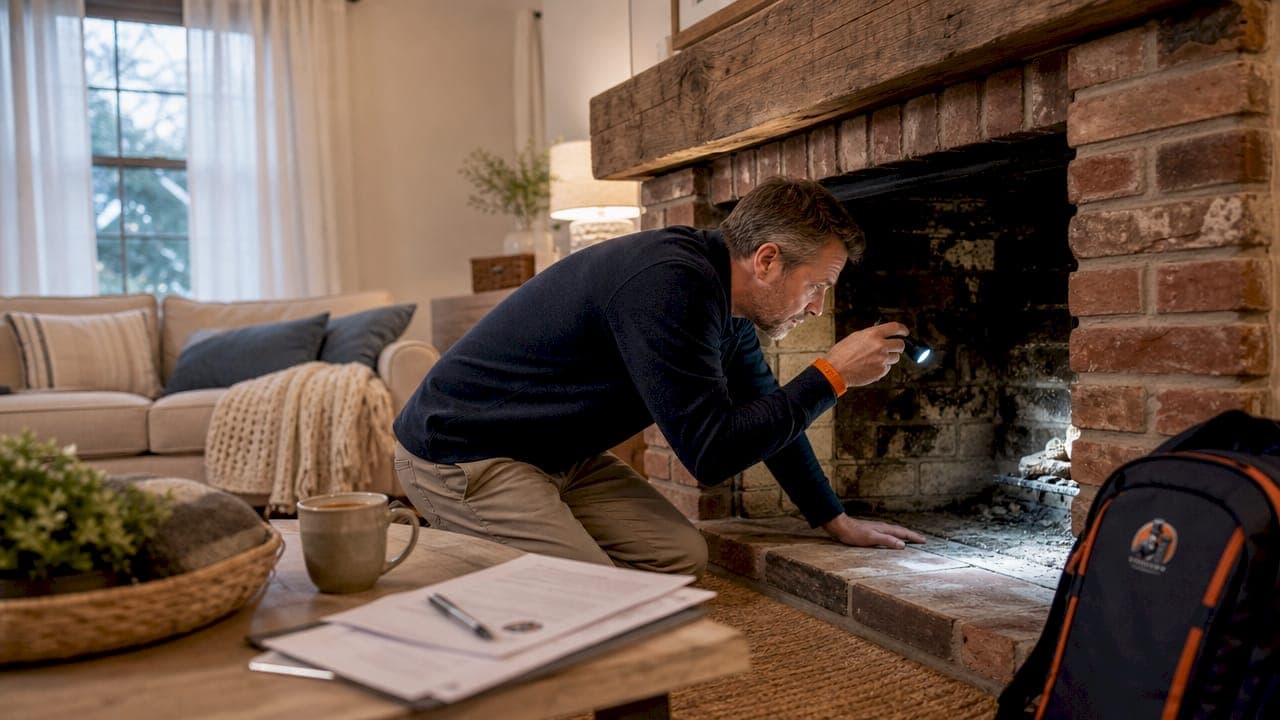
Fireplace cleaning after purchasing a home is a mandatory safety step, not an optional courtesy, and it must happen before you light a single fire. A fireplace that looks clean to the eye can contain creosote deposits, cracked flue liners, or blocked vents left behind by the previous owners. These hidden conditions cause chimney fires and carbon monoxide intrusion. NFPA 211, the national fire protection standard, designates a Level 2 chimney inspection as the required baseline after any real estate transaction. Understanding why fireplace cleaning is needed after purchase protects your family, your home, and your investment from day one.
Why fireplace cleaning is needed after purchase
The core reason is simple: you have no history with this fireplace. You do not know how often the previous owners burned wood, what type of wood they used, or when the chimney was last swept. That uncertainty makes the fireplace a potential hazard until a professional evaluates and cleans it. The first fire after moving in is a unique risk event because prior burning habits affect deposit levels and chimney condition in ways that are completely unpredictable to a new owner.
A visual check from the firebox opening tells you almost nothing about what is happening inside the flue. Creosote, soot, and structural damage accumulate in areas that are invisible without specialized tools. Skipping the post-purchase cleaning and inspection is not just a maintenance oversight. It is a liability risk that can void homeowner's insurance claims if a chimney fire occurs and no documented inspection exists.
What is creosote and why does it matter for new homeowners?
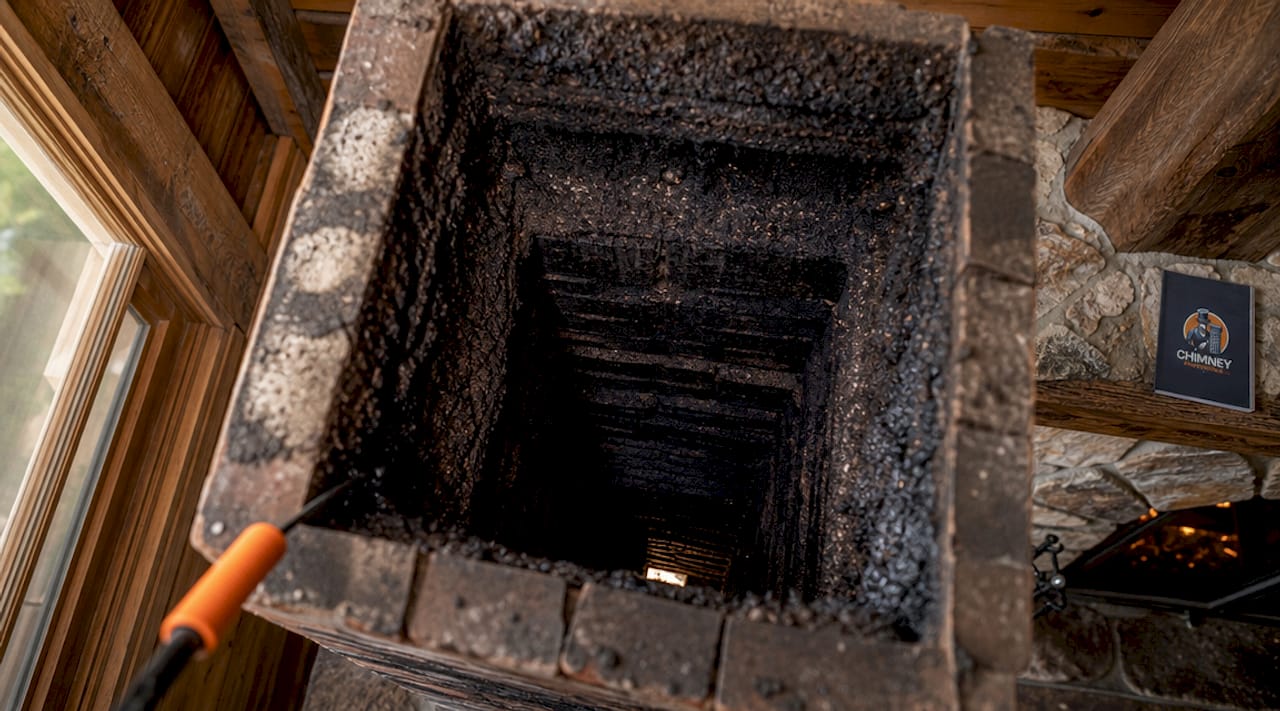
Creosote is a tar-like residue that forms when combustion byproducts from burning wood condense on the cooler interior surfaces of a chimney flue. It is the primary cause of chimney fires in the United States. Creosote buildup ignites at temperatures that a normal fire can easily reach, and once it catches, a chimney fire can burn at over 2,000 degrees Fahrenheit.
For new homeowners, the danger is compounded by the unknown. The previous owners may have burned green or unseasoned wood, which produces far more creosote than properly dried firewood. They may have burned at low temperatures for extended periods, a habit that accelerates deposit buildup. You inherit all of that history the moment you close on the property.
Creosote deposits are classified in three stages, and the right cleaning approach depends on which stage is present:
- Stage 1: Loose, flaky soot that a standard chimney brush removes easily
- Stage 2: Harder, tar-like deposits that require rotary cleaning tools and more aggressive techniques
- Stage 3: Glazed, hardened creosote that bonds to the flue liner and demands chemical treatment before mechanical removal
Pro Tip: If your certified chimney sweep tells you no cleaning is needed after inspection, that is actually good news. It means the previous owners maintained the chimney well, and you now have a documented baseline to build your maintenance schedule from.
Visual inspection from inside the firebox cannot reliably identify which stage of creosote is present. Only a professional sweep with proper lighting, brushes, and a camera system can make that determination accurately.
Why a Level 2 chimney inspection is the baseline after buying a home
NFPA 211 mandates a Level 2 inspection after every real estate transaction involving a property with a fireplace or chimney. This is not a recommendation. It is the industry standard, and skipping it in favor of a basic Level 1 visual check violates NFPA 211 and increases your legal and financial liability as the new owner.
A Level 2 inspection goes far beyond what a general home inspector performs during the buying process. Here is what it includes:
- Video scanning of the flue interior using a camera system that reveals cracks, mortar deterioration, and obstructions invisible to the naked eye
- Inspection of accessible attic, crawl space, and basement areas where the chimney passes through the structure
- Evaluation of the chimney exterior including the crown, cap, flashing, and masonry condition
- A written report with photos and video documentation that establishes a legal safety record for your home
"Do not light a fire until a qualified sweep inspection and cleaning are completed." — First Time Fireplace Owner Guide
The documentation produced by a Level 2 inspection provides legal and insurance protection that a general home inspection simply does not offer. If an issue arises later, that report proves you acted responsibly and in compliance with national fire safety standards. Level 2 inspections typically cost $250 to $500 and produce photo and video reports that establish a clear safety baseline. That cost is minimal compared to the expense of a chimney fire or a denied insurance claim.
How cleaning establishes your maintenance schedule and prevents risks
Cleaning a fireplace after purchase does more than remove old deposits. It resets the clock on your maintenance timeline and gives you an accurate starting point for all future care decisions. Without that baseline, you are guessing at when the next cleaning is due, and guessing with a fireplace is dangerous.
Sweeping is necessary when deposits reach approximately 1/8 inch or when any obstruction is present. Once a professional cleans the flue to bare liner, you know exactly where you stand. From that point, the frequency of future cleanings depends on how often you burn and what you burn, not on a generic calendar schedule.
| Condition after cleaning | Recommended next step |
|---|---|
| No deposits, clear flue | Annual inspection before next burning season |
| Light Stage 1 deposits | Clean after every cord of wood burned |
| Stage 2 deposits found | Immediate professional cleaning, evaluate liner condition |
| Stage 3 glazed creosote | Chemical treatment required before mechanical removal |
Pro Tip: Burn only seasoned hardwood with a moisture content below 20 percent. Wood that is too wet produces three to four times more creosote than properly dried firewood, which directly shortens the time between required cleanings.
Regular maintenance also reduces carbon monoxide risk. A blocked or damaged flue does not vent combustion gases properly, and carbon monoxide can migrate into living spaces silently. Annual inspections and cleaning by certified sweeps prevent dangerous events and identify issues before they become emergencies.
What hidden dangers does a professional inspection reveal?
Many homeowners trust a superficial look inside the firebox and assume the fireplace is safe. That assumption is one of the most common and costly mistakes we see. Hidden chimney damage is often invisible without professional inspection, even when the fireplace appears clean and well-maintained.
Here are the specific hazards that only a professional inspection and cleaning can reliably detect:
- Flue liner cracks: Hairline fractures in clay tile or cast-in-place liners allow heat and combustion gases to transfer directly into wall cavities, creating a fire hazard inside your home's structure
- Mortar deterioration: Crumbling mortar joints between flue tiles compromise the liner's integrity and allow toxic gases to escape into the chimney chase
- Animal nests and debris blockages: Birds, squirrels, and raccoons frequently nest in unused chimneys, and a single nest can completely block airflow and cause carbon monoxide to back-draft into the home
- Deteriorated damper components: A warped or stuck damper prevents proper draft and can trap combustion gases inside the firebox
- Water damage and efflorescence: Moisture intrusion from a damaged crown or missing chimney cap causes spalling brick, rusted components, and liner degradation that worsens with every rain
Level 2 video flue scanning reveals these conditions with precision that general home inspectors cannot match. A general home inspection is a broad overview. A chimney inspection is a specialized evaluation by a trained professional using purpose-built equipment.
Cost considerations and next steps before your first fire
Budgeting for post-purchase fireplace service is straightforward once you understand what is involved. Inspection and cleaning costs in 2026 break down as follows:
| Service | Typical cost range |
|---|---|
| Level 2 chimney inspection | $250 to $600 |
| Standard chimney sweep and cleaning | $175 to $350 |
| Combined inspection and cleaning | $350 to $800 |
| Repairs (if issues found) | Varies by scope |
These figures reflect national averages. Dallas-Fort Worth homeowners can check local pricing estimates for more accurate budgeting in the DFW market.
The sequence of steps every new homeowner should follow before lighting the first fire is clear:
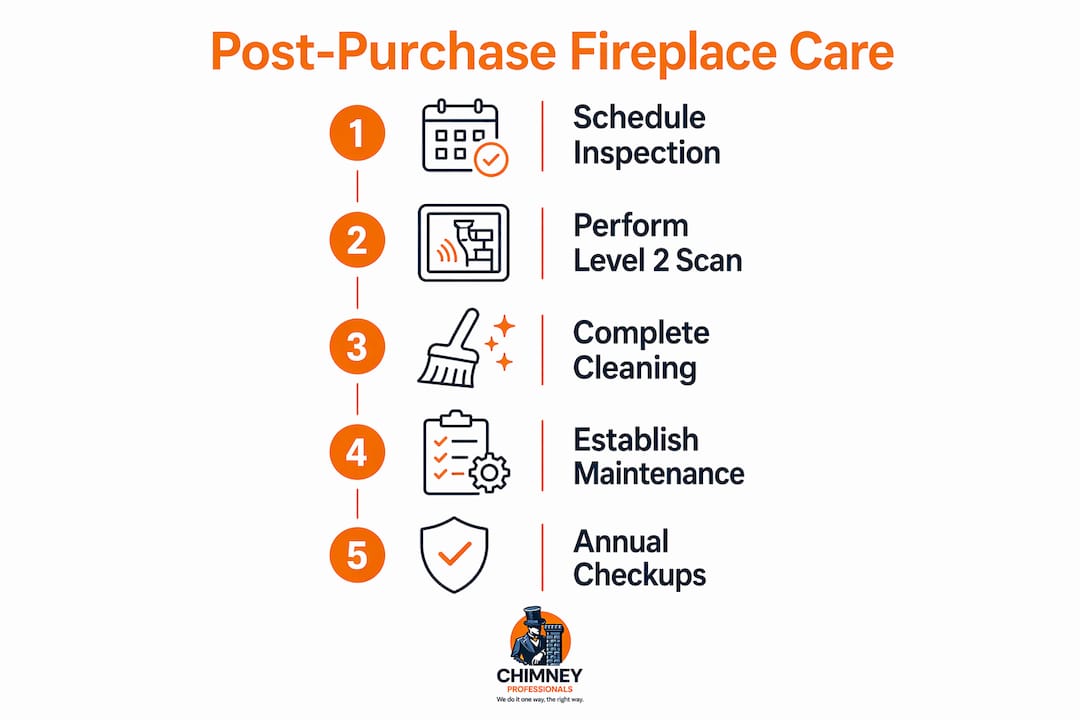
- Schedule a Level 2 chimney inspection with a certified chimney sweep before moving any furniture near the fireplace
- Complete professional cleaning based on the inspection findings, addressing the specific creosote stage present
- Review the written inspection report and address any repairs before use
- Confirm the damper operates correctly and the flue is clear
- Plan for annual chimney service going forward, typically before each burning season
Scheduling inspection and cleaning before the first fire protects you for safety and insurance purposes. If a fire or carbon monoxide incident occurs and you have no inspection record, your insurance company has grounds to deny the claim.
Key takeaways
Fireplace cleaning after purchase is a non-negotiable safety requirement because it removes inherited creosote deposits, establishes a maintenance baseline, and produces the documentation that protects you legally and financially.
| Point | Details |
|---|---|
| Cleaning is required before first use | Inherited deposits and unknown history make the fireplace unsafe until professionally evaluated. |
| Level 2 inspection is the NFPA 211 standard | Video flue scanning reveals hidden damage that visual checks and general home inspectors miss. |
| Creosote stage determines cleaning method | Wrong techniques leave dangerous residue behind; matching method to stage is critical for safety. |
| Cleaning sets your maintenance schedule | A clean baseline tells you exactly when future sweeping is needed based on actual use. |
| Documentation protects your insurance claim | A written inspection report provides legal proof of compliance if an incident ever occurs. |
What we have learned from inspecting hundreds of new-to-you fireplaces
After working with homeowners across the Dallas-Fort Worth Metroplex, our team at Chimney Professional Services has seen the same pattern repeat itself. A new homeowner moves in, the fireplace looks fine, and they light a fire in December without a second thought. Then we get the call.
The most overlooked hazard is not dramatic. It is a Stage 2 creosote deposit sitting quietly in the upper flue, invisible from the firebox, waiting for the first hot fire of the season. We have also found active animal nests, cracked liners that were painted over to look intact, and dampers that were wired open by previous owners who gave up trying to fix them properly.
What surprises most homeowners is how much the inspection report changes their relationship with the fireplace. Once you have a written record with photos and video, you stop guessing. You know what you have, what condition it is in, and exactly what needs to happen next. That documentation also travels with the home. When you eventually sell, a clean inspection history is a genuine selling point that buyers and their agents notice.
Our honest advice: do not treat the post-purchase inspection as a formality. Treat it as the first act of responsible homeownership for this specific system. The fireplace is one of the few appliances in your home that can cause a structural fire if neglected. Starting with a professional cleaning and inspection is the only way to know with confidence that it is safe.
— chimneyprofessionalservices
Get your new fireplace inspected and cleaned by Dallas experts
If you have recently purchased a home in the Dallas-Fort Worth area and your fireplace has not been professionally inspected and cleaned, Chimney Professional Services is ready to help. Our certified chimney inspectors perform full Level 2 inspections with video flue scanning, followed by professional cleaning matched to your specific deposit conditions.
We also handle any repairs the inspection uncovers, from fireplace repair services for gas and wood systems to chimney masonry repair for structural issues found in the flue or exterior. Our team is available daily from 8 AM to 8 PM across the DFW Metroplex. Contact Chimney Professional Services today to schedule your post-purchase inspection before you light that first fire.
FAQ
Why is fireplace cleaning needed right after buying a home?
You inherit the previous owner's entire maintenance history, including any creosote buildup, blockages, or structural damage. A professional cleaning and Level 2 inspection before first use is the only way to confirm the fireplace is safe to operate.
What does a Level 2 chimney inspection include?
A Level 2 inspection includes video scanning of the flue interior, evaluation of accessible structural areas, and a written report with photos and video documentation. NFPA 211 requires this level of inspection after every real estate transaction involving a fireplace.
How often should you clean a fireplace after the initial post-purchase cleaning?
Cleaning is required when deposits reach approximately 1/8 inch or when any obstruction is present. For most homeowners who burn regularly, that means an annual cleaning before each burning season.
Does a gas fireplace also need inspection after purchase?
Yes. Gas fireplaces burn cleaner than wood-burning systems but still require annual safety checks for vent integrity and carbon monoxide risk, along with seasonal pilot light service.
Can a general home inspection replace a chimney inspection?
No. A general home inspection is a broad overview and does not include video flue scanning or the specialized evaluation required by NFPA 211. Only a certified chimney sweep performing a Level 2 inspection meets the post-purchase standard.