
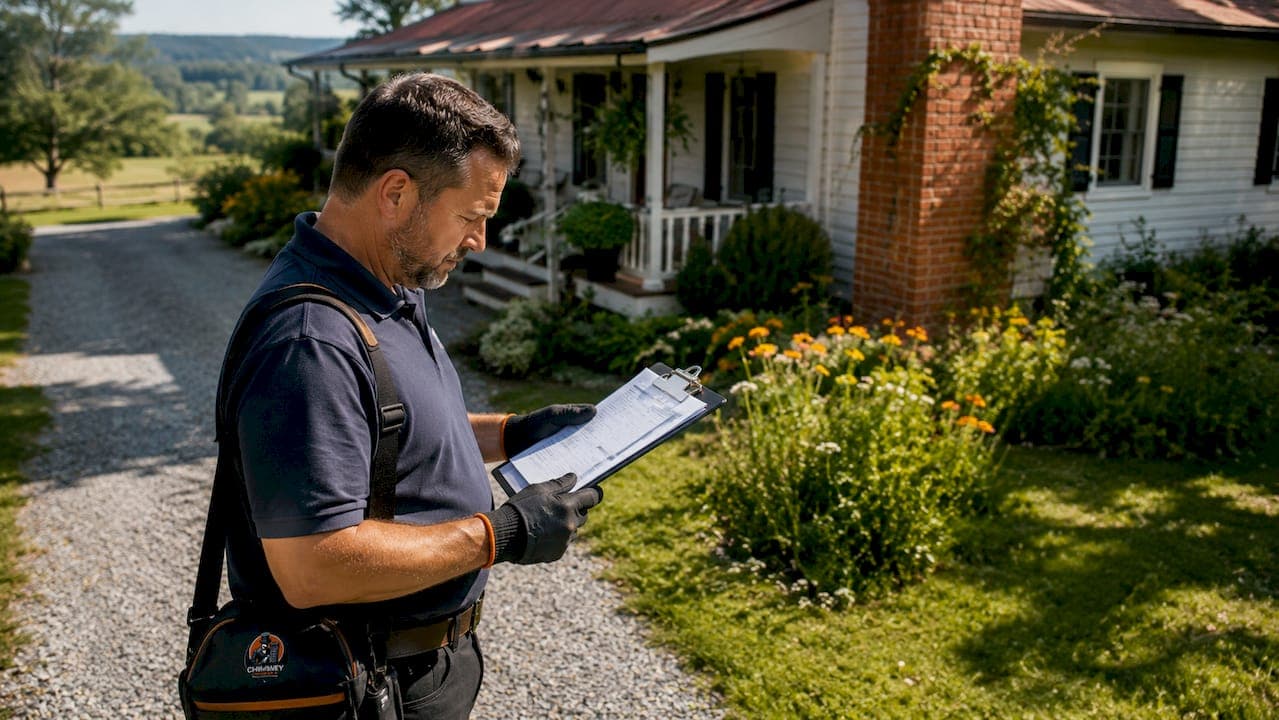
A certified chimney inspector's role in a property sale is to conduct a mandatory NFPA 211 Level 2 inspection that validates chimney safety, structural integrity, and code compliance before ownership transfers. This is not a courtesy check. It is a regulated process that protects buyers, sellers, lenders, and insurers with objective, documented evidence. The inspection uses specialized equipment, including HD video scans of the flue interior, to detect damage that no general home inspection can find. In the DFW real estate market, where older masonry chimneys and storm-related wear are common, the role of certified chimney inspector in a property sale directly affects whether a deal closes on time and on terms.
What is a level 2 chimney inspection and why is it required for property sales?
NFPA 211 defines three chimney inspection levels, and Level 2 is the standard required whenever a property changes ownership. Level 1 covers only accessible areas with no special tools. Level 3 involves destructive access to concealed areas. Level 2 sits between them and is the legally recognized standard for real estate transfers.
A Level 2 inspection goes well beyond what a general home inspector does. It covers all accessible areas of the chimney system, including the attic, basement, and crawl spaces, and it requires a video scan of the flue interior. That video scan is the only reliable method to detect hairline cracks, creosote buildup, and obstructions hidden deep inside the flue. Performing a Level 1 inspection instead of a Level 2 during a real estate transfer is non-compliant with NFPA 211 and can carry liability consequences for all parties involved.
Here is what a complete Level 2 inspection covers:
- Flue interior: HD video scan to identify cracks, blockages, and deteriorated liner sections
- Firebox and smoke chamber: Visual and physical check for spalling, mortar failure, and smoke staining
- Exterior masonry: Assessment of crown, cap, flashing, and brickwork for water intrusion or structural damage
- Accessible structural areas: Attic, basement, and crawl space checks for clearance violations and hidden damage
- Written report: Date-stamped photos and HD video documentation of all findings
The cost of a Level 2 inspection ranges from $350 to $600 depending on system complexity. That fee is modest compared to the repair costs it can uncover or prevent. The written report becomes a legal document that lenders, insurers, and attorneys can reference throughout the closing process.
| Inspection Level | Scope | When Required |
|---|---|---|
| Level 1 | Visual check of accessible areas only | Annual maintenance |
| Level 2 | Video scan plus accessible structural areas | Property sale or transfer |
| Level 3 | Destructive access to concealed areas | Suspected hidden damage |
How does the inspector's report affect property sale negotiations?
Chimney issues rank among the top five real estate negotiation points, and repair costs can range from $500 to over $15,000 depending on the severity of damage found. That range explains why the inspection report carries real weight at the negotiating table. A cracked flue liner or failed flashing is not a cosmetic issue. It is a safety and liability issue that buyers, lenders, and insurers all take seriously.
The inspection report affects negotiations in four concrete ways:
- Seller leverage through pre-listing inspection: Sellers who order a certified inspection before listing can address defects on their own timeline, at competitive prices, and with documentation ready for buyers. Pre-listing inspections reduce buyer objections and keep sales on track.
- Buyer protection from hidden costs: Buyers who order an inspection during the contingency period get objective evidence of chimney condition before committing to the purchase. This prevents expensive surprises after closing.
- Lender and insurer compliance: Most mortgage lenders and homeowner's insurance providers require documentation of chimney condition before approving financing or coverage. CSIA-certified inspectors provide written reports with date-stamped photo and HD video evidence that meets these requirements.
- Repair credit negotiations: When defects are found, the documented report gives both parties a factual basis for negotiating repair credits or price reductions, rather than relying on estimates or assumptions.
Pro Tip: If you are selling a DFW home with a fireplace, order your certified inspection at least three weeks before listing. That window gives you time to complete any needed masonry or flashing repairs and have documentation ready before the first showing.
You can also review common chimney defects that affect negotiations to understand which findings carry the most financial weight in a sale.
What differentiates certified inspectors from general home inspectors?
General home inspectors limit chimney checks to visual external observations, lacking the specialized tools needed to detect internal or hidden damage. That limitation is not a criticism. It reflects the scope of their training and license. A general home inspector is qualified to flag obvious exterior issues. They are not equipped to assess flue liner integrity, smoke chamber condition, or hidden structural failure.
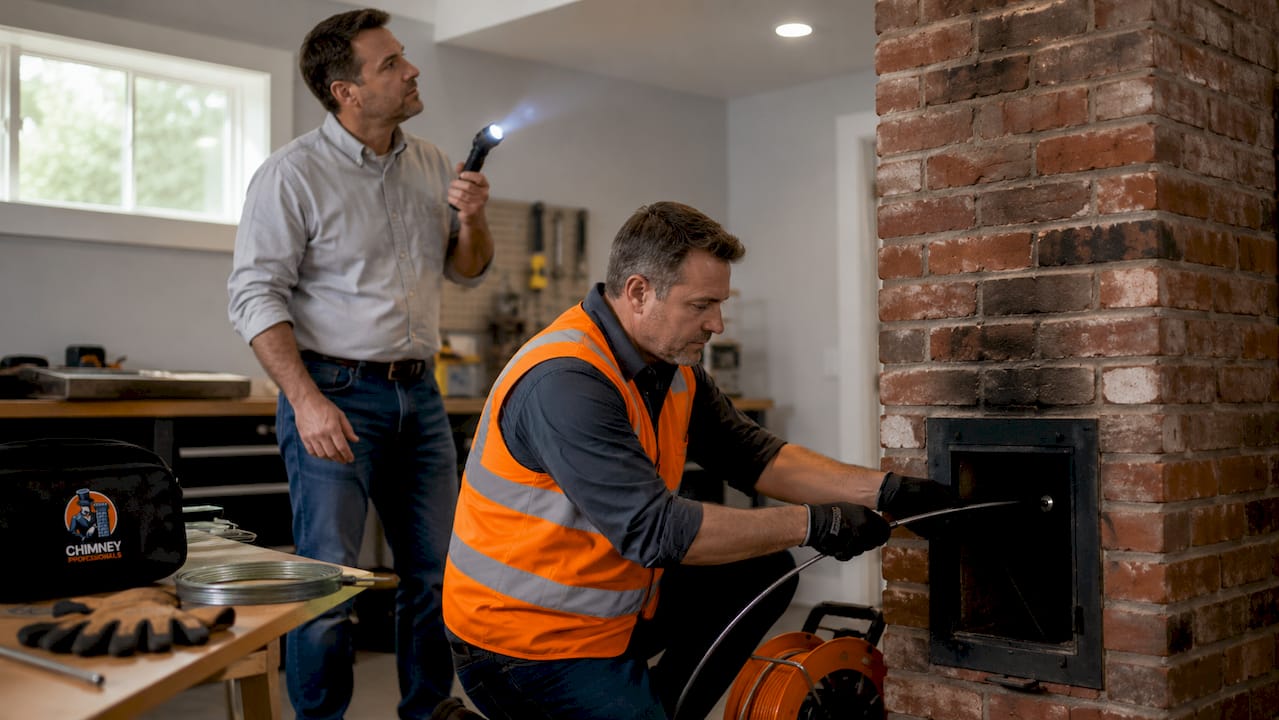
Certified chimney inspectors, particularly those holding the CSIA Certified Chimney Sweep (CCS) credential, operate under a different standard entirely. Over 1,300 professionals hold the CSIA CCS credential, meeting rigorous requirements in chimney safety, continuing education, and professional ethics. That credential signals to lenders and insurers that the inspection meets recognized industry standards.
Key differences between certified and general inspectors include:
- Equipment: Certified inspectors use HD video cameras designed for flue interiors. General inspectors use flashlights and mirrors.
- Training: CSIA certification requires formal coursework, field experience, and ongoing education. General home inspection licenses do not include chimney-specific training.
- Report acceptance: Uncertified inspection reports are frequently rejected by lenders and insurers, forcing costly re-inspections that delay closing.
- Liability protection: A certified inspector's report provides a defensible, professional opinion. An uncertified report may not hold up if a defect is discovered after closing.
Pro Tip: Always ask for the inspector's CSIA certification number before booking. You can verify active credentials directly on the CSIA website. This one step protects you from reports that lenders will reject.
Understanding why annual certified service matters also helps buyers and sellers recognize the value of a documented maintenance history when entering a transaction.
When should you schedule a certified chimney inspection during the sales process?
Delaying chimney inspections until closing day causes rushed repairs and delays. The right time to schedule depends on whether you are the buyer or the seller, but the principle is the same for both. Earlier is always better.
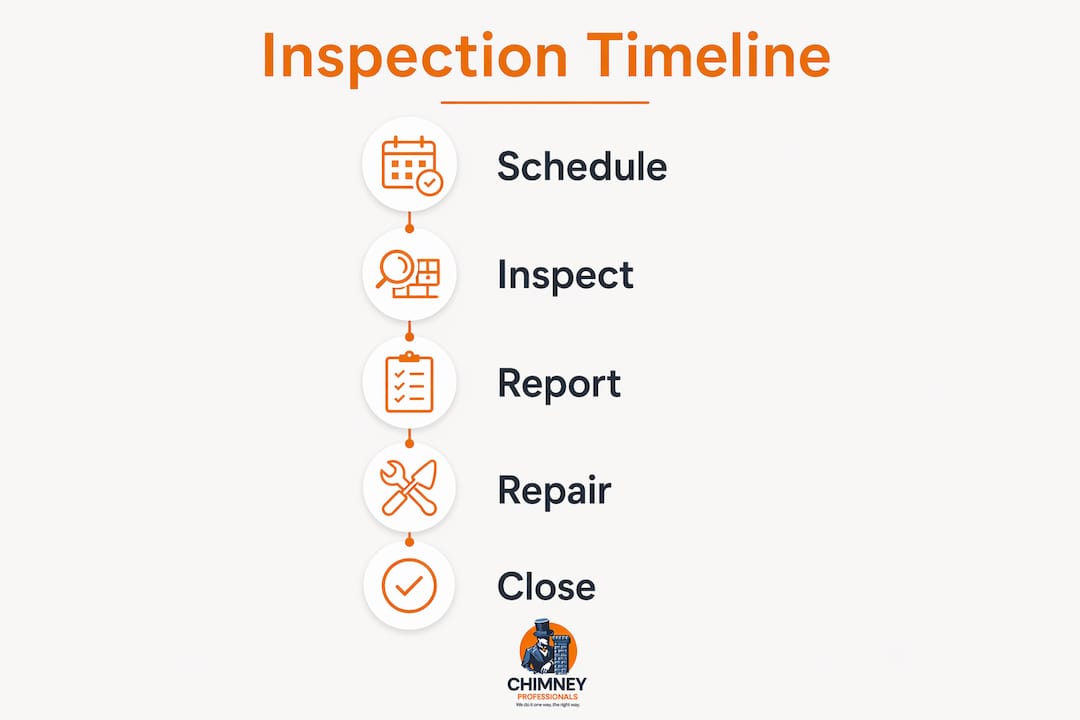
For sellers, the ideal window is three to four weeks before listing. This gives you time to receive the report, arrange any needed repairs, and have documentation ready before buyers start making offers. Pre-listing inspections give sellers confidence and reduce the chance of a buyer using chimney defects as leverage to renegotiate the price.
For buyers, the contingency period is the correct time to act. Most purchase contracts in Texas include an option period or inspection contingency of seven to ten days. Scheduling a certified chimney inspection within the first two days of that window gives you time to review findings, request repairs, or walk away if the damage is too severe.
Practical steps to follow when scheduling:
- Verify the inspector holds an active CSIA certification before booking
- Request a written scope of work confirming the inspection meets NFPA 211 Level 2 standards
- Ask for HD video documentation as part of the deliverable, not just a written summary
- Confirm the report format is acceptable to your lender and insurer before the inspection date
- Schedule repairs immediately after receiving the report to avoid closing delays
The benefits of regular chimney inspections extend beyond the sale itself. Buyers who understand the chimney's condition from day one are better positioned to maintain it safely after closing.
Key takeaways
A certified chimney inspector is the only qualified professional who can deliver the NFPA 211 Level 2 inspection required for property sales, and skipping or substituting that step creates legal, financial, and safety risks for every party in the transaction.
| Point | Details |
|---|---|
| Level 2 is mandatory | NFPA 211 requires a Level 2 inspection for all property sales, not a basic visual check. |
| Certification matters to lenders | Only CSIA-certified inspector reports are consistently accepted by lenders and insurers. |
| Early scheduling prevents delays | Order the inspection before listing or within the first two days of the contingency period. |
| Reports drive negotiations | Documented findings give buyers and sellers a factual basis for repair credits or price adjustments. |
| Video scanning is non-negotiable | HD flue video is the only way to detect hidden cracks and hazards that affect safety and compliance. |
What we see in DFW chimneys before every closing
After years of conducting Level 2 inspections across the Dallas-Fort Worth Metroplex, our team at Chimney Professional Services has seen the same pattern repeat. A fireplace looks perfectly fine from the living room. The seller has used it for years without incident. Then the HD video scan reveals a cracked flue liner, failed mortar joints, or water intrusion behind the firebox that has been quietly worsening for a decade.
The DFW climate creates specific risks that buyers and sellers here need to understand. Rapid temperature swings between summer heat and winter cold cause masonry to expand and contract repeatedly, accelerating mortar deterioration and liner cracking. Hailstorms, which are common across North Texas, damage chimney crowns and caps in ways that are invisible from the ground but show up clearly on a video scan.
Our honest observation is this: the sellers who struggle most at closing are the ones who skipped the pre-listing inspection. They enter negotiations without documentation, and when a buyer's inspector finds a problem, the seller has no counter-evidence and no time to get competitive repair quotes. The sellers who move quickly and confidently are the ones who already have a certified report and completed repairs in hand.
We also see buyers make a costly mistake by relying on the general home inspection report for chimney clearance. That report will not catch a deteriorated liner or a blocked flue. Those are the defects that cause house fires and carbon monoxide exposure. A certified inspection is not a formality. It is the only way to know what you are actually buying.
Our recommendation for any DFW transaction involving a fireplace is straightforward. Hire a CSIA-certified inspector, get the Level 2 report with full video documentation, and build that step into the timeline before it becomes urgent.
— chimneyprofessionalservices
Schedule your certified chimney inspection before closing
Chimney Professional Services provides NFPA 211 Level 2 inspections across the Dallas-Fort Worth Metroplex, with full HD video documentation and written reports that meet lender and insurer requirements. Our certified inspectors identify masonry defects, flue damage, and water intrusion issues before they become deal-breakers.
Whether you need a pre-listing inspection to market your home with confidence or a buyer's inspection during the contingency period, our team is available daily from 8 AM to 8 PM to work around your schedule. We also handle chimney masonry repair and chimney leak repair so you can address findings and stay on track for closing. Contact Chimney Professional Services today to book your inspection and protect your transaction.
FAQ
What does a level 2 chimney inspection include?
A Level 2 chimney inspection includes an HD video scan of the flue interior, a physical check of all accessible areas including the attic and basement, and a written report with date-stamped photo and video evidence. It is the standard required by NFPA 211 for all property sales and transfers.
Why won't a general home inspection satisfy lender requirements?
General home inspectors perform only visual external chimney checks and lack the specialized tools to assess flue integrity. Lenders and insurers require reports from CSIA-certified inspectors, and uncertified reports are frequently rejected, causing delays and additional inspection costs.
How much does a certified chimney inspection cost for a home sale?
A Level 2 chimney inspection typically costs between $350 and $600 depending on system complexity. That cost is minor compared to repair bills that can exceed $15,000 if hidden defects go undetected before closing.
When is the best time for a seller to schedule a chimney inspection?
Sellers should schedule a certified inspection three to four weeks before listing. This allows time to complete any needed repairs and have full documentation ready before buyers submit offers, reducing the chance of last-minute negotiation conflicts.
Can chimney inspection findings delay a real estate closing?
Yes. If a certified inspection reveals significant defects and no prior documentation exists, buyers may request repairs or credits that require additional time to negotiate and complete. Scheduling the inspection early, rather than during the final days before closing, prevents this outcome.